Recent additions, changes and updates to Don's Maps
I have completed my page on the history of the Earth from the beginning of the earth to the end of the dinosaurs, and a selection of the animals and plants from the Precambrian to the Cretaceous. I am now working on a page on Gӧbekli Tepe. Göbekli Tepe was built by hunter-gatherers from the Pre-Pottery Neolithic period (around 9 600 - 8 200 BC), a significant discovery showing that these early people did not just settle agricultural communities, but were capable of complex monumental architecture for social and ritual purposes. Archaeological evidence suggests nomadic groups gathered to construct the large, T-shaped pillars and enclosures using stone tools, challenging the idea that complex societies only arose after farming.
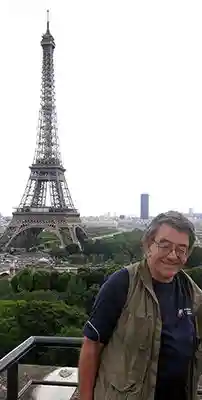
Photo: Me in Paris, on top of the Musée de l'Homme.
Maps of the Earth's Children Series including a map of Journeys in the Land of Painted Caves, the last book in the series.
Maps include the true extent of the ice in the last ice age, as well as maps of The Territory of the Zelandonii, Journeys in Clan of the Cave Bear, local area around the cave in Clan of the Cave Bear, The Valley of Horses, Iron Gates map, local map of the Sharamudoi, local map of The Mammoth Hunters Lion Camp, map of Ukraine, map of The Plains of Passage, Clickable map of the Plains of Passage, Donau Mouth to First Snow from the Plains of Passage, The Encounter with the S'Armunai, Wurm and Riss Glaciation in the headwaters of the Donau (Danube), How I draw the maps.
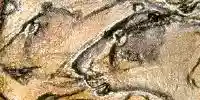
Index of caves and rock shelters with wall paintings and engravings Last updated Wednesday 08 February 2023
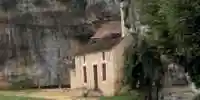 Les Combarelles in the Dordogne, with more than 600 images on its walls, most of them engraved, is considered to be one of the major sanctuaries of Magdalenian culture. This extraordinary site was discovered in 1901. Beyond the entrance of the cave two galleries diverge. The largest one, now open to the public, is a narrow and winding passage, following a zig zag pattern for more than 240 metres. The animals represented are finely engraved. A diverse fauna is represented, including horses, reindeer, ibex, mammoths, rhinoceros, bears, lions and a few bisons and aurochs. A very important paper on the representations of humans at les Combarelles has been added.
Last updated Wednesday 11 December 2024
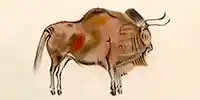 Dots and lines are the most ubiquitous abstract symbols in Palaeolithic art, whether on the walls of caves or on suitable pieces of bone and ivory. Many researchers have noted the occurrence of these symbols, and their occurrence particularly in relation to representations of animals. Here I have put together some of the best examples. The evidence presented here shows that where the evidence exists and the data is sufficient, there is no correlation between the Taxon and the number of dots or lines. For example, horses have numbers of dots and lines which are spread across the range of 1, 2, 3, 4, 5, 6, and 7, and Aurochs (early cattle) have numbers of dots and lines which include 2, 3, 4, 6, 7, and 18 or more.
Last updated Monday 16 January 2023
