Edward F. Edinger: The Olympian Gods
It is remarkable that the early civilized mind took it as self-evident that there were beings who lived forever.
This is not so obvious to the modern mind; one has to dig into the depths of psychological experience to rediscover what was self-evident to our ancestors.
Taken as a whole, the Greek Pantheon tells us that the immortal ones are fundamental presences. In psychological terms, we can say that they are inhabitants of the collective unconscious.
They are expressions of the archetypes, those psychic entities that continue to exist unchanging while the momentary individual egos come and go.
One of the striking features of The Iliad is that gods and men are active on the same stage. In the course of the battles and the to-and-fro of the champions and the warriors and armies, not only are there human soldiers on the field, but gods are there fighting along with them. Every now and then one of the gods will take one particular warrior and imbue him with superior power, or if a favorite is having a bad time of it, he may just pick him up bodily in a cloud and transport him to safety. If we take this as a picture of the psychological realm, we see that there is a free, fluid interpenetration
between ego experience and archetypal factors signified by the gods. The nature of psychological experience is that what we do and what we experience are constantly interpenetrated by these other powers, although as a rule consciousness is making so much noise, it doesn’t notice. The fact that there are twelve Olympians is surely significant—although the roster is not absolutely fixed; there were some late revisions.
Dionysus is a late addition, and Demeter is not always present. However, it seems important to point out in a general way the symbolism of the sacred number twelve. One need only think of the twelve hours of the day, the twelve tribes of Israel, the twelve apostles of Christ, the twelve signs of the zodiac, the twelve labors of Heracles. Twelve is related to the symbolism of wholeness, to the mandala and the quaternity.
It is a particularly meaningful number for the sacred ones. As the ego looks in the direction of the Self, the transpersonal center of the psyche, it tends to experience the Self not as a unity (at least not at first) but as a multiplicity of archetypal factors that one can think of as the Greek gods. Let us consider the gods as a whole before discussing the individuals.
From the viewpoint of depth psychology, the gods stand for the archetypes, the basic patterns within the human psyche that exist independent of personal experience. They are the templates on which the individual life is formed. Mythologically, these eternal patterns are thought of as gods, existing in a special place apart from ordinary human experience.
The Greeks called that special region Olympus, and thought of it originally as a mountain peak, and later as the whole upper sky. In The Odyssey Homer describes Olympus: . . . Olympus, where, they say, is the abode of the gods that stands fast forever. Neither is it shaken by winds or ever wet with rain, nor does snow fall upon it, but the air is outspread clear and cloudless, and over it hovers a radiant whiteness. Therein the blessed gods are glad all their days. . . . 1
Of course, this is just one version of heaven as the transcendent realm, the realm beyond the personal. A parallel conception was the image of Yahweh in Hebrew mythology. He was also a sky god and inhabited Mount Sinai, an equivalent of Mount Olympus and analogous to the Christian heaven as well. Indeed, almost all primitive mythologies involve some notion of heaven as an abode for the gods, with something of this perfect, eternal, untarnished quality.
Psychologically we can consider the idea of an Olympian realm as a projection onto the outer world (onto the sky in this case) of an inner state. It would be a state that is eternal, unchanging, and a realm of the spirit, as opposed to matter. Every now and then one encounters the notion that such images amount to nothing more than wish fulfillment. But no wish was fulfilled in the original Greek conception of Olympus, since as the myths and all the early literature make clear, there was no advantage to them in imagining the Olympians up in their heavenly realm.
Quite the contrary, the Olympian existence merely emphasized the misery of mortal life. We are left with the conclusion that there exists an eternal psyche, or something symbolized by an eternal psyche, that is of greater duration than the ego. This idea is developed in Jung’s concept of the collective unconscious, the abode of the archetypes. In his purely psychological view, the heavenly realm of the Greek gods is seen as a part of the human psyche, which is beyond time and space and beyond the control of the conscious personality.
The early images such as that of Olympus are understood as translations of psychological realities into external ones. When we take the Greek gods individually, we have a complete chart of the eternal or impersonal dimension of the psyche. The assembly of the gods gives us a set of archetypal principles, along the lines that Nietzsche elaborated when he described the Dionysian and Apollonian principles in his essay “The Birth of Tragedy.”
The same sort of elaboration can be made for each of the Greek gods, so that we see a Zeus principle, an Ares principle, an Aphrodite principle, an Athena principle, and so on. We experience these principles in different ways. We observe them, for instance, lived out in the personalities and behavior of others. If we review our various friends and acquaintances we can come up with examples—not in pure culture, of course, but approximate examples—of each of the archetypal principles the Greek gods embody, and we can equally well, by self-examination, detect one or more such principles that are guiding factors in our own psychology.
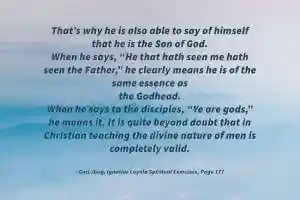
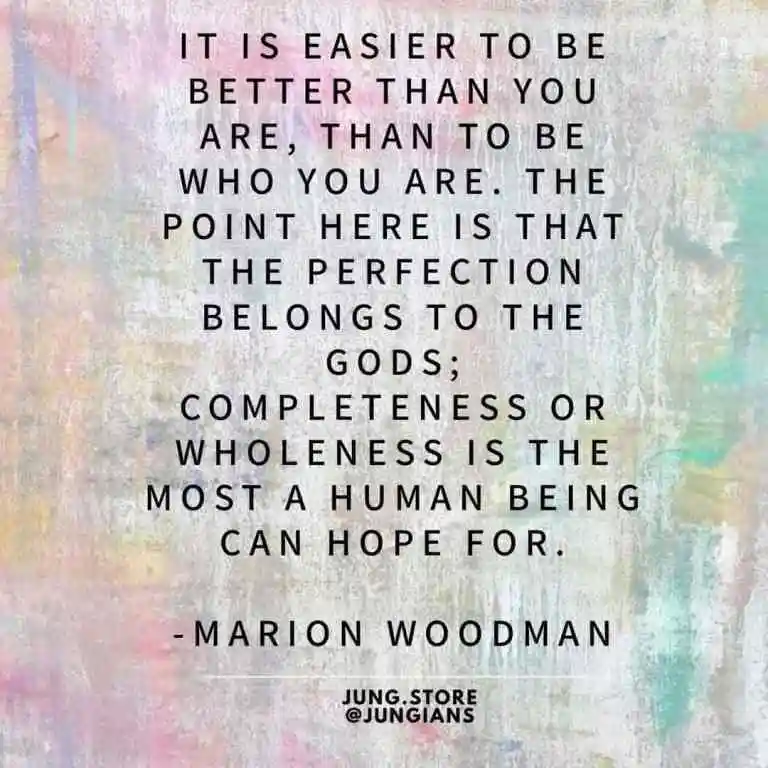
We will encounter expressions of them in our dreams as numinous entities, having a guiding or helping capacity of some kind. The more we approach the state of wholeness, the more likely we are to have had at least brief encounters with most, if not all, of these divine principles. Each of us contains within us the whole Olympian Pantheon. ~Edward F. Edinger, The Eternal Drama, Page 27-29
Carl Jung Depth Psychology Blog