Python Program to Count Positive, Zero, and Negative Numbers in a List
This article was created to cover some programs in Python that count positive, zero, and negative numbers available in a given list. Here is a list of programs covered in this article:
- Count positive, zero, and negative numbers in a list of 10 elements (numbers).
- Count positive, zero, and negative numbers in a list of n elements.
Count Positive, Zero, and Negative Numbers in a List of 10 Elements
The question is: write a Python program to count the total positive, zero, and negative numbers available in a given list. Here is its answer:
nums = []
totPositive = 0
totNegative = 0
totZero = 0

print("Enter 10 Numbers: ")
for i in range(10):
  nums.insert(i, int(input()))

for i in range(10):
  if nums[i]>0:
    totPositive = totPositive+1
  elif nums[i]<0:
    totNegative = totNegative+1
  else:
    totZero = totZero+1

print("\nPositive Number: ")
print(totPositive)
print("Negative Number: ")
print(totNegative)
print("Zero: ")
print(totZero)
Here is its sample run:
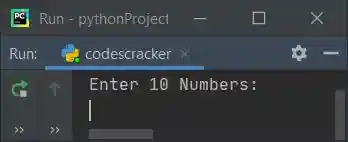
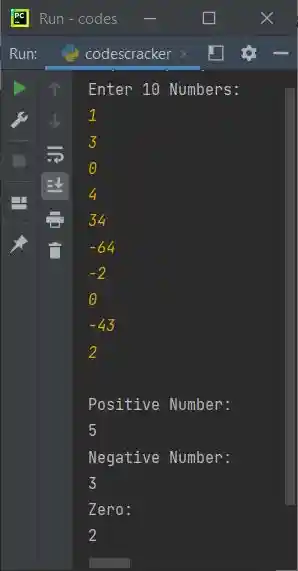
Now enter any 10 numbers as input, say "1, 3, 0, 4, 34, -64, -2, 0, -43, 2," and press the ENTER key to count and print the total number of positive and negative numbers along with zeros:
Count positive, zero, and negative numbers from a series of n numbers
This is a little similar to the previous program. The only main difference is that this program allows the user to define the size of the list too.
nums = []
totPositive = 0
totNegative = 0
totZero = 0

print(end="Enter the Size: ")
s = int(input())

print(end="Enter " +str(s)+ " Numbers: ")
for i in range(s):
  nums.insert(i, int(input()))

for i in range(s):
  if nums[i]>0:
    totPositive = totPositive+1
  elif nums[i]<0:
    totNegative = totNegative+1
  else:
    totZero = totZero+1

print(end="\nPositive Number(s): " +str(totPositive))
print("\nNegative Number(s): " +str(totNegative))
print("Zero(s): " +str(totZero))
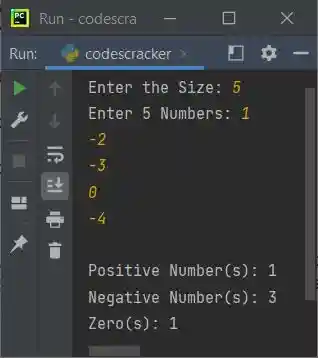
Here is its sample run with user input: "5" as size and "1, -2, -3, 0, -4" as five numbers:
« Previous Program Next Program »
Liked this post? Share it!