Python Program to Print ASCII Value
In this article, I've created some programs in Python, that find and prints ASCII value(s) in following ways:
- Print ASCII Value of single Character entered by User
- Print ASCII Values of all 255 Characters
- Print ASCII Values of all characters in a String entered by User
Find and Print ASCII Value of a Character
This program find and prints ASCII value of a particular character entered by user at run-time. The ord() method returns ASCII value of a character passed as its argument, like shown in the program given below:
print("Enter a Character: ")
ch = input()

asc = ord(ch)
print("\nASCII Value:", asc)
Here is its sample run:
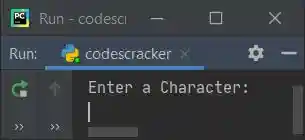
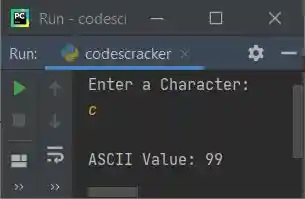
Now supply the input say c and press ENTER key to find and print the ASCII value 'c'
(entered character by user) as shown in the snapshot given below:
Modified Version of Previous Program
The end skips inserting an automatic newline using print(). The str() converts any type of value to string type. The len() returns length of a string passed as its argument. The \" is used to print "
print("Enter a Character: ", end="")
ch = input()

chlen = len(ch)
if chlen==1:
    asc = ord(ch)
    print("\nASCII Value of \"" +(ch)+ "\" = " +str(asc))
else:
    print("\nInvalid Input!")
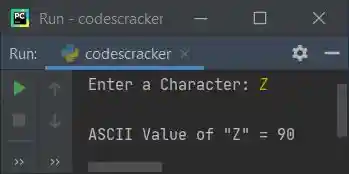
Here is its sample run with user input Z:
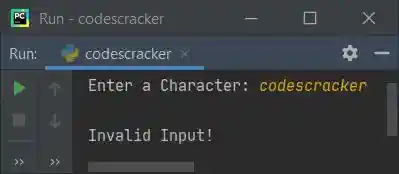
Here is another sample run with user input codescracker. Since it is not a character, rather it is a string, therefore the program produces following output. At last of this article, I've created a program that prints ASCII value of anything like character, string, etc.
Print ASCII Values of all Characters
This program prints ASCII value of all 255 characters:
print("ASCII\tCharacter")
for i in range(256):
    ch = chr(i)
    print(i, "\t\t", ch)
The snapshot given below shows a small part of the output produced by above Python:
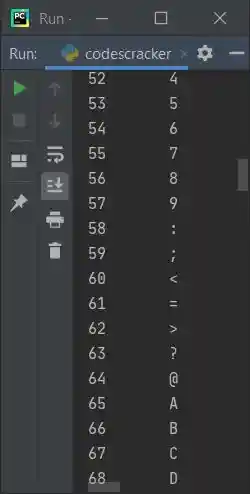
The following code from above program:
states that the statements inside it gets executed 256 number of times with value of i from 0 to 255.
Find and Print ASCII Value of all Characters in String
This program find and prints ASCII value of all characters in a string entered by user.
print("Enter a String: ", end="")
text = input()

textlen = len(text)
for ch in text:
    asc = ord(ch)
    print(ch, "\t", asc)
Here is its sample run with input, CodesCracker:
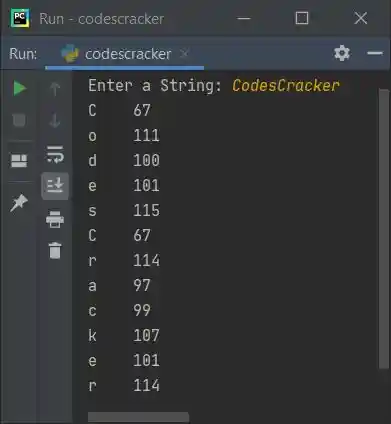
Here is another sample run with user input as codes123%#4/|]{
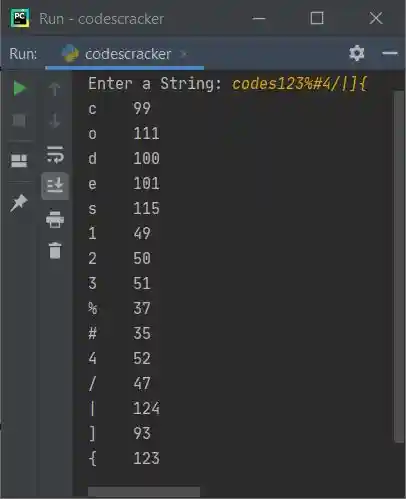
Modified Version of Previous Program
The previous program is modified because that program prints ASCII value of c from string say codescracker three times. Since there are three c available in this string. But this program prints ASCII value of all characters for only one time, without mattering whether the character occurs one or more times in the string:
print("Enter a String: ", end="")
text = input()

text = "".join(dict.fromkeys(text))
textlen = len(text)
for ch in text:
    asc = ord(ch)
    print(ch, "\t", asc)
Here is its sample run with string user input as codescracker.com:
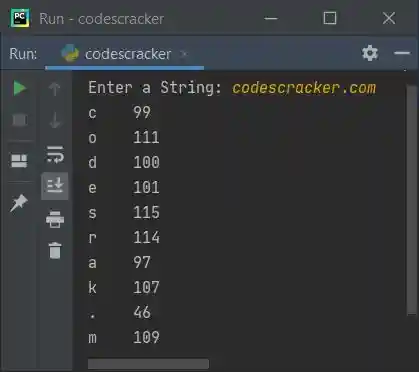
Note - In above program, the statement text = "".join(dict.fromkeys(text)), removes
duplicate characters from the string entered by user, stored in text.
Note - Dictionary does not allows duplicates.
Same Program in Other Languages
- Java Print ASCII Values Character
- C Print ASCII Values of Character
- C++ Print ASCII Values of Character
« Previous Program Next Program »
Liked this post? Share it!