Daniel Geng
I am interested in generative models, how we can control them, and novel ways to use them. I've also worked on levarging differentiable models of motion for image and video synthesis and understanding, and in the past I've worked on representation learning, multimodal learning, and reinforcement learning.
|
|
Motion Prompting: Controlling Video Generation with Motion Trajectories
Daniel Geng, Charles Herrmann, Junhwa Hur, Forrester Cole, Serena Zhang, Tobias Pfaff, Tatiana Lopez-Guevara, Carl Doersch, Yusuf Aytar, Michael Rubinstein, Chen Sun, Oliver Wang, Andrew Owens, Deqing Sun CVPR, 2025 (Oral) We train a video generation to be conditioned on motion, and then prompt it with motion prompts, elliciting a wide range of behavior. arXiv / webpage |
|
|
Images that Sound: Composing Images and Sounds on a Single Canvas
Ziyang Chen, Daniel Geng, Andrew Owens NeurIPS, 2024 We use diffusion models to make spectrograms that look like natural images, but also sound like natural sounds. arXiv / webpage / code |
|
|
Factorized Diffusion: Perceptual Illusions by Noise Decomposition
Daniel Geng*, Inbum Park*, Andrew Owens ECCV, 2024 Sister project of "Visual Anagrams." Another zero-shot method for making more types of optical illusions with diffusion models, with connections to spatial and composition control of diffusion models, and inverse problems. arXiv / webpage / code |
|
|
Visual Anagrams: Synthesizing Multi-View Optical Illusions with Diffusion Models
Daniel Geng, Inbum Park, Andrew Owens CVPR, 2024 (Oral) A simple, zero-shot method to synthesize optical illusions from diffusion models. We introduce Visual Anagrams—images that change appearance under a permutation of pixels. arXiv / webpage / code / colab |
|
|
Motion Guidance: Diffusion-Based Image Editing with Differentiable Motion Estimators
Daniel Geng, Andrew Owens ICLR, 2024 We guide diffusion sampling using off-the-shelf optical flow networks. This enables zero-shot motion based image editing. arXiv / webpage / code |
|
|
Self-Supervised Motion Magnification by Backpropagating Through Optical Flow
Daniel Geng*, Zhaoying Pan*, Andrew Owens NeurIPS, 2023 By differentiating through off-the-shelf optical flow networks we can train motion magnification models in a fully self-supervised manner. arXiv / webpage / code |
|
|
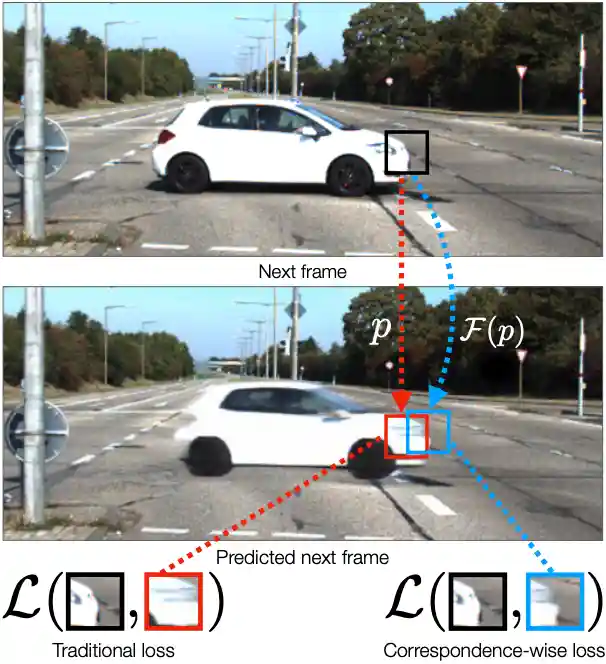
Comparing Correspondences: Video Prediction with Correspondence-wise Losses
Daniel Geng, Max Hamilton, Andrew Owens CVPR, 2022 Pixelwise losses compare pixels by absolute location. Instead, comparing pixels to their semantic correspondences surprisingly yields better results. arXiv / webpage / code |
|
|
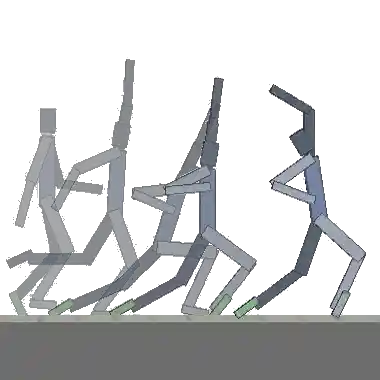
SMiRL: Surprise Minimizing RL in Dynamic Environments
Glen Berseth, Daniel Geng, Coline Devin, Nicholas Rhinehart, Chelsea Finn, Dinesh Jayaraman, Sergey Levine ICLR, 2021 (Oral) Life seeks order. If we reward an agent for stability do we also get interesting emergent behavior? arXiv / webpage / oral |
|
|
Plan Arithmetic: Compositional Plan Vectors for Multi-task Control
Coline Devin, Daniel Geng, Trevor Darrell, Pieter Abbeel, Sergey Levine NeurIPS, 2019 Learning a composable representation of tasks aids in long-horizon generalization of a goal-conditioned policy. arXiv / webpage / short video / code |


Website template from Jon Barron.
Last updated Apr 2025.