July
This article is about the month. For other uses, see July (disambiguation).
"Jul." redirects here. For other uses, see Jul.
| << | July | >> | ||||
|---|---|---|---|---|---|---|
| Su | Mo | Tu | We | Th | Fr | Sa |
| 1 | 2 | 3 | ||||
| 4 | 5 | 6 | 7 | 8 | 9 | 10 |
| 11 | 12 | 13 | 14 | 15 | 16 | 17 |
| 18 | 19 | 20 | 21 | 22 | 23 | 24 |
| 25 | 26 | 27 | 28 | 29 | 30 | 31 |
| 2021 | ||||||
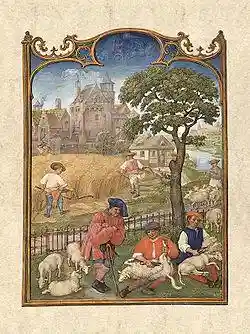
July is the seventh month of the year (between June and August) in the Julian and Gregorian Calendars and the fourth of seven months to have a length of 31 days. It was named by the Roman Senate in honour of Roman general Julius Caesar, it being the month of his birth. Prior to that, it was called Quintilis, being the fifth month of the 10-month calendar.
It is on average the warmest month in most of the Northern Hemisphere, where it is the second month of summer, and the coldest month in much of the Southern Hemisphere, where it is the second month of winter. The second half of the year commences in July. In the Southern Hemisphere, July is the seasonal equivalent of January in the Northern hemisphere.
July begins on the same day of the week as April as well as January in leap years. In common years, no other month ends on the same day of the week as July, but January does in leap years. In Additionally, in common years, July begins and ends on the same day of the week as October and ends on the same day of the week as February of the previous year, and in leap years, it begins and ends on the same day of the week as May of the previous year. In years before common years, July begins on the same day of the week as September and December of the following year and ends on the same day of the week as April and December of the following year. In years before leap years, July begins on the same day of the week as June of the following year and ends on the same day of the week as September of the following year. In common years preceded by common years, July begins and ends on the same day of the week as January of the previous year.
"Dog days" are considered to begin in early July in the Northern Hemisphere, when the hot sultry weather of summer usually starts. Spring lambs born in late winter or early spring are usually sold before 1 July.
July is the traditional period known as "fence month," the closed season for deer in England. The end of England's High Court of Justice Trinity Term takes place on 31 July. July is also the time in which the elections take place for the Japanese House of Councillors, held every three years and replacing half of its seats.
In Ancient Rome, the festival of Poplifugia was celebrated on 5 July, and Ludi Apollinares was held on 13 July and for several days afterwards. However, these dates do not correspond to the modern Gregorian calendar.
July symbols
- July's birthstone is the ruby, which symbolizes contentment.

Ruby gemstone
.jpg) Its birth flowers are the Larkspur or the Water Lily.
Its birth flowers are the Larkspur or the Water Lily.
- The zodiac signs for the month of July are Cancer (until July 22) and Leo (July 23 onwards).[1][2]
Observances
This list does not necessarily imply either official status nor general observance.
- Season of Emancipation 14 April to 23 August (Barbados)
- Honor America Days: 14 June to 4 July (United States)
Month-long observances
- In Catholic tradition, July is the Month of the Most Precious Blood of Jesus.
- Group B Strep Awareness Month (United States, United Kingdom)
- National Hot Dog Month (United States)
- National Ice Cream Month (United States)
Non-Gregorian observances, 2019
(All Baha'i, Islamic, and Jewish observances begin at the sundown prior to the date listed, and end at sundown of the date in question unless otherwise noted.)
- List of observances set by the Bahá'í calendar
- List of observances set by the Chinese calendar
- List of observances set by the Hebrew calendar
- List of observances set by the Islamic calendar
- List of observances set by the Solar Hijri calendar
.jpg)
Movable observances, 2020
- Phi Ta Khon (Dan Sai, Loei province, Isan, Thailand) – Dates are selected by village mediums and can take place anywhere between March and July.
- Ra o te Ui Ariki (Cook Islands) July 6[3]
- Collector Car Appreciation Day (United States) July 10
- Senior Citizen's Day (Kiribati) July 11 [4]
- Shark Week July 28 (United States)
- Earth Overshoot Day: July 29
- See also Movable Western Christian observances
- See also Movable Eastern Christian observances
First Friday: July 3
- Fishermen's Holiday (Marshall Islands)
First Saturday: July 4
- American Independence Day
- Día del Amigo (Peru)
- International Co-operative Day
- International Free Hugs Day
First Saturday and Sunday: July 4–5
First Sunday: July 5
Sunday closest to 2 July: July 5
First full week in July: July 5–11
- NAIDOC Week (Australia)
First Monday: July 6
- CARICOM Day (Guyana)
- Heroes' Day (Zambia)
- Mother's Day (South Sudan)
- National Day (Cayman Islands)
5 July or following Monday if it's a weekend: July 6
Day after first Monday: July 7
- Unity Day (Zambia)
Second Thursday: July 9
- National Tree Day (Mexico)
Second Sunday: July 12
- Father's Day (Uruguay)
- Sea Sunday (Western Christianity)
Nearest Sunday to 11 July: July 12
Third Monday
- Birthday of Don Luis Muñoz Rivera (Puerto Rico, United States)
- Children's Day (Cuba, Panama, and Venezuela)
- Galla Bayramy (Turkmenistan)
- Marine Day (Japan)
- Presidents' Day (Botswana)
Third Sunday: July 19
- Galla Bayramy (Turkmenistan)
- National Ice Cream Day (United States)
Second to last Sunday in July and the following two weeks: July 19-August 1
Third Tuesday: July 20
- Birthday of Don Luis Muñoz Rivera (Puerto Rico, United States)
- Mandela Day (South Africa)
Fourth Sunday: July 26
Friday preceding the Fourth Saturday and the following Sunday: July 24-August 2
- Tobata Gion Yamagasa festival (Tobata, Japan)
Fourth Thursday: July 28
- National Chili Dog Day (United States)
Last Saturday: July 25
- Black Saturday (France)
- National Dance Day (United States)
Last Sunday: July 30
- Father's Day (Dominican Republic)
- National Tree Day (Australia)
- Navy Day (Russia)
- Reek Sunday (Ireland)
Thursday before the first Monday: July 30
Following Friday: July 31
Last Friday: July 31
- National Schools Tree Day (Australia)
- System Administrator Appreciation Day
Fixed Gregorian observances
- July 1
- Armed Forces Day (Singapore)
- Canada Day (Canada)
- Children's Day (Pakistan)
- Communist Party of China Founding Day (People's Republic of China)
- Day of Officials and Civil Servants (Hungary)
- Doctors' Day (India)
- Emancipation Day (Netherlands Antilles)
- Engineer's Day (Bahrain, Mexico)
- Feast of the Most Precious Blood (removed from official Roman Catholic calendar since 1969)
- Hong Kong Special Administrative Region Establishment Day (Hong Kong, China)
- Independence Day (Burundi)
- Independence Day (Rwanda)
- Independence Day (Somalia)
- International Tartan Day
- July Morning (Bulgaria)
- Keti Koti (Emancipation Day) (Suriname)
- Madeira Day (Madeira, Portugal)
- Moving Day (Quebec) (Canada)
- National Creative Ice Cream Flavor Day (United States)
- National Gingersnap Day (United States)
- Newfoundland and Labrador Memorial Day
- Republic Day (Ghana)
- Sir Seretse Khama Day (Botswana)
- Territory Day (British Virgin Islands)
- Van Mahotsav, celebrated until July 7 (India)
- July 2
- Flag Day (Curaçao) (Kingdom of the Netherlands)
- Palio di Provenzano (Siena, Italy)
- Police Day (Azerbaijan)
- World UFO Day
- July 3
- The start of the dog days according to the Old Farmer's Almanac but not according to established meaning in most European cultures.
- Emancipation Day (United States Virgin Islands)
- Independence Day (Belarus)
- Stay out of the Sun Day
- July 4
- Birthday of Queen Sonja (Norway)
- Dree Festival, celebrated until July 7 (Apatani people, Arunachal Pradesh, India)
- Independence Day (Abkhazia)
- Independence Day (United States)
- Liberation Day (Northern Mariana Islands)
- Liberation Day (Rwanda)
- Republic Day (Philippines)
- July 5
- Armed Forces Day (Venezuela)
- Bloody Thursday (International Longshore and Warehouse Union)
- Constitution Day (Armenia)
- Emancipation Day (New York City, United States)
- Independence Day (Algeria)
- Independence Day (Cape Verde)
- Independence Day (Venezuela)
- Saints Cyril and Methodius Feast Day (celebrated as a public holiday in Slovakia)
- X-Day (Church of the SubGenius)
- July 6
- Constitution Day (Cayman Islands)
- Day of the Capital (Kazakhstan)
- National Fried Chicken Day (United States)
- Independence Day (Comoros)
- Independence Day/Republic Day, (Malawi)
- Jan Hus Day (Czech Republic)
- Kupala Night (Poland, Russia, Belarus and Ukraine)
- Statehood Day (Lithuania)
- Teachers' Day (Peru)
- July 7
- Independence Day (Solomon Islands)
- Ivan Kupala Day (Belarus, Poland, Russia, Ukraine)
- Saba Saba Day (Tanzania)
- Tanabata (Japan, Gregorian date, some follow the traditional calendar)
- World Chocolate Day
- July 8
- Air Force and Air Defense Forces Day (Ukraine)
- Peter and Fevronia Day (Russian Orthodox)
- July 9
- Arbor Day (Cambodia)
- Constitution Day (Australia)
- Constitution Day (Palau)
- Constitutionalist Revolution Day (São Paulo)
- Day of the Employees of the Diplomatic Service (Azerbaijan)
- Independence Day (Argentina, South Sudan)
- Nunavut Day (Nunavut)
- July 10
- July 11
- China National Maritime Day (China)
- Day of the Flemish Community (Flemish Community of Belgium)
- Eleventh Night (Northern Ireland)
- Gospel Day (Kiribati)
- Imamat Day (Isma'ilism)
- World Population Day (International)
- July 12
- Birthday of the Heir to the Crown of Tonga (Tonga)
- Independence Day (Kiribati, São Tomé and Príncipe)
- Malala Day
- The Twelfth, also known as Orangemen's Day (Northern Ireland, Newfoundland and Labrador)
- July 13
- Statehood Day (Montenegro)
- July 14
- Bastille Day (France and French dependencies)
- Birthday of Victoria, Crown Princess of Sweden, an official flag day (Sweden)
- Hondurans' Day (Honduras)
- Republic Day (Iraq)
- July 15
- Bon Festival (Kantō region, Japan)
- Elderly Men Day (Kiribati)
- Festival of Santa Rosalia (Palermo, Sicily)
- Sultan's Birthday (Brunei Darussalam)
- July 16
- Engineer's Day (Honduras)
- Holocaust Memorial Day (France)
- July 17
- International Firgun Day
- Constitution Day (Finland)
- July 18
- Constitution Day (Uruguay)
- Nelson Mandela International Day
- July 19
- Liberation Day (Nicaragua)
- Martyrs' Day (Burma)
- July 20
- Día del Amigo (Argentina)
- Engineer's Day (Costa Rica)
- Independence Day (Colombia)
- Lempira's Day (Honduras)
- Tree Planting Day (Central African Republic)
- July 21
- Belgian National Day
- Racial Harmony Day (Singapore)
- July 22
- Foundation Day in Cleveland
- July 23
- Birthday of Haile Selassie (Rastafari)
- Children's Day (Indonesia)
- Flag Day (Abkhazia)
- National Hot Dog Day (United States)
- National Remembrance Day (Papua New Guinea)
- Renaissance Day (Oman)
- Revolution Day (Egypt)
- July 24
- Children's Day (Vanuatu)
- Navy Day (Venezuela)
- Pioneer Day (Utah) (United States)
- Simón Bolívar Day (Ecuador, Venezuela, Colombia, and Bolivia)
- July 25
- Guanacaste Day (Costa Rica)
- National Day of Galicia (Galicia (Spain))
- National Baha'i Day (Jamaica)
- Puerto Rico Constitution Day (Puerto Rico)
- Republic Day (Tunisia)
- Revolution Day (Egypt)
- July 26
- Day of National Significance (Barbados)
- Day of the National Rebellion (Cuba)
- Independence Day (Liberia)
- Independence Day (Maldives)
- Kargil Victory Day (India)
- July 27
- Day of Victory in the Great Fatherland Liberation War (North Korea)
- Iglesia ni Cristo Day (the Philippines)
- José Celso Barbosa Day (Puerto Rico)
- Martyrs and Wounded Soldiers Day (Vietnam)
- National Korean War Veterans Armistice Day (United States)
- National Sleepy Head Day (Finland)
- July 28
- Day of Commemoration of the Great Upheaval (Canada)
- Fiestas Patrias (Peru)
- Liberation Day (San Marino)
- Ólavsøka Eve (Faroe Islands)
- World Hepatitis Day
- July 29
- July 30
- Feast of the Throne (Morocco)
- Día del Amigo (Paraguay)
- Independence Day (Vanuatu)
- Martyrs Day (South Sudan)
- Feast of the Throne (Morocco)
- July 31
- Saint Ignatius of Loyola
- Ka Hae Hawaiʻi Day (Hawaii, United States)
- Martyrdom Day of Shahid Udham Singh (Haryana and Punjab, India)
- Treasury Day (Poland)
- Warriors' Day (Malaysia)
See also
References
- ^ The Earth passed the junction of the signs at 08:36 UT/GMT July 22, 2020, and will pass it again at 14:26 UT/GMT July 22, 2021.
- ^ "Astrology Calendar", yourzodiacsign. Signs in UT/GMT for 1950–2030.
- ^ https://anydayguide.com/calendar/2202
- ^ https://anydayguide.com/calendar/2223
External links
This article is copied from an article on Wikipedia® - the free encyclopedia created and edited by its online user community. The text was not checked or edited by anyone on our staff. Although the vast majority of Wikipedia® encyclopedia articles provide accurate and timely information, please do not assume the accuracy of any particular article. This article is distributed under the terms of GNU Free Documentation License.