148. 排序链表
题目描述
给你链表的头结点 head ,请将其按 升序 排列并返回 排序后的链表 。
进阶:
- 你可以在
O(n log n)时间复杂度和常数级空间复杂度下,对链表进行排序吗?
示例 1:

输入:head = [4,2,1,3]
输出:[1,2,3,4]
示例 2:
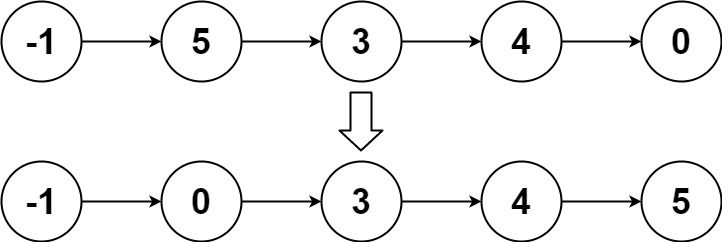
输入:head = [-1,5,3,4,0]
输出:[-1,0,3,4,5]
示例 3:
输入:head = []
输出:[]
提示:
- 链表中节点的数目在范围
[0, 5 * 104]内 -105 <= Node.val <= 105
解法
先用快慢指针找到链表中点,然后分成左右两个链表,递归排序左右链表。最后合并两个排序的链表即可。
Python3
# Definition for singly-linked list.
# class ListNode:
#     def __init__(self, val=0, next=None):
#         self.val = val
#         self.next = next
class Solution:
    def sortList(self, head: ListNode) -> ListNode:
        if head is None or head.next is None:
            return head
        slow, fast = head, head.next
        while fast and fast.next:
            slow, fast = slow.next, fast.next.next
        t = slow.next
        slow.next = None
        l1, l2 = self.sortList(head), self.sortList(t)
        dummy = ListNode()
        cur = dummy
        while l1 and l2:
            if l1.val <= l2.val:
                cur.next = l1
                l1 = l1.next
            else:
                cur.next = l2
                l2 = l2.next
            cur = cur.next
        cur.next = l1 or l2
        return dummy.next
Java
/**
 * Definition for singly-linked list.
 * public class ListNode {
 *     int val;
 *     ListNode next;
 *     ListNode() {}
 *     ListNode(int val) { this.val = val; }
 *     ListNode(int val, ListNode next) { this.val = val; this.next = next; }
 * }
 */
class Solution {
    public ListNode sortList(ListNode head) {
        if (head == null || head.next == null) {
            return head;
        }
        ListNode slow = head, fast = head.next;
        while (fast != null && fast.next != null) {
            slow = slow.next;
            fast = fast.next.next;
        }
        ListNode t = slow.next;
        slow.next = null;
        ListNode l1 = sortList(head);
        ListNode l2 = sortList(t);
        ListNode dummy = new ListNode(0);
        ListNode cur = dummy;
        while (l1 != null && l2 != null) {
            if (l1.val <= l2.val) {
                cur.next = l1;
                l1 = l1.next;
            } else {
                cur.next = l2;
                l2 = l2.next;
            }
            cur = cur.next;
        }
        cur.next = l1 == null ? l2 : l1;
        return dummy.next;
    }
}