Johannes Hörner | home
I am a data scientist working on air quality modeling. Previously, I completed my PhD at the Department of Meteorology and Geophysics at the Universtity of Vienna on the topic of Snowball Earth.
publications
-
Making Sense of Bifurcation Diagrams: A New Framework to Understand the Roles of Clouds and Bare Sea Ice for Waterbelt States
Journal of Geophysical Research: Atmospheres, 2025
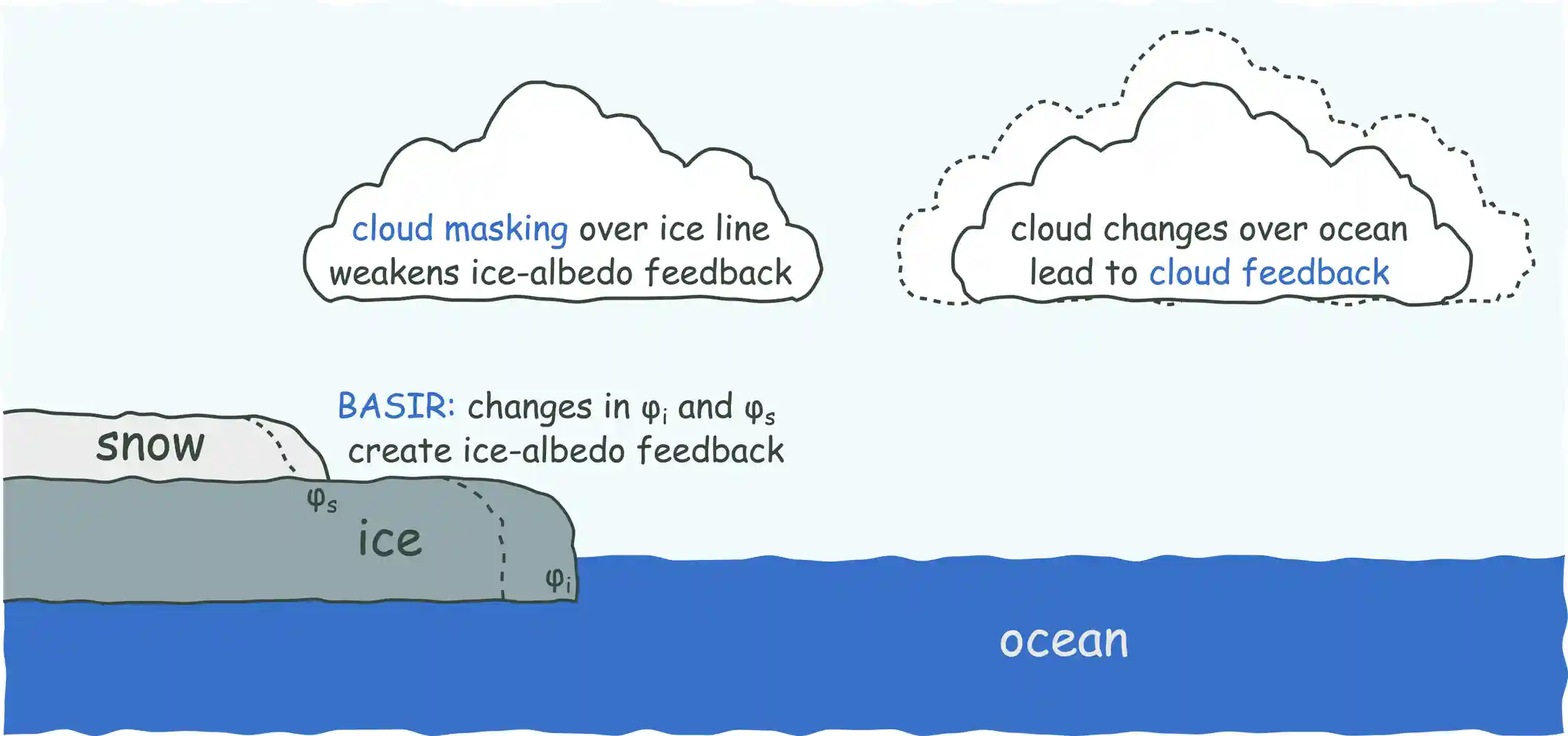
Earth has experienced several pan-glaciations in its history, often interpreted as hard Snowball Earth periods with global ice cover. Alternatively, waterbelt states with a narrow equatorial strip of ice-free ocean provide a compelling explanation for the survival of life during these extreme glaciations. In this study, we establish a framework to quantify three atmospheric factors that influence waterbelt states: the spatial extent of bare dark sea ice set by the pattern of surface precipitation and evaporation, cloud masking of the ice-albedo feedback, and cloud shortwave feedback. We first explore these factors in the Budyko-Sellers energy balance model, and then investigate them in simulations with three versions of the ICON global climate model. This allows us to relate differences in the waterbelt states between ICON versions to the three factors. A broader Hadley circulation shifts the boundary between snow-covered and bare sea ice poleward, leading to waterbelt states whose ice lines are at higher latitudes. Cloud masking always works in favor of stable waterbelt states by weakening the ice-albedo feedback. The role of the cloud shortwave feedback, in contrast, depends on the ICON version: in one version, increasing cloud condensate over the low-latitude open ocean destabilizes waterbelt states and creates an additional small hysteresis. In the other two versions, the cloud shortwave feedback is stabilizing. While our study does not answer which of the model versions is most realistic, it provides a quantitative framework for understanding the atmospheric mechanisms that govern the existence and hysteresis of waterbelt states.
-
Instantaneous Radiative Effect of Surface Longwave Spectral Emissivity in a Snowball Earth Simulation
Daniel S. Zetterberg, Xianglei Huang, Johannes Hörner, Aiko Voigt, and Xiuhong Chen
Journal of Geophysical Research: Atmospheres, 2025
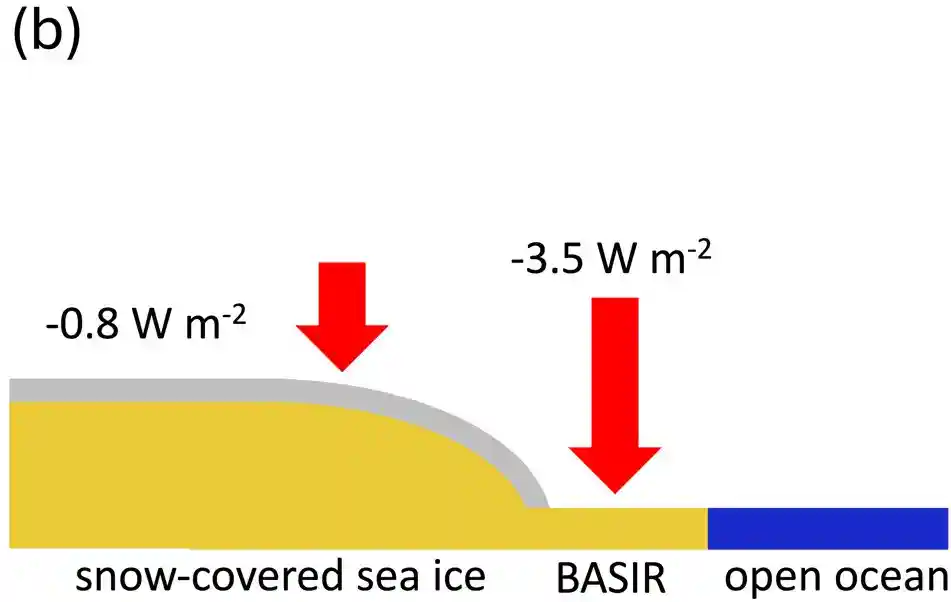
Spectrally dependent emission by the surface (i.e., surface spectral emissivity) is commonly ignored by current climate models. Surface spectral emissivity matters more in cold and dry environments than in hot and humid environments. Recent modeling studies confirmed that, for current climate simulations, this process affects the polar climate more than the extra-polar climate. As for the Snowball Earth, a period characterized by global polar-like conditions of extreme cold and low humidity, including surface spectral emissivity could alter the simulated global radiation budget. This, in turn, could affect the simulated climate of the Snowball Earth. Here, we use an aqua-planet slab-ocean simulation of Snowball Earth by the ICON model to perform offline radiative transfer calculations to quantify such impact on the outgoing longwave radiation (OLR). The offline radiative transfer model is used to compute the clear-sky OLR for two surfaces that would be present in the extremely cold simulation: ice and snow. Compared to the results with assumed blackbody surface, the global mean OLR decreases by 2.9 and 1.0 W m−2 for ice and snow surfaces, respectively. The impact of surface spectral emissivity on the OLR is strongest at the equator and weakens toward the poles, presenting a noticeable meridional gradient. Effects of surface emissivity are also larger during the summer than the winter. The radiative effects of this often-neglected process would be small for a snow-covered globe but could be important for climate states with exposed ice, particularly Jormungand states, as well as simulations of other cold and dry climates.
-
Sea-ice thermodynamics can determine waterbelt scenarios for Snowball Earth
Johannes Hörner, and Aiko Voigt
Earth System Dynamics, 2024
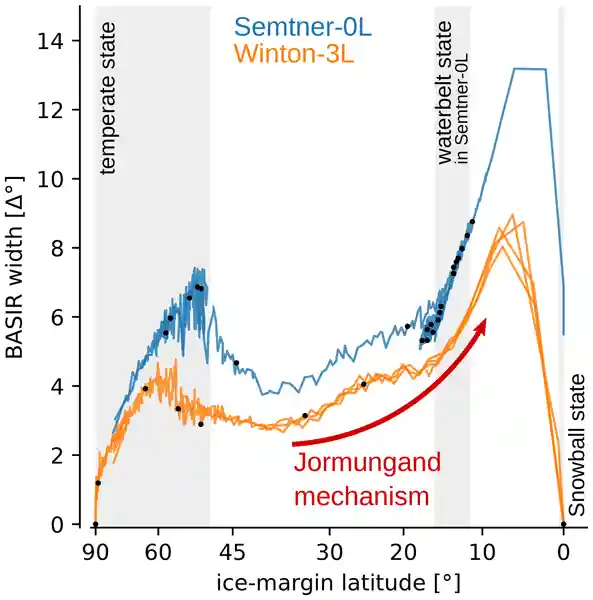
Snowball Earth refers to multiple periods in the Neoproterozoic during which geological evidence indicates that the Earth was largely covered in ice. A Snowball Earth results from a runaway ice–albedo feedback, but there is an ongoing debate about how the feedback stopped: with fully ice-covered oceans or with a narrow strip of open water around the Equator. The latter states are called waterbelt states and are an attractive explanation for Snowball Earth events because they provide a refugium for the survival of photosynthetic aquatic life, while still explaining Neoproterozoic geology. Waterbelt states can be stabilized by bare sea ice in the subtropical desert regions, which lowers the surface albedo and stops the runaway ice–albedo feedback. However, the choice of sea-ice model in climate simulations significantly impacts snow cover on ice and, consequently, surface albedo. Here, we investigate the robustness of waterbelt states with respect to the thermodynamical representation of sea ice. We compare two thermodynamical sea-ice models, an idealized zero-layer Semtner model, in which sea ice is always in equilibrium with the atmosphere and ocean, and a three-layer Winton model that is more sophisticated and takes into account the heat capacity of ice. We deploy the global icosahedral non-hydrostatic atmospheric (ICON-A) model in an idealized aquaplanet setup and calculate a comprehensive set of simulations to determine the extent of the waterbelt hysteresis. We find that the thermodynamic representation of sea ice strongly influences snow cover on sea ice over the range of all simulated climate states. Including heat capacity by using the three-layer Winton model increases snow cover and enhances the ice–albedo feedback. The waterbelt hysteresis found for the zero-layer model disappears in the three-layer model, and no stable waterbelt states are found. This questions the relevance of a subtropical bare sea-ice region for waterbelt states and might help explain drastically varying model results on waterbelt states in the literature.
-
How does cloud-radiative heating over the North Atlantic change with grid spacing, convective parameterization, and microphysics scheme in ICON version 2.1.00?
Sylvia Sullivan, Behrooz Keshtgar, Nicole Albern, Elzina Bala, Christoph Braun, Anubhav Choudhary, Johannes Hörner, Hilke Lentink, Georgios Papavasileiou, and Aiko Voigt
Geoscientific Model Development, 2023
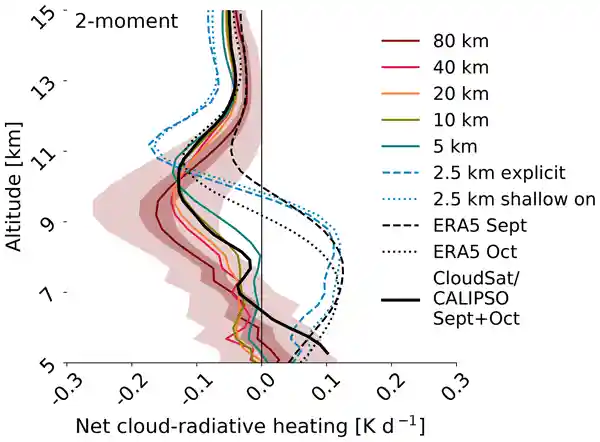
Cloud-radiative heating (CRH) within the atmosphere and its changes with warming affect the large-scale atmospheric winds in a myriad of ways, such that reliable predictions and projections of circulation require reliable calculations of CRH. In order to assess the sensitivities of upper-tropospheric midlatitude CRH to model settings, we perform a series of simulations with the ICOsahedral Nonhydrostatic Model (ICON) over the North Atlantic using six different grid spacings, parameterized and explicit convection, and one- versus two-moment cloud microphysics. While sensitivity to grid spacing is limited, CRH profiles change dramatically with microphysics and convection schemes. These dependencies are interpreted via decomposition into cloud classes and examination of cloud properties and cloud-controlling factors within these different classes. We trace the model dependencies back to differences in the mass mixing ratios and number concentrations of cloud ice and snow, as well as vertical velocities. Which frozen species are radiatively active and the broadening of the vertical velocity distribution with explicit convection turn out to be crucial factors in altering the modeled CRH profiles.
-
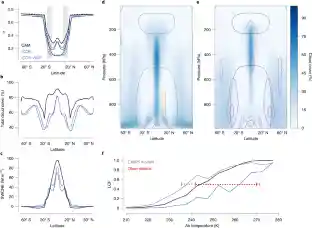
Ice-free tropical waterbelt for Snowball Earth events questioned by uncertain clouds
Christoph Braun, Johannes Hörner, Aiko Voigt, and Joaquim G. Pinto
Nature Geoscience, 2022
Geological evidence of active tropical glaciers reaching sea level during the Neoproterozoic (1,000–541 Ma), suggesting a global ocean completely covered in ice, was the key observation in the development of the hard Snowball Earth hypothesis. These conditions are hard to reconcile with the survival of complex marine life through Snowball Earth glaciations, which led to alternative waterbelt scenarios where a large-scale refugium was present in the form of a narrow ice-free strip in the tropical ocean. Here we assess whether a waterbelt scenario maintained by snow-free dark sea ice at low latitudes is plausible using simulations from two climate models run with a variety of cloud treatments in combination with an energy-balance model. Our simulations show that waterbelt states are not a robust and naturally emerging feature of Neoproterozoic climate. Intense shortwave reflection by mixed-phase clouds, in addition to a low albedo of bare sea ice, is needed for geologically relevant waterbelt states. Given the large uncertainty in mixed-phase clouds and their interaction with radiation, our results strongly question the idea that waterbelt scenarios can explain the Neoproterozoic geology. Hence, Neoproterozoic life has probably faced the harsh conditions of a hard Snowball Earth.
-
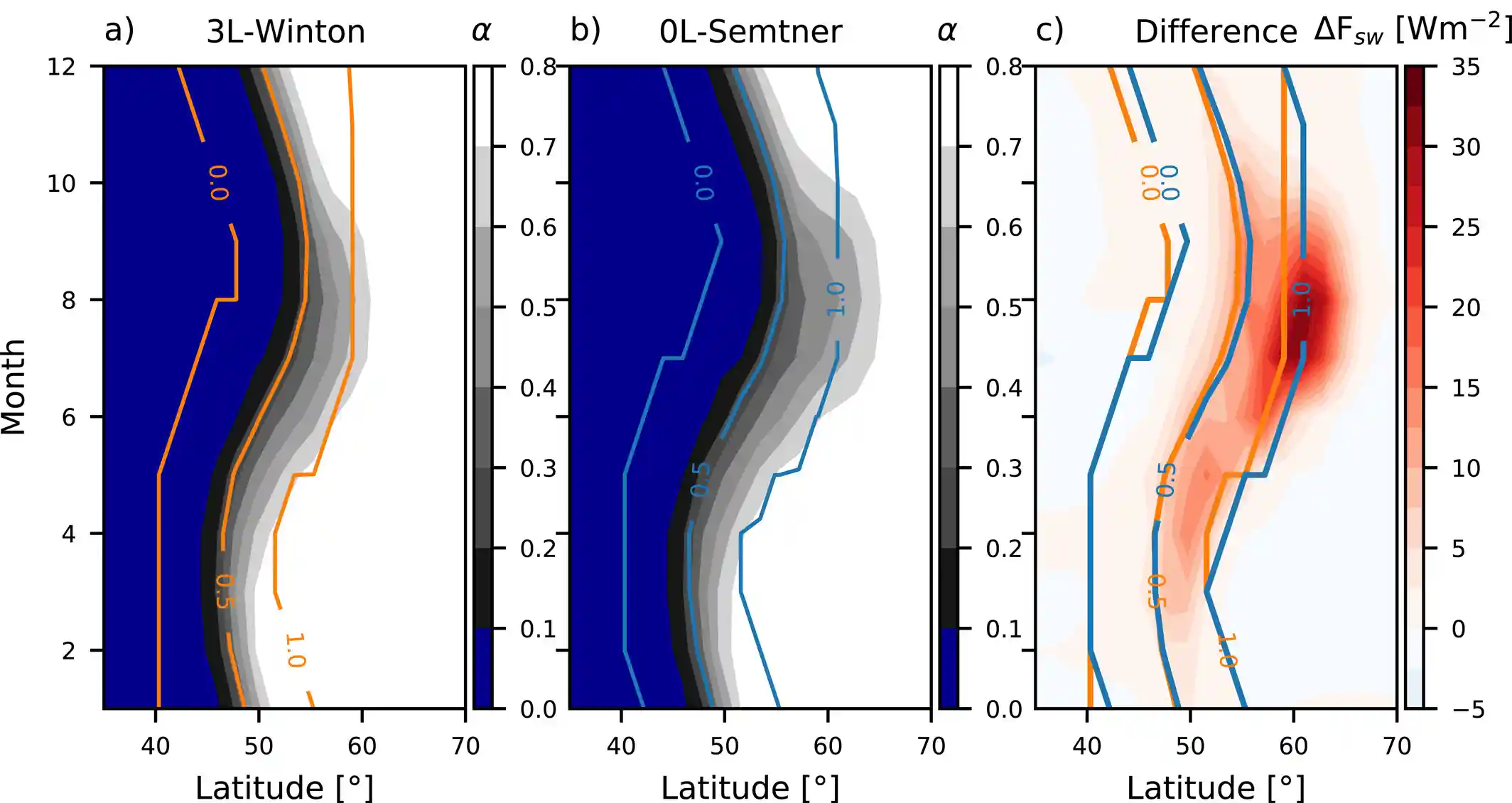
Snowball Earth initiation and the thermodynamics of sea ice
Johannes Hörner, Aiko Voigt, and Christoph Braun
Journal of Advances in Modeling Earth Systems, 2022
Snowball Earth is a hypothesized state in the deep past of Earth in which the ocean was completely or nearly completely covered by sea ice, resulting from a runaway ice-albedo feedback. Here, we address how the treatment of sea-ice thermodynamics affects the initiation of a Snowball Earth in the global climate model ICON-A run in an idealized slab-ocean aquaplanet setup. Specifically, we study the impact of vertical resolution and brine pockets of ice by comparing the 3-layer Winton and a 0-layer Semtner scheme, and we investigate the impact of limiting ice thickness to 5 m. The internal heat storage of ice is increased by higher vertical resolution and brine pockets, which weakens surface melting and increases global albedo by allowing snow and ice to persist longer into the summer season. The internal heat storage weakens the melt-ratchet effect, as is confirmed with offline simulations with the two ice schemes. The result is a substantially easier Snowball Earth initiation and an increase in the critical CO2 for Snowball initiation by 50%. Limiting ice thickness impedes Snowball initiation as the removal of excess ice leads to an artificial heat source. Yet, the impact is minor and critical CO2 is decreased by 5% only. The results show that while the sea-ice thickness limit plays only a minor role, the internal heat storage of ice represents an important factor for Snowball initiation and needs to be taken into account when modeling Snowball Earth initiation.
-
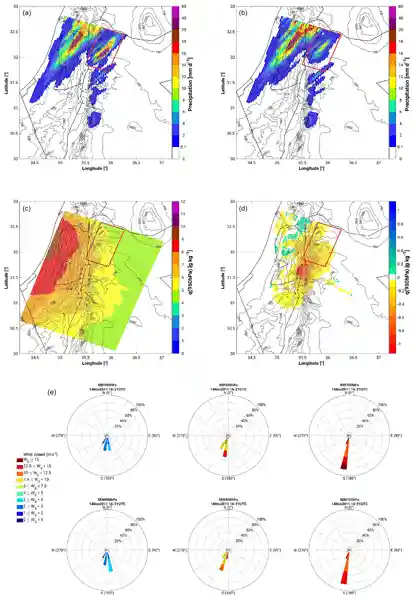
An idealized model sensitivity study on Dead Sea desertification with a focus on the impact on convection
Samiro Khodayar, and Johannes Hoerner
Atmospheric Chemistry and Physics, 2020
The Dead Sea desertification-threatened region is affected by continual lake level decline and occasional but life-endangering flash floods. Climate change has aggravated such issues in the past decades. In this study, the impact on local conditions leading to heavy precipitation from the changing conditions of the Dead Sea is investigated. Idealized sensitivity simulations with the high-resolution COSMO-CLM (COnsortium for Small-scale MOdelling and Climate Limited-area Modelling) and several numerical weather prediction (NWP) runs on an event timescale are performed on the Dead Sea area. The simulations are idealized in the sense that the Dead Sea model representation does not accurately represent the real conditions but those given by an external dataset. A reference or Dead Sea simulation covering the 2003–2013 period and a twin sensitivity or bare soil simulation in which the Dead Sea is set to bare soil are compared. NWP simulations focus on heavy precipitation events exhibiting relevant differences between the Dead Sea and the bare soil decadal realization to assess the impact on the underlying convection-related processes. The change in the conditions of the Dead Sea is seen to affect the atmospheric conditions leading to convection in two ways. (a) The local decrease in evaporation reduces moisture availability in the lower boundary layer locally and in the neighbouring regions, directly affecting atmospheric stability. Weaker updraughts characterize the drier and more stable atmosphere of the simulations in which the Dead Sea has been dried out. (b) Thermally driven wind system circulations and resulting divergence/convergence fields are altered, preventing in many occasions the initiation of convection because of the omission of convergence lines. On a decadal scale, the difference between the simulations suggests a weak decrease in evaporation, higher air temperatures and less precipitation (less than 0.5%).