Trending Papers - Hugging Face

new

Get trending papers in your email inbox once a day!

Get trending papers in your email inbox!

Subscribe

byAK and the research community

Submitted by

unilm

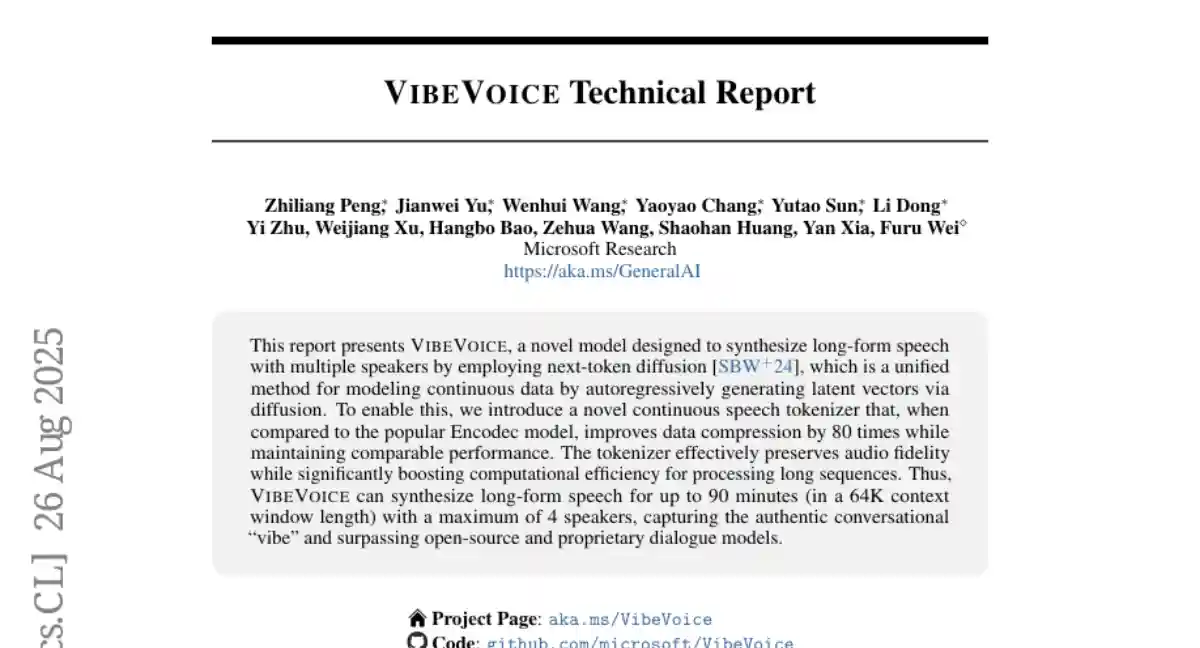
VibeVoice Technical Report

VibeVoice synthesizes long-form multi-speaker speech using next-token diffusion and a highly efficient continuous speech tokenizer, achieving superior performance and fidelity.

Submitted by

unilm

VibeVoice Technical Report

VibeVoice synthesizes long-form multi-speaker speech using next-token diffusion and a highly efficient continuous speech tokenizer, achieving superior performance and fidelity.

Submitted by

akhaliq

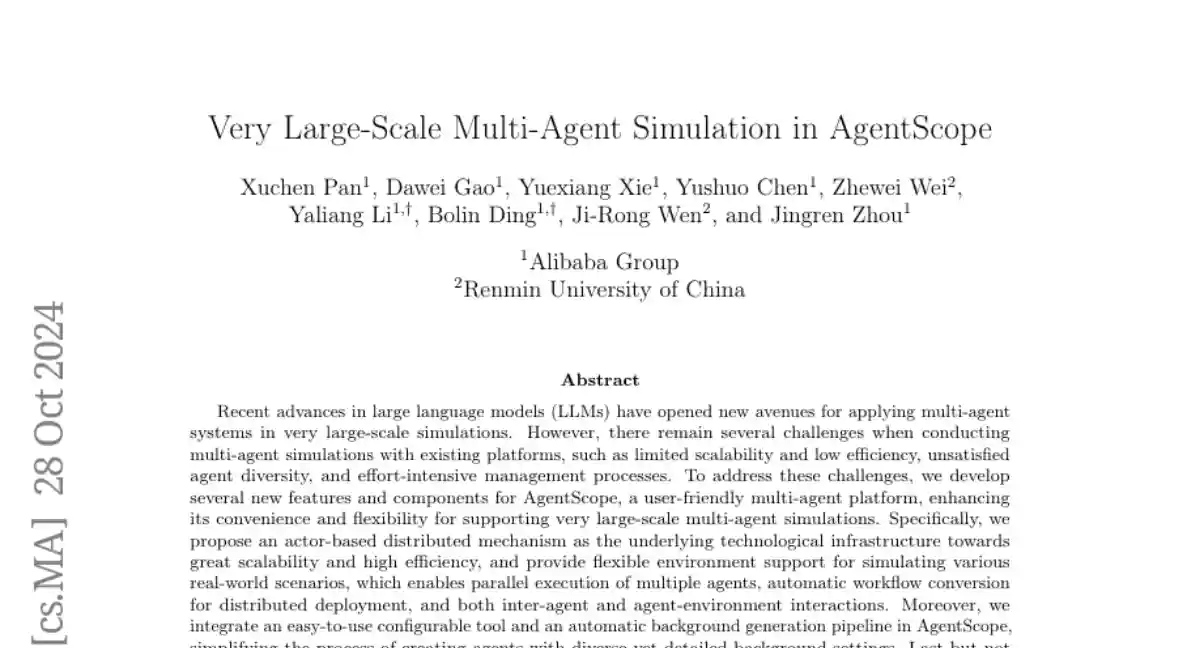
Very Large-Scale Multi-Agent Simulation in AgentScope

Enhancements to the AgentScope platform improve scalability, efficiency, and ease of use for large-scale multi-agent simulations through distributed mechanisms, flexible environments, and user-friendly tools.

· Published on Jul 25, 2024

Submitted by

akhaliq

Submitted by

taesiri

Submitted by

taesiri

Submitted by

taesiri

Submitted by

taesiri

Submitted by

yyamada

Submitted by

yyamada

Submitted by

taesiri

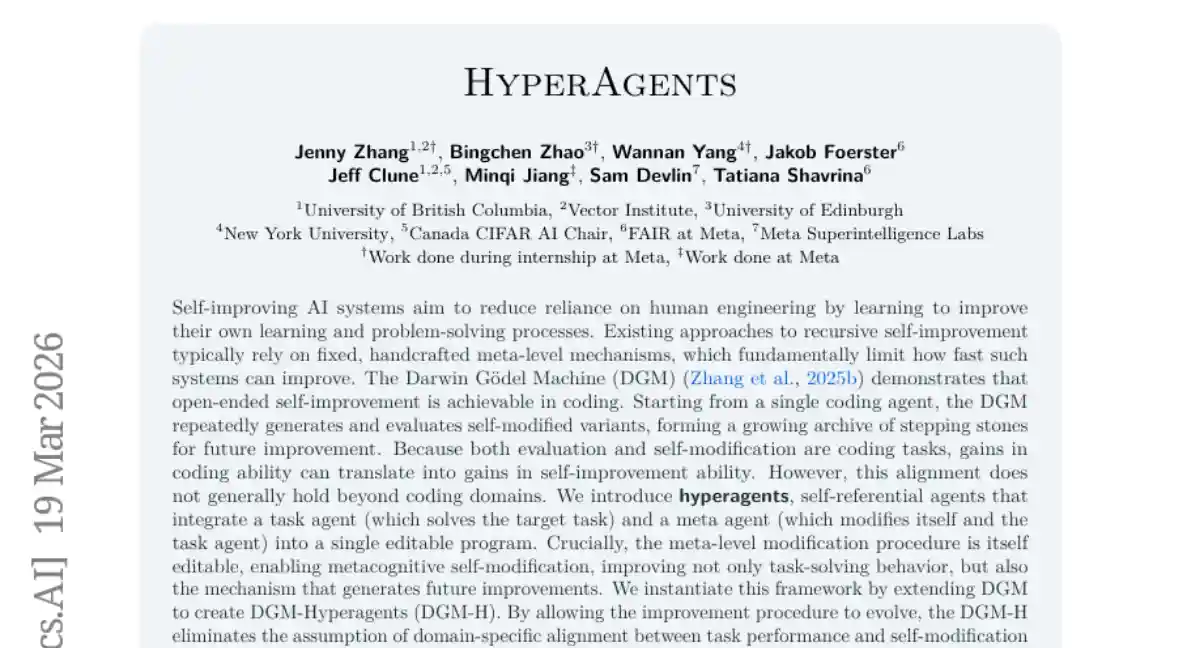
Hyperagents

Hyperagents represent a self-referential framework that integrates task and meta-agents into a single editable program, enabling metacognitive self-modification and open-ended improvement across diverse computational domains.

  • 8 authors

· Published on Mar 19, 2026

Submitted by

taesiri

Hyperagents

Hyperagents represent a self-referential framework that integrates task and meta-agents into a single editable program, enabling metacognitive self-modification and open-ended improvement across diverse computational domains.

Submitted by

daixufang

Submitted by

daixufang

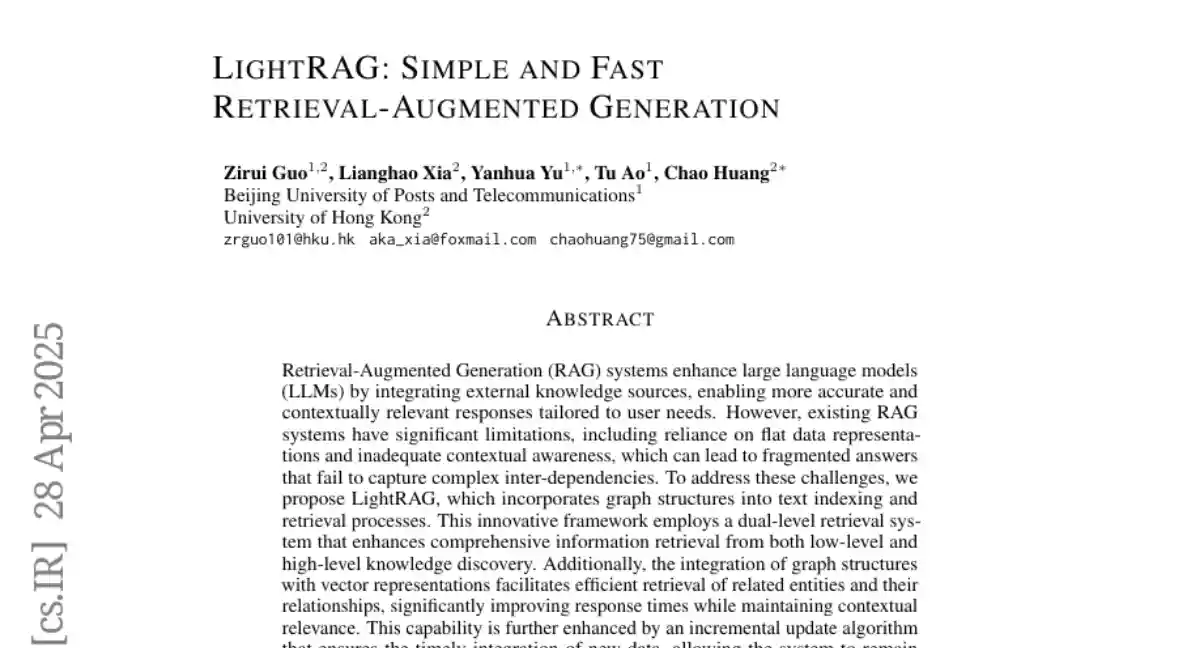
LightRAG: Simple and Fast Retrieval-Augmented Generation

LightRAG improves Retrieval-Augmented Generation by integrating graph structures for enhanced contextual awareness and efficient information retrieval, achieving better accuracy and response times.

  • 5 authors

· Published on Oct 8, 2024

Submitted by

ethanchern

Submitted by

ethanchern

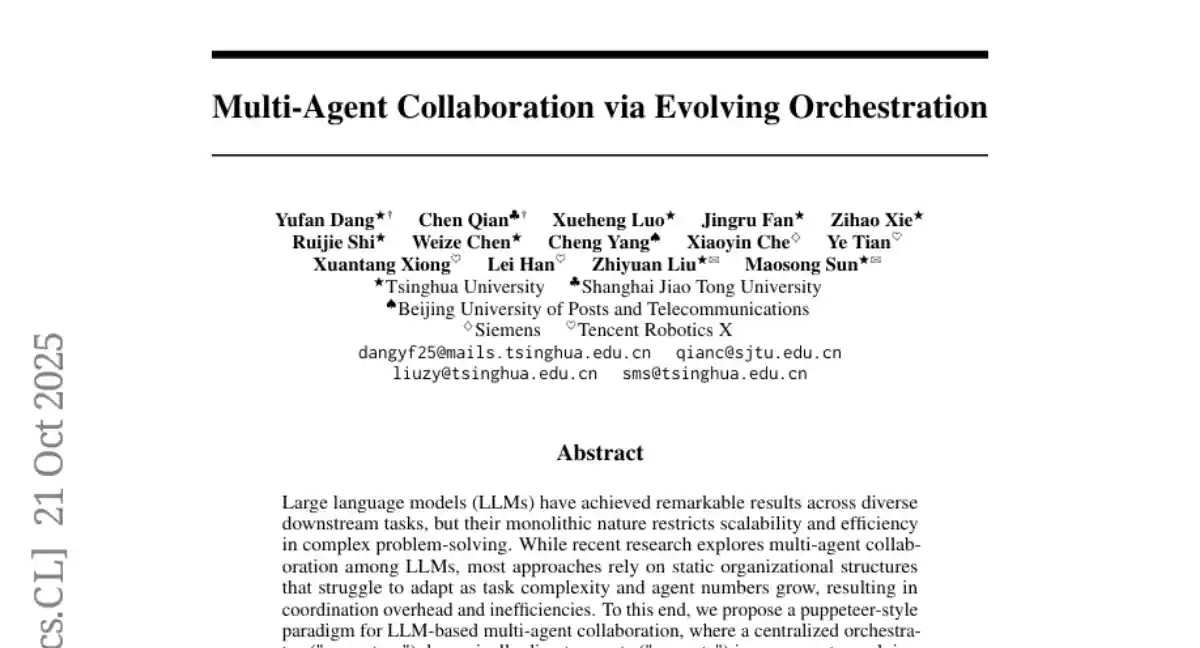
Multi-Agent Collaboration via Evolving Orchestration

A centralized orchestrator dynamically directs LLM agents via reinforcement learning, achieving superior multi-agent collaboration in varying tasks with reduced computational costs.

  • 14 authors

· Published on May 26, 2025

Multi-Agent Collaboration via Evolving Orchestration

A centralized orchestrator dynamically directs LLM agents via reinforcement learning, achieving superior multi-agent collaboration in varying tasks with reduced computational costs.

  • 14 authors

· May 26, 2025

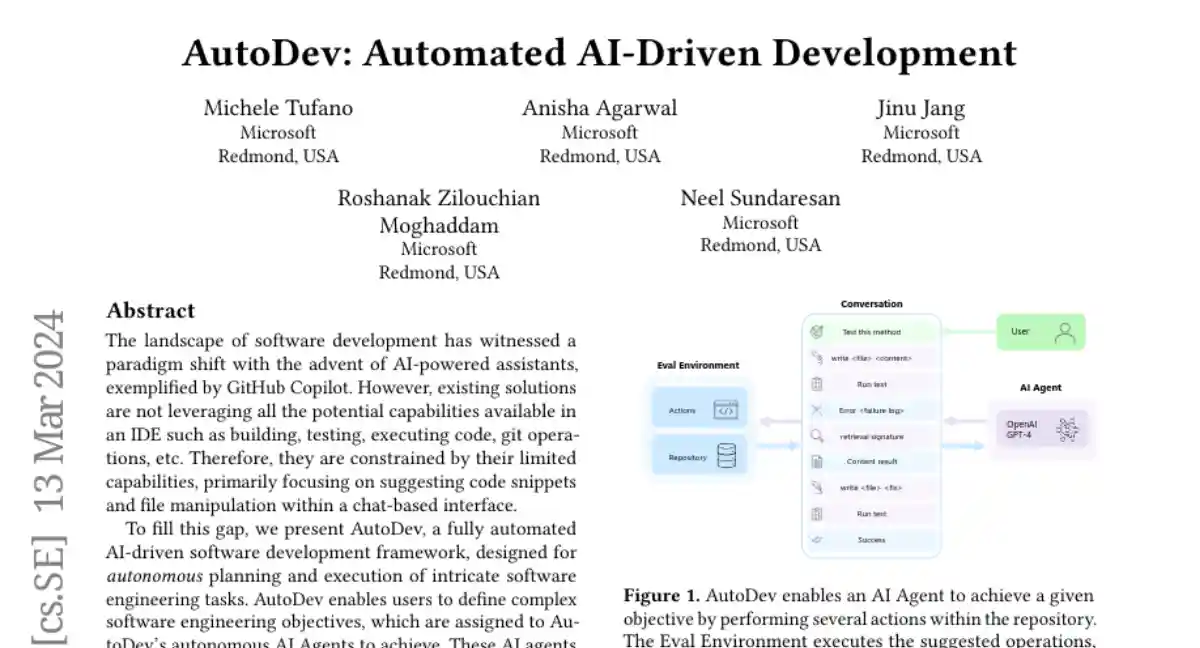
AutoDev: Automated AI-Driven Development

AutoDev is an AI-driven software development framework that automates complex engineering tasks within a secure Docker environment, achieving high performance in code and test generation.

  • 5 authors

· Published on Mar 13, 2024

AutoDev: Automated AI-Driven Development

AutoDev is an AI-driven software development framework that automates complex engineering tasks within a secure Docker environment, achieving high performance in code and test generation.

Submitted by

akhaliq

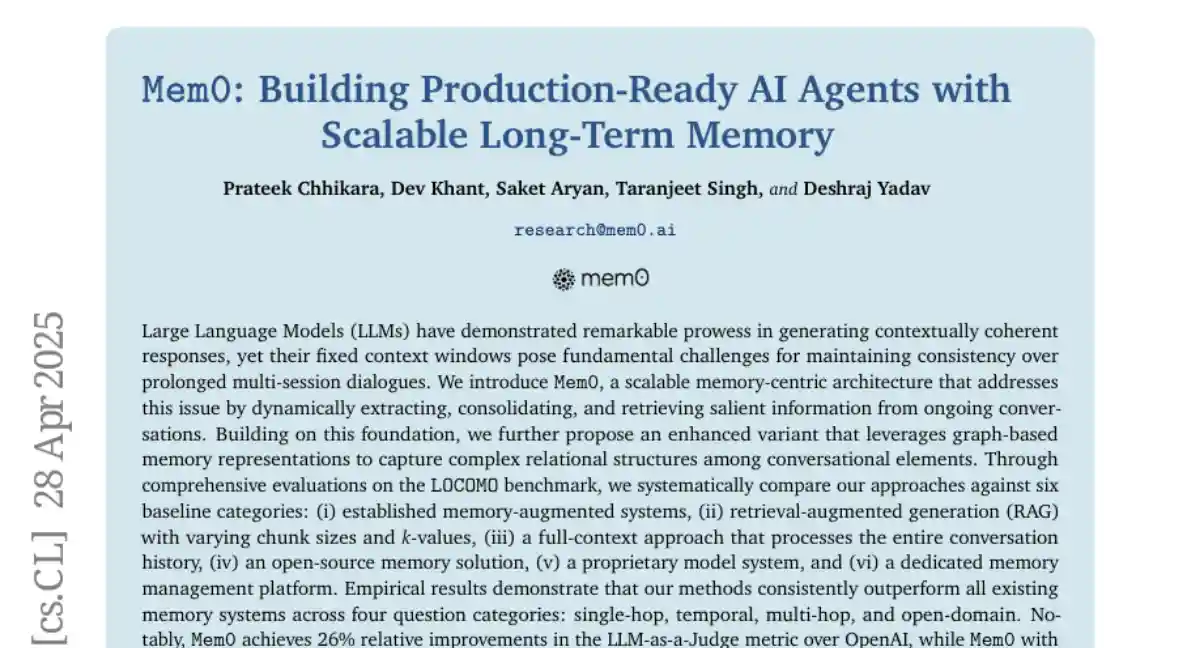
Mem0: Building Production-Ready AI Agents with Scalable Long-Term Memory

Mem0, a memory-centric architecture with graph-based memory, enhances long-term conversational coherence in LLMs by efficiently extracting, consolidating, and retrieving information, outperforming existing memory systems in terms of accuracy and computational efficiency.

· Published on Apr 28, 2025

Submitted by

akhaliq

Submitted by

taesiri

Submitted by

taesiri

Submitted by

akhaliq

Submitted by

akhaliq

Submitted by

Huaxiu

Submitted by

Huaxiu

Submitted by

Wyattz23

Submitted by

Wyattz23

Submitted by

akhaliq

Submitted by

akhaliq

Submitted by

youganglyu

Submitted by

youganglyu

Submitted by

ventr1c

Position: Agentic Evolution is the Path to Evolving LLMs

Large language models face limitations in adapting to changing real-world environments, necessitating a new approach called agentic evolution that treats deployment-time improvement as a goal-directed optimization process.

  • 14 authors

· Published on Jan 30, 2026

Submitted by

ventr1c

Position: Agentic Evolution is the Path to Evolving LLMs

Large language models face limitations in adapting to changing real-world environments, necessitating a new approach called agentic evolution that treats deployment-time improvement as a goal-directed optimization process.

  • 14 authors

· Jan 30, 2026

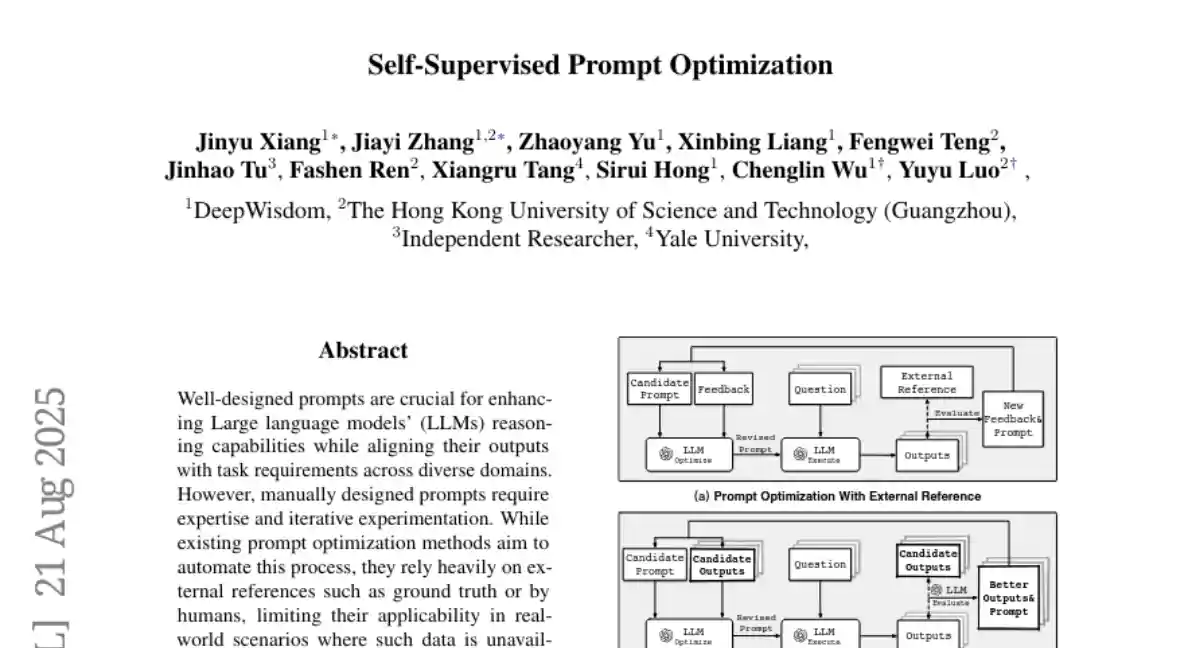
Self-Supervised Prompt Optimization

A self-supervised framework optimizes prompts for both closed and open-ended tasks by evaluating LLM outputs without external references, reducing costs and required data.

· Published on Feb 7, 2025

Self-Supervised Prompt Optimization

A self-supervised framework optimizes prompts for both closed and open-ended tasks by evaluating LLM outputs without external references, reducing costs and required data.

Submitted by

kpzhang996

Submitted by

kpzhang996

Submitted by

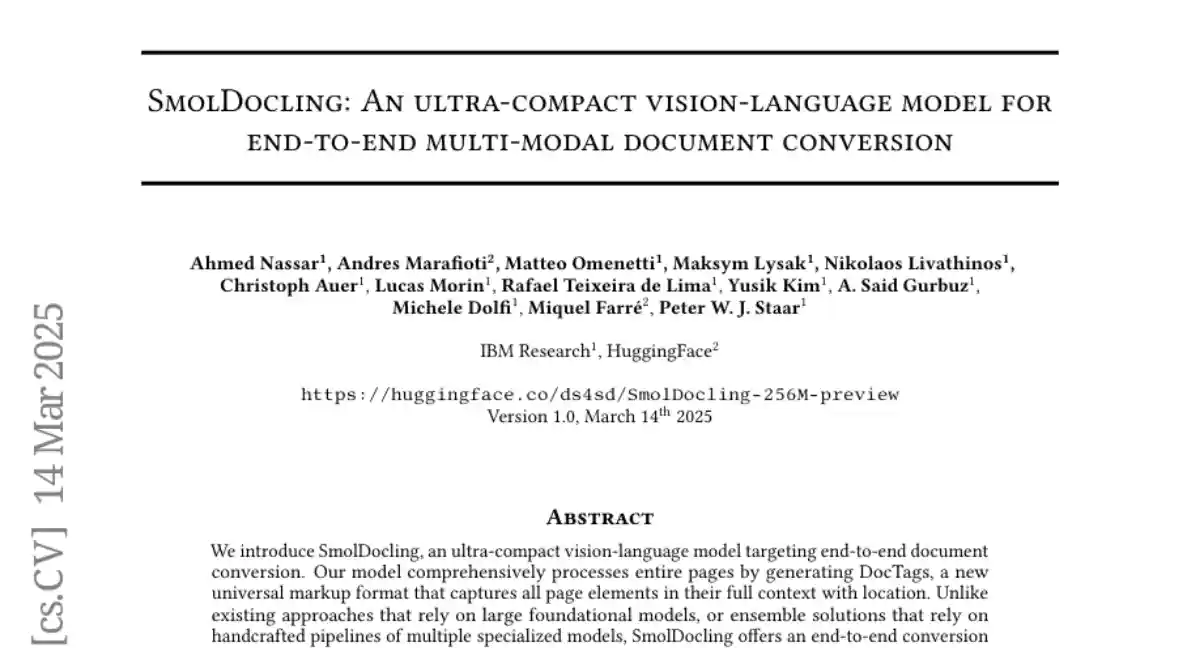
andito

Submitted by

andito

Submitted by

Zhouhc

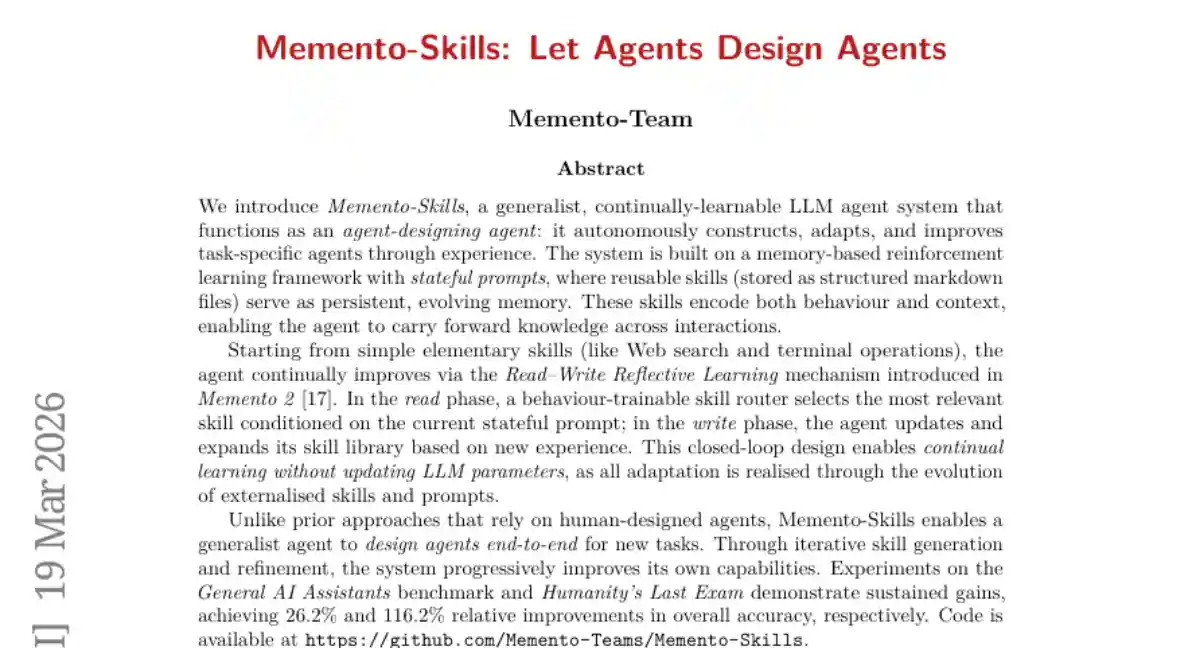
Memento-Skills: Let Agents Design Agents

A generalist language model agent system autonomously designs and improves task-specific agents through memory-based reinforcement learning with stateful prompts and skill libraries.

Submitted by

Zhouhc

Memento-Skills: Let Agents Design Agents

A generalist language model agent system autonomously designs and improves task-specific agents through memory-based reinforcement learning with stateful prompts and skill libraries.

Submitted by

Lingaaaaaaa

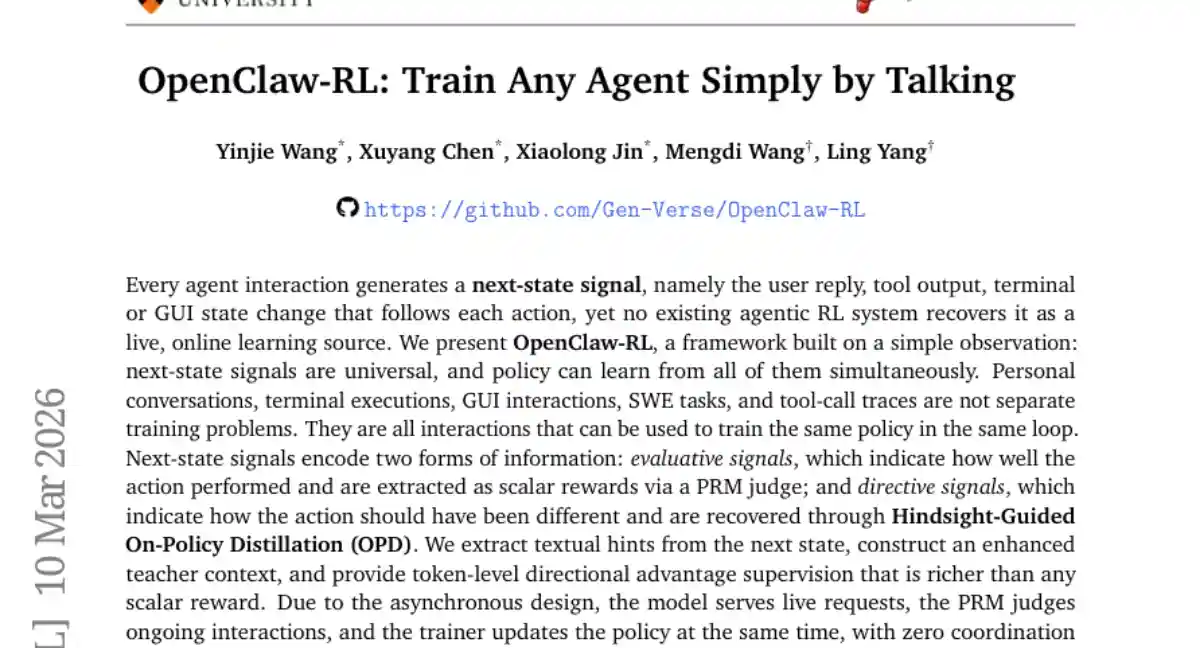
OpenClaw-RL: Train Any Agent Simply by Talking

OpenClaw-RL framework enables policy learning from diverse next-state signals across multiple interaction modalities using asynchronous training with PRM judges and hindsight-guided distillation.

Submitted by

Lingaaaaaaa

OpenClaw-RL: Train Any Agent Simply by Talking

OpenClaw-RL framework enables policy learning from diverse next-state signals across multiple interaction modalities using asynchronous training with PRM judges and hindsight-guided distillation.

Submitted by

taesiri

Submitted by

taesiri

Submitted by

akhaliq

Submitted by

akhaliq

Submitted by

akhaliq

Submitted by

akhaliq

Submitted by

Virgilllll

Submitted by

Virgilllll

Submitted by

wchengad

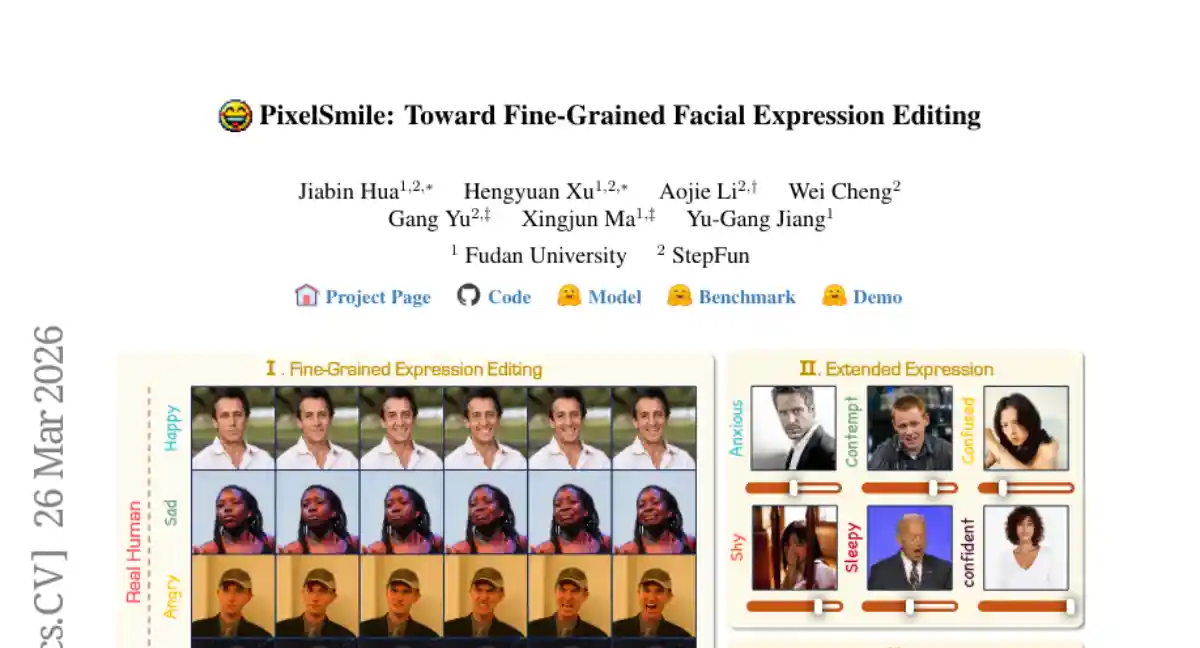
PixelSmile: Toward Fine-Grained Facial Expression Editing

A diffusion framework called PixelSmile is introduced that disentangles facial expression semantics through symmetric joint training and contrastive learning to enable precise, controllable, and fine-grained expression editing with robust identity preservation.

Submitted by

wchengad

PixelSmile: Toward Fine-Grained Facial Expression Editing

A diffusion framework called PixelSmile is introduced that disentangles facial expression semantics through symmetric joint training and contrastive learning to enable precise, controllable, and fine-grained expression editing with robust identity preservation.

Submitted by

taesiri

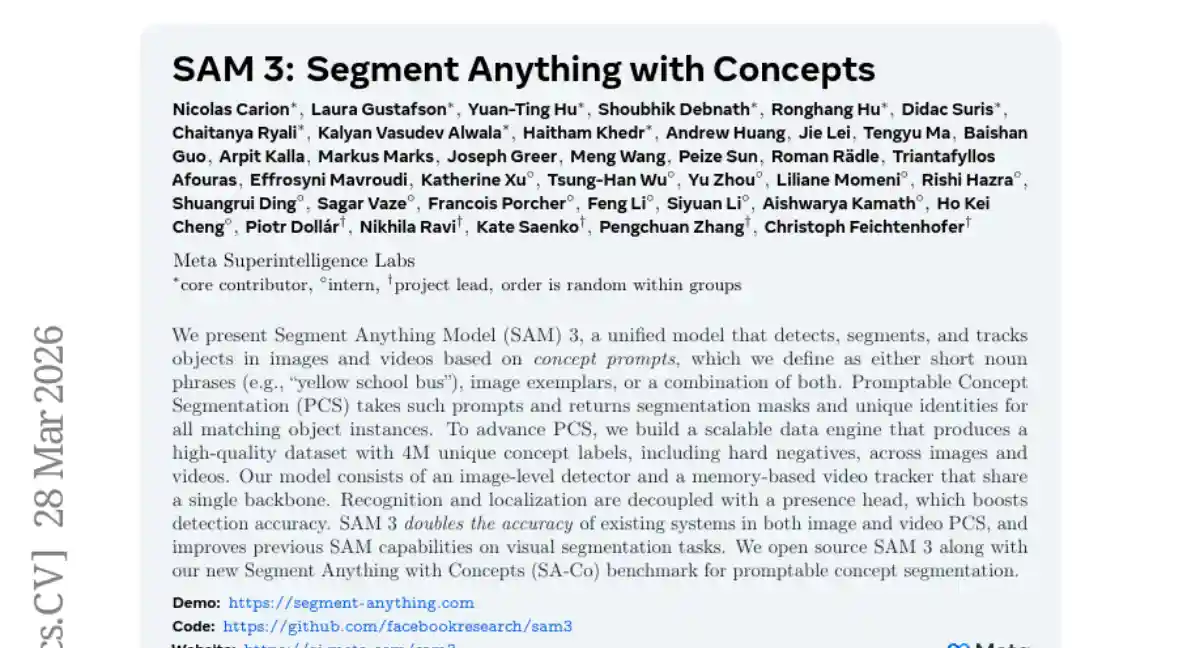
SAM 3: Segment Anything with Concepts

Segment Anything Model 3 achieves state-of-the-art performance in promptable concept segmentation and tracking by leveraging a unified model architecture with decoupled recognition and localization.

Submitted by

taesiri

SAM 3: Segment Anything with Concepts

Segment Anything Model 3 achieves state-of-the-art performance in promptable concept segmentation and tracking by leveraging a unified model architecture with decoupled recognition and localization.

Submitted by

UglyToilet

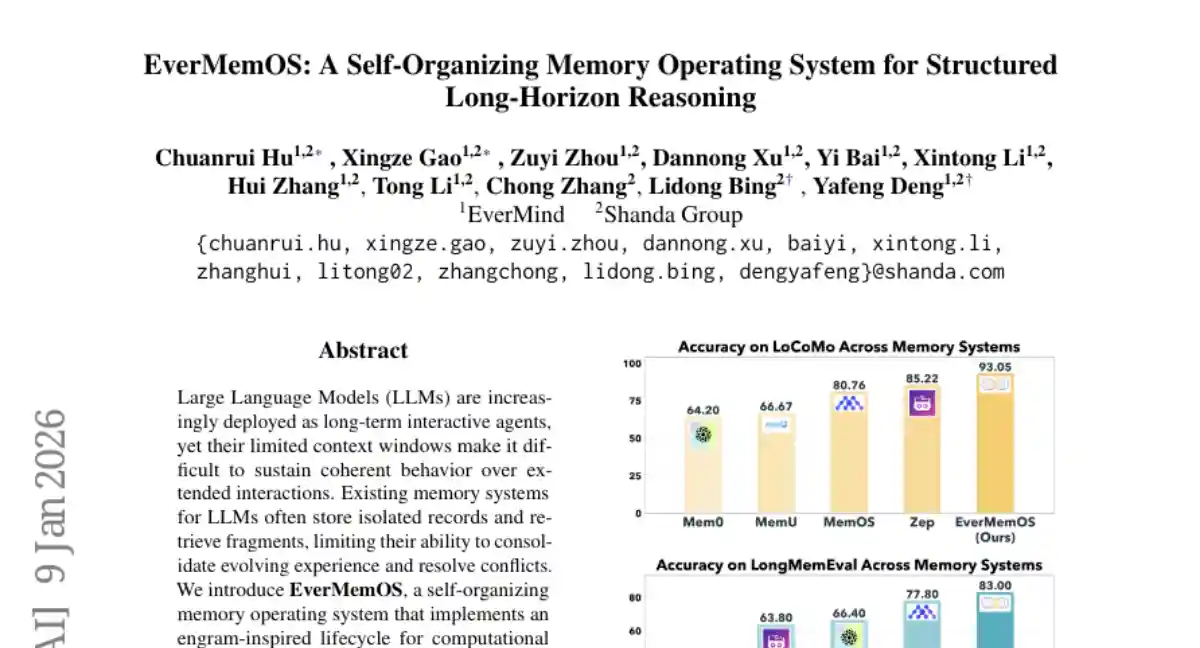
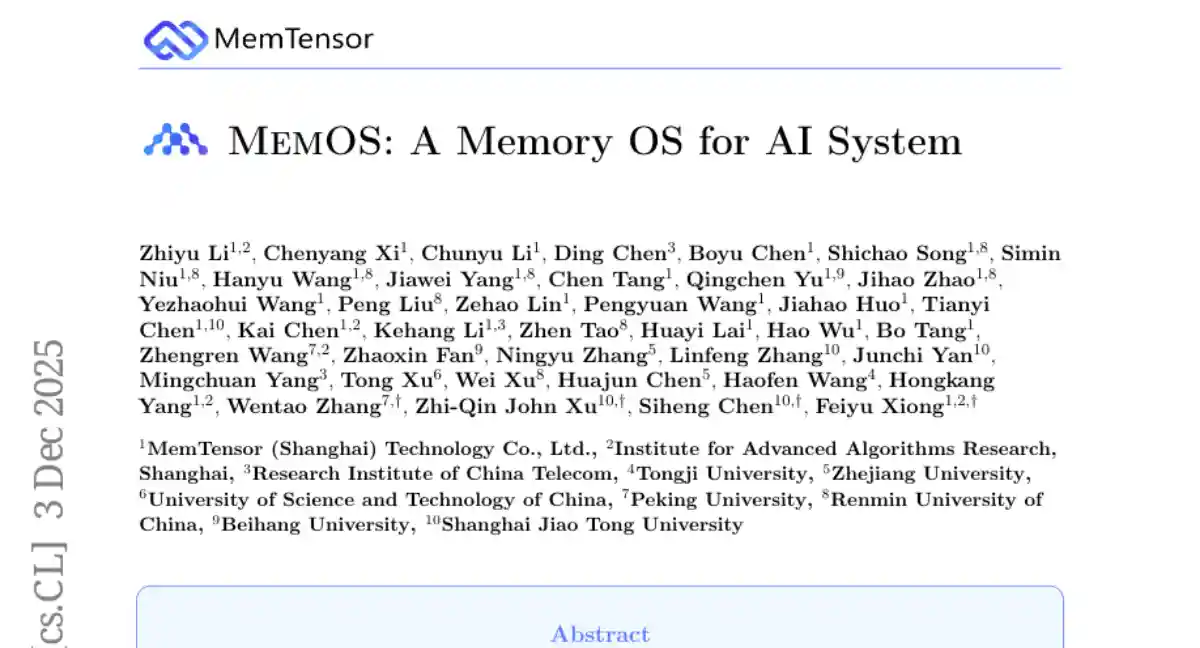
MemOS: A Memory OS for AI System

MemOS, a memory operating system for Large Language Models, addresses memory management challenges by unifying plaintext, activation-based, and parameter-level memories, enabling efficient storage, retrieval, and continual learning.

· Published on Jul 4, 2025

Submitted by

UglyToilet

MemOS: A Memory OS for AI System

MemOS, a memory operating system for Large Language Models, addresses memory management challenges by unifying plaintext, activation-based, and parameter-level memories, enabling efficient storage, retrieval, and continual learning.

Submitted by

taesiri

LTX-2: Efficient Joint Audio-Visual Foundation Model

LTX-2 is an open-source audiovisual diffusion model that generates synchronized video and audio content using a dual-stream transformer architecture with cross-modal attention and classifier-free guidance.

· Published on Jan 6, 2026

Submitted by

taesiri

Submitted by

bertjiazheng

Submitted by

bertjiazheng

Submitted by

taesiri

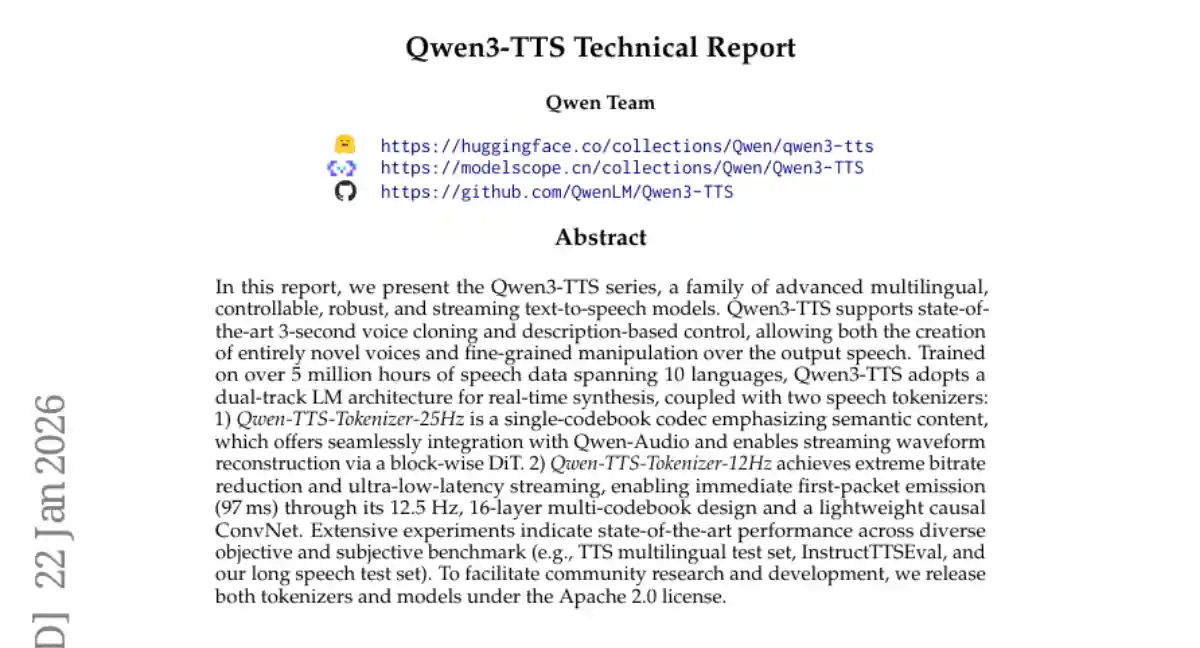
Qwen3-TTS Technical Report

The Qwen3-TTS series presents advanced multilingual text-to-speech models with voice cloning and controllable speech generation capabilities, utilizing dual-track LM architecture and specialized speech tokenizers for efficient streaming synthesis.

Qwen Qwen

· Published on Jan 22, 2026

Submitted by

taesiri

Qwen3-TTS Technical Report

The Qwen3-TTS series presents advanced multilingual text-to-speech models with voice cloning and controllable speech generation capabilities, utilizing dual-track LM architecture and specialized speech tokenizers for efficient streaming synthesis.

Submitted by

hao-li

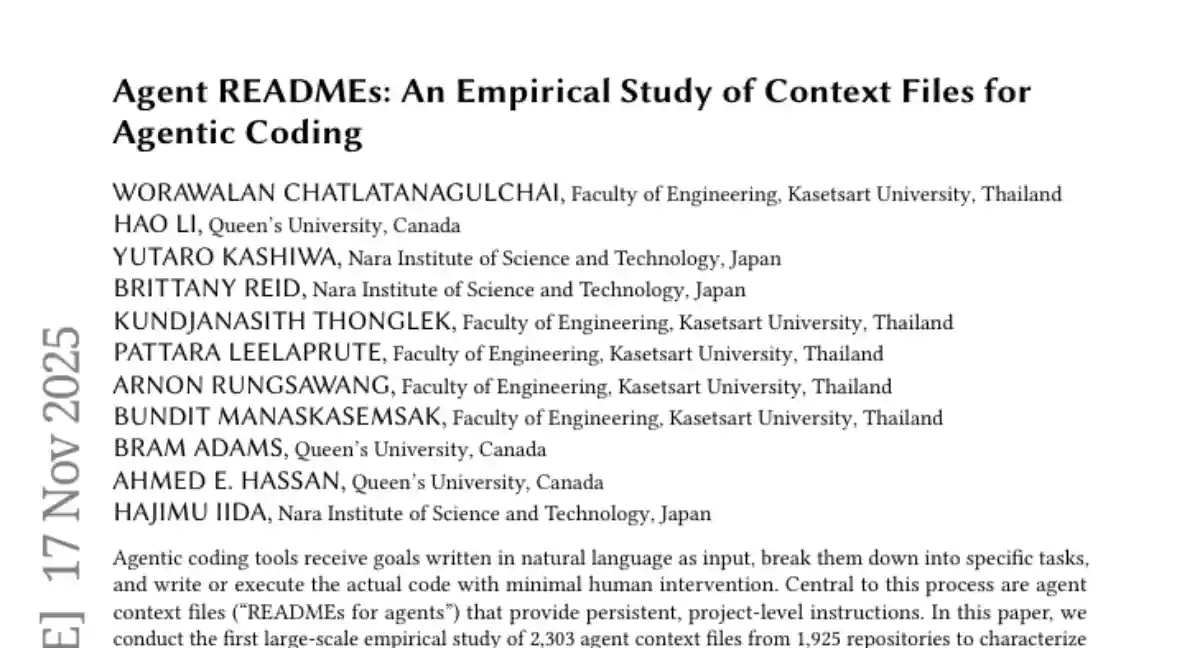
Agent READMEs: An Empirical Study of Context Files for Agentic Coding

Agentic coding tools receive goals written in natural language as input, break them down into specific tasks, and write or execute the actual code with minimal human intervention. Central to this process are agent context files ("READMEs for agents") that provide persistent, project-level instructions. In this paper, we conduct the first large-scale empirical study of 2,303 agent context files from 1,925 repositories to characterize their structure, maintenance, and content. We find that these files are not static documentation but complex, difficult-to-read artifacts that evolve like configuration code, maintained through frequent, small additions. Our content analysis of 16 instruction types shows that developers prioritize functional context, such as build and run commands (62.3%), implementation details (69.9%), and architecture (67.7%). We also identify a significant gap: non-functional requirements like security (14.5%) and performance (14.5%) are rarely specified. These findings indicate that while developers use context files to make agents functional, they provide few guardrails to ensure that agent-written code is secure or performant, highlighting the need for improved tooling and practices.

  • 11 authors

· Published on Nov 17, 2025

Submitted by

hao-li

Agent READMEs: An Empirical Study of Context Files for Agentic Coding

Agentic coding tools receive goals written in natural language as input, break them down into specific tasks, and write or execute the actual code with minimal human intervention. Central to this process are agent context files ("READMEs for agents") that provide persistent, project-level instructions. In this paper, we conduct the first large-scale empirical study of 2,303 agent context files from 1,925 repositories to characterize their structure, maintenance, and content. We find that these files are not static documentation but complex, difficult-to-read artifacts that evolve like configuration code, maintained through frequent, small additions. Our content analysis of 16 instruction types shows that developers prioritize functional context, such as build and run commands (62.3%), implementation details (69.9%), and architecture (67.7%). We also identify a significant gap: non-functional requirements like security (14.5%) and performance (14.5%) are rarely specified. These findings indicate that while developers use context files to make agents functional, they provide few guardrails to ensure that agent-written code is secure or performant, highlighting the need for improved tooling and practices.

  • 11 authors

· Nov 17, 2025

Submitted by

wchengad

Submitted by

wchengad

Submitted by

florinshum

Submitted by

florinshum

Submitted by

taesiri

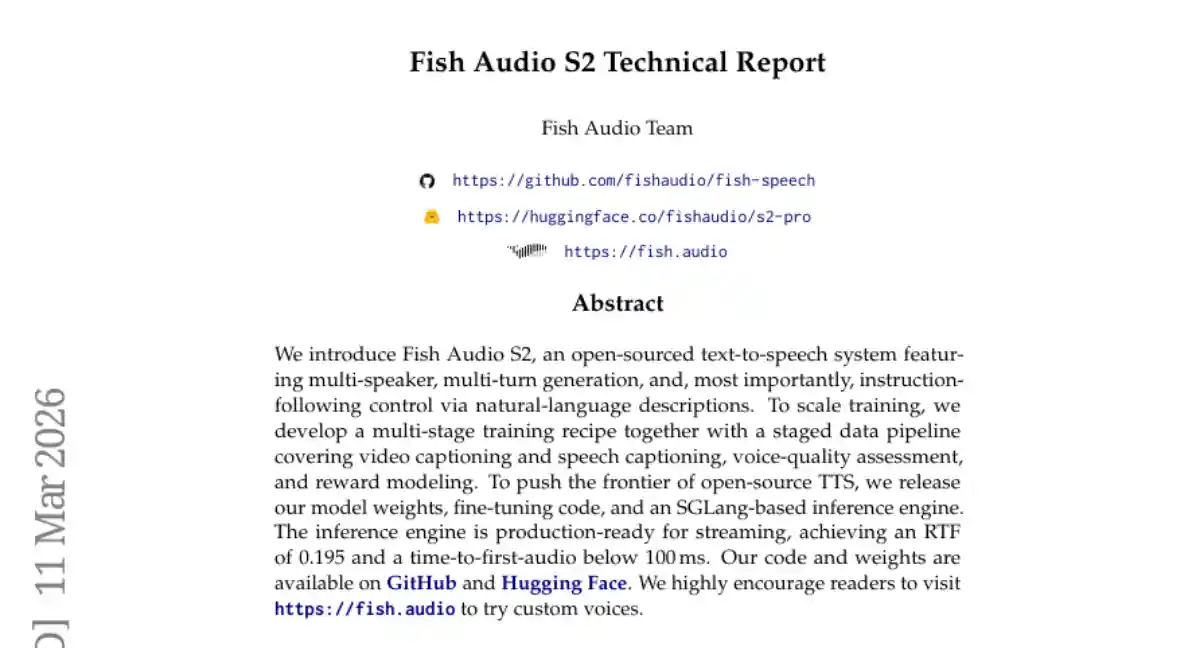
Fish Audio S2 Technical Report

Fish Audio S2 is an open-source text-to-speech system with multi-speaker capabilities, multi-turn generation, and instruction-following control through natural-language descriptions, utilizing a multi-stage training approach and production-ready inference engine.

Submitted by

taesiri

Fish Audio S2 Technical Report

Fish Audio S2 is an open-source text-to-speech system with multi-speaker capabilities, multi-turn generation, and instruction-following control through natural-language descriptions, utilizing a multi-stage training approach and production-ready inference engine.

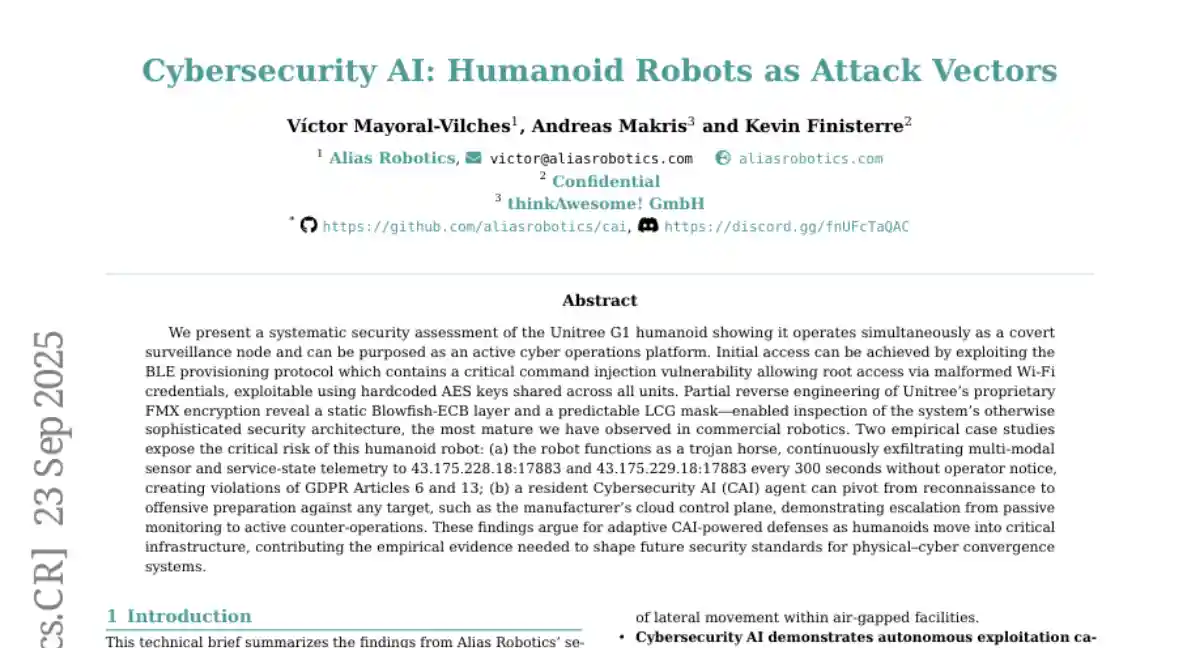
Cybersecurity AI: Humanoid Robots as Attack Vectors

The Unitree G1 humanoid robot is vulnerable to BLE provisioning protocol exploits, exfiltrates sensor data, and can be repurposed for active cyber operations, highlighting the need for improved security standards in commercial robotics.

  • 3 authors

· Published on Sep 17, 2025
Cybersecurity AI: Humanoid Robots as Attack Vectors

The Unitree G1 humanoid robot is vulnerable to BLE provisioning protocol exploits, exfiltrates sensor data, and can be repurposed for active cyber operations, highlighting the need for improved security standards in commercial robotics.

Submitted by

syxbb

Submitted by

syxbb