Object-Oriented Programming (OOP) (Learning Path) – Real Python
Learning Path ⋅ Skills: Python, OOP, Classes, Data Classes, Getters, Setters, Property, super(), Magic Methods, Operator Overloading, SOLID, Inheritance, Composition, Mixin Classes, Factory Pattern

You’ll start with the fundamentals of classes and OOP concepts, then build on that with data classes, constructors, and super(). From there, you’ll explore magic methods, managed attributes, inheritance, composition, and design patterns like Factory Method and SOLID.
Object-Oriented Programming (OOP)
Learning Path ⋅ 16 Resources
Getting Started With OOP
Learn what object-oriented programming is and how Python implements it. You’ll get familiar with classes, objects, attributes, and methods.


Course
Class Concepts: Object-Oriented Programming in Python
Python uses object-oriented programming to group data and associated operations together into classes. In this video course, you'll learn how to write object-oriented code with classes, attributes, and methods.
Building and Customizing Classes
Now that you know the basics, learn how to customize your classes. You’ll work with data classes, different types of constructors, and the super() function for calling parent class methods.

Course
Using Data Classes in Python
Data classes are one of the new features introduced in Python 3.7. When using data classes, you don't have to write boilerplate code to get proper initialization, representation, and comparisons for your objects.
Course
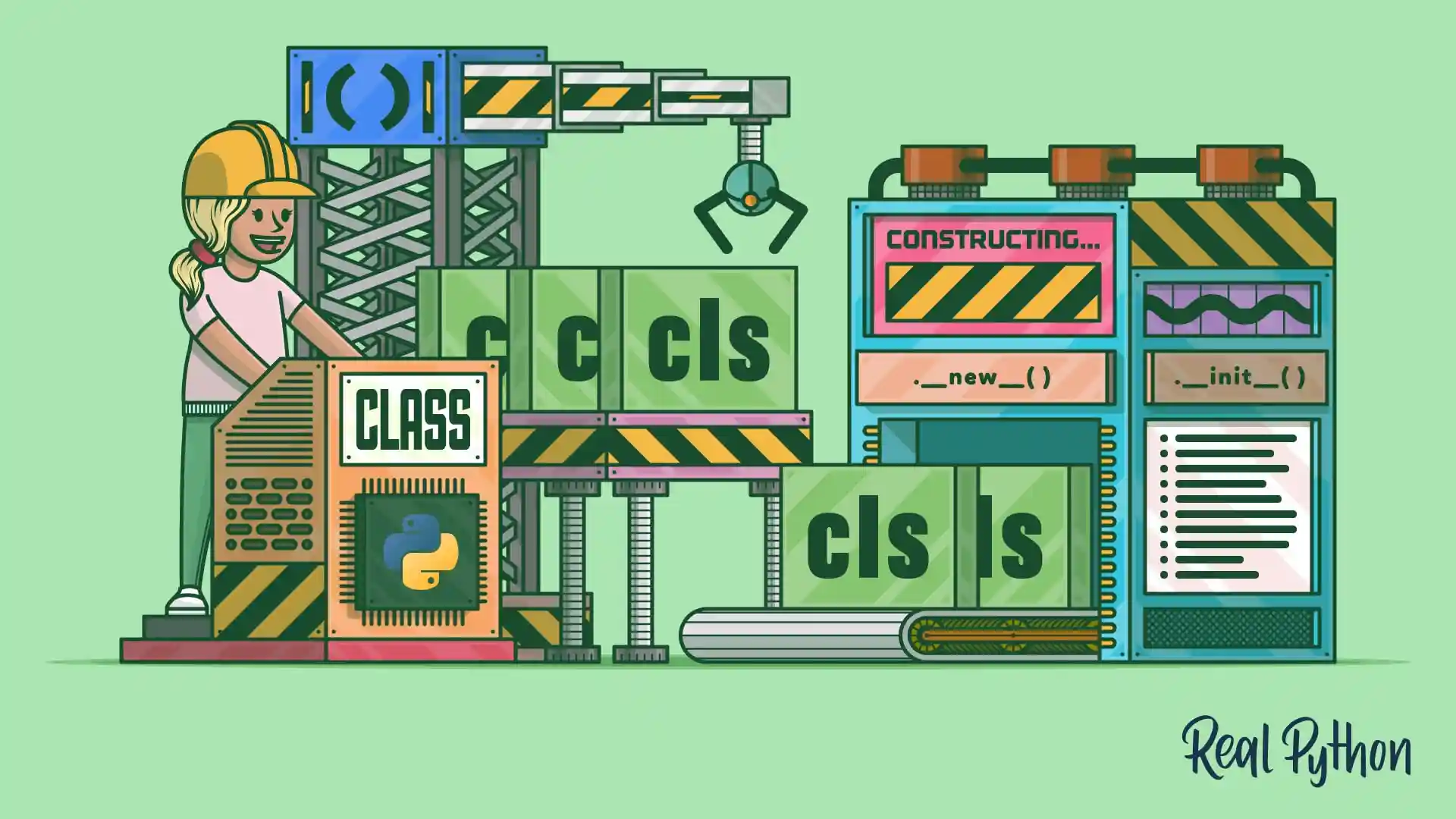
Using Python Class Constructors
Learn how class constructors work in Python. You'll also explore Python's instantiation process, which has two main steps: instance creation and instance initialization.

Course
Using Multiple Constructors in Your Python Classes
Learn how to provide multiple constructors in your Python classes. To this end, you'll learn different techniques, such as checking argument types, using default argument values, writing class methods, and implementing single-dispatch methods.

Methods and Magic
Explore the different types of methods Python classes can have and learn how magic methods let you customize how your objects behave with built-in operations.


Course
Python's Magic Methods in Classes
Learn what magic methods are in Python, how they work, and how to use them in your custom classes to support powerful features in your object-oriented code.

Managing Attributes
Control how attributes are accessed and modified on your objects. You’ll learn about getters, setters, and Python’s property() decorator for creating managed attributes.

Course
Getters and Setters in Python
Learn what getter and setter methods are, how Python properties are preferred over getters and setters when dealing with attribute access and mutation, and when to use getter and setter methods instead of properties in Python.

Inheritance and Design Patterns
Learn how to reuse and extend classes through inheritance and composition. Then apply established design patterns like Factory Method and SOLID principles to write well-structured code.


Course
Inheritance and Composition: A Python OOP Guide
Learn about inheritance and composition in Python. You'll improve your object-oriented programming (OOP) skills by understanding how to use inheritance and composition and how to leverage them in their design.

Tutorial
What Are Mixin Classes in Python?
Learn how to use Python mixin classes to write modular, reusable, and flexible code with practical examples and design tips.


Course
Design and Guidance: Object-Oriented Programming in Python
Learn about the SOLID principles, which are five well-established standards for improving your object-oriented design in Python. By applying these principles, you can create object-oriented code that is more maintainable, extensible, scalable, and testable.
Congratulations on completing this learning path! You’ve learned how Python’s object-oriented programming works, from basic classes to inheritance, design patterns, and SOLID principles.
Continue your intermediate Python journey with the next learning path:
Learning Path
Files and File Streams
12 Resources ⋅ Skills: Python, Pathlib, File I/O, Serialization, Encoding, Unicode, PDF, WAV, Context Managers, ZIP Files
You might also be interested in these related learning paths: