SimFlow CFD Simulation Software

SimFlow
CFD Software
Made Easy

Complete CFD workflow on your desktop, from mesh generation to post-processing. All physics included, all platforms supported.

Download now for Free. No signup. Windows, Linux, macOS.

SimFlow CFD - Desktop CFD Software

SimFlow CFDDesktop CFD SoftwareWindows / Linux / macOS
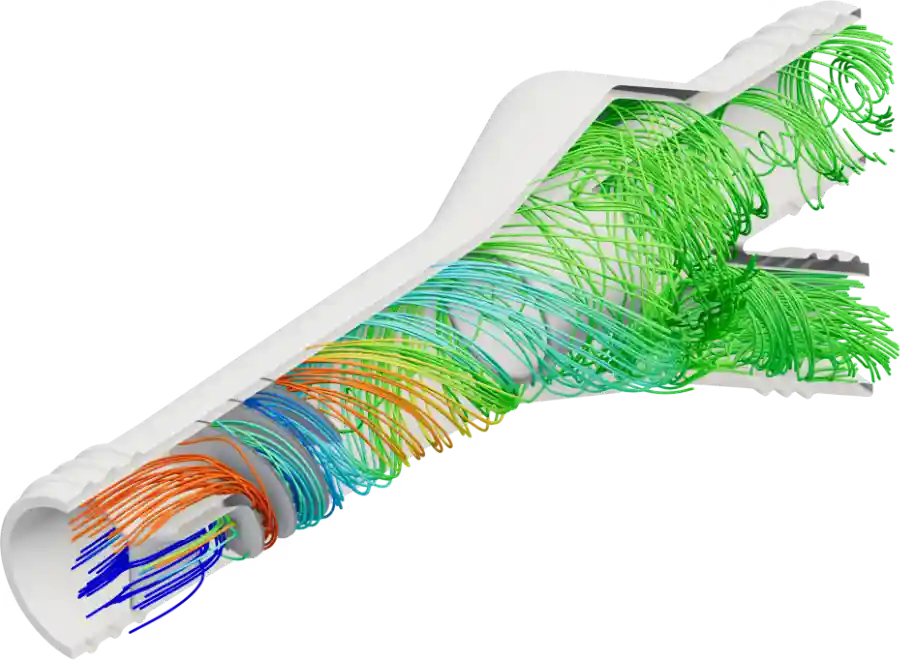
SimFlow CFD flow separator simulation

Trusted by engineers and researchers worldwide

0k+Engineers Worldwide

0+Physical Models

0+Years of Development

0+CFD Applications

Desktop Software
Cross-Platform

SimFlow runs on Windows, Linux, and macOS. Install it, own it, run it.

Your Machine
Your Data

Every simulation stays on your hardware. Fully offline license available.

Unlimited CPUs
HPC Ready

HPC grade parallel computing. No per core fees, no hourly charges.

AI & Remote Computing

AI-powered assistant to configure simulations faster. Run jobs anywhere local cluster, remote server, or cloud.

Coming 2026

CFD Simulation - Blower

01

Import Geometry

Create or import a CAD model in portable formats STL, STEP, IGES, OBJ, BRep.

02

Generate Mesh

Cut Cell Method, Hex Dominant, Boundary Layer. Easy configuration and parallel meshing.

03

Set Up Physics

Choose simulation type, boundary conditions, material properties, and adjust model details.

04

Run Simulation

Use all the compute power at hand with a single click. Monitor convergence, forces, and results in real time.

05

Visualize Results

Analyze with SimFlow or integrated ParaView. Streamlines, contour plots, animations. Export in VTK, Fluent, Tecplot.

Incompressible & compressible flows. Steady-state & transient. Subsonic to supersonic. Newtonian & non-Newtonian fluids.

Incompressible Flow
Fluid flow where density variation is negligible. Used for most liquid flows and low-speed gas flows (Mach < 0.3) providing robust solutions without loss of accuracy.

Compressible Flow
Flow where density changes significantly due to pressure and temperature variations. Essential for high-speed aerodynamics and gas dynamics.

Transient Simulation
Time-dependent simulation capturing flow evolution and dynamics over time. Required for unsteady phenomena like vortex shedding, pulsating flows, startup conditions evaluation.

Supersonic Flow
Flow exceeding the speed of sound (Mach > 1). Features shock waves, expansion fans, and compressibility-dominated physics.

Full RANS suite (k-ε, k-ω, Spalart-Allmaras models family), Large Eddy Simulation (LES), and Detached Eddy Simulation (DES).

Turbulence Modeling
Turbulence is a chaotic flow regime characterized by irregular velocity fluctuations and vortices, occurring at high Reynolds numbers. Directly resolving all turbulent scales is computationally prohibitive and turbulence models approximate their effect on the mean flow, making CFD simulations tractable for real-world applications.

k-epsilon
Two-equation RANS turbulence model family solving for turbulent kinetic energy (k) and dissipation rate (epsilon). Robust and widely used for industrial flows. In SimFlow you can choose between basic and enhanced RNG or Realizable models.

k-omega
The k-ω model solves transport equations for turbulent kinetic energy (k) and specific dissipation rate (ω), performing well in near-wall and adverse pressure gradient flows. Its most notable enhancement is the k-ω SST model, which blends k-ω near walls with k-ε in the freestream.

Large Eddy Simulation (LES)
Resolves large-scale turbulent structures directly while modeling small scales (sub-grid modelling). Provides high-fidelity unsteady results at higher computational cost.

Detached Eddy Simulation (DES)
Hybrid RANS-LES approach using RANS near walls and LES in separated regions. Balances accuracy and cost for massively separated flows.

Conjugate heat transfer (CHT). Forced & natural convection. Radiation models (S2S, DO, P1). Solar load. Joule heating.

Conjugate Heat Transfer (CHT)
Coupled simulation of heat conduction in solids and convection in fluids. Solves temperature fields across solid-fluid interfaces simultaneously. Supports arbitrary number of fluid/solid regions.

Convection
Heat transfer by fluid motion - forced (driven by external forces) or natural (driven by buoyancy from temperature differences).

Radiation
Thermal radiation models (Surface-to-Surface, Discrete Ordinates, P1) simulate heat transfer through invisible rays between surfaces and through participating gases, without requiring direct contact or fluid motion.

Solar Load
Models solar radiation intensity and direction for outdoor and indoor thermal analysis, including direct and diffuse irradiation components.

Volume of Fluid (VoF), Eulerian multiphase dispersed flows, Lagrangian particle tracking, cavitation, wave generation, phase change.

Volume of Fluid (VoF)
The Volume of Fluid (VoF) method tracks where different fluids, such as water and air, meet and how their shared interface moves and deforms over time, making it well suited for simulations like waves, sloshing tanks, or breaking dams.

Eulerian Multiphase
Each phase treated as interpenetrating continua with separate conservation equations (separate velocity). Suitable for dispersed flows like bubble columns and fluidized beds.

Lagrangian Particle Tracking
Tracks individual particles or particle groups (parcels), droplets, or bubbles through the flow field. Models drag, heat transfer, collisions, and particle phase change (evaporation/condensation).

Cavitation
Phase change from liquid to vapor when local pressure drops below vapor pressure. Critical for pump, propeller, and hydraulic equipment analysis.

Species transport with 2000+ species database. Chemical reactions. EDM, EDC, Fast Chemistry. Coal combustion.

Species Transport
Species Transport models how different gases or fluids mix and spread through a flow, such as exhaust dispersing in air or a pollutant traveling downstream, with a built-in database of 2000+ species including their thermodynamic and transport properties.

Eddy Dissipation Model (EDM)
Fast chemistry combustion model assuming reaction rate is controlled by turbulent mixing rather than chemical kinetics. Suitable for well-ventilated flames.

Eddy Dissipation Concept (EDC)
Extended combustion model incorporating detailed chemical kinetics within fine turbulent structures. Handles finite-rate chemistry and multi-step reactions.

Coal Combustion
Lagrangian particle-based model for coal devolatilization, char oxidation, and volatile combustion with radiation coupling.

Moving Reference Frame (MRF), dynamic mesh with 6DoF, overset (Chimera) mesh, sliding mesh interfaces.
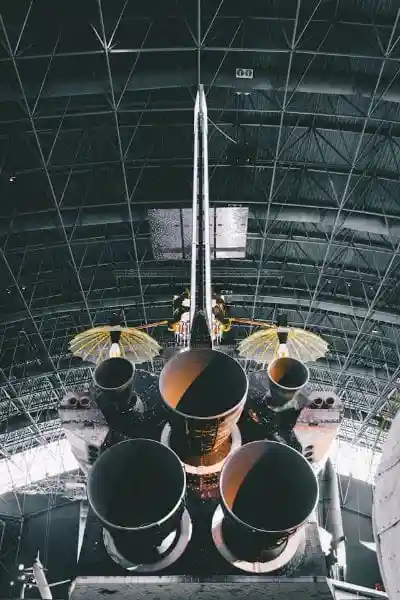

Moving Reference Frame (MRF)
Steady-state approximation for rotating machinery. Solves equations in a rotating frame without mesh motion, ideal for fans, impellers, and propellers.

6 Degrees of Freedom (6DoF)
Rigid body motion solver computing translation and rotation in all six directions from fluid forces and moments. Used for free-floating objects.

Overset (Chimera) Mesh
Overlapping mesh technique where a body-fitted mesh moves over a background mesh. Enables large displacements without mesh deformation or remeshing.

Sliding Mesh
Mesh interface that rotates or translates relative to adjacent regions. Captures transient rotor-stator interaction effects in turbomachinery and mixers.

Aerospace CFD Simulation

Aerospace & Defense

Aerospace CFD Simulation

Aerodynamics
Study of air behavior around aircraft, spacecraft, and projectiles, including lift, drag, and stability forces across flight regimes.

Supersonic Flow
Airflow exceeding Mach 1, producing shock waves and expansion fans. Critical for missile, re-entry vehicle, and high-speed aircraft design.

Propulsion Systems
Engine intakes, nozzles, and exhaust systems where internal flow efficiency directly determines thrust and fuel consumption.

Thermal Protection
Simulation of heat transfer on aerospace structures exposed to extreme temperatures during high-speed flight, re-entry, and engine operation.

Aerodynamics

  • Aircraft & spacecraft external aerodynamics
  • Missile & high-speed vehicle design
  • UAV & drone aerodynamic optimization

Propulsion & Thermal

  • Engine intake & nozzle flow analysis
  • Rotor & fan blade aerodynamics
  • Thermal protection & heat shielding
Automotive CFD Simulation

Automotive Engineering

Automotive CFD Simulation

Vehicle Aerodynamics
Study of air flow around a vehicle body to minimize drag, reduce noise, and improve fuel efficiency or range in EVs.

Thermal Management
Simulation of heat dissipation and cooling systems in vehicles, including engine cooling, underhood airflow, EV battery temperature control, and brake cooling.

Cabin Comfort
HVAC simulation of airflow, temperature distribution, and humidity inside the passenger cabin for occupant thermal comfort.

Combustion
Modeling of fuel ignition and burning processes inside internal combustion engines to optimize power output and minimize emissions.

Aerodynamics

  • Vehicle aerodynamics & drag reduction
  • Crosswind stability & cornering analysis
  • Underbody & wheel wake analysis

Thermal Systems

  • Underhood & engine bay thermal management
  • EV battery thermal management
  • HVAC & cabin comfort analysis
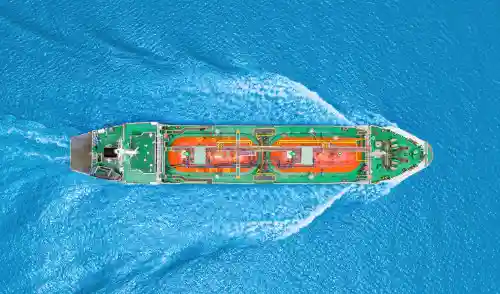
Marine CFD Simulation

Marine & Offshore

Marine CFD Simulation

Hull Resistance
Total hydrodynamic drag on a ship hull comprising frictional, wave-making, and form resistance. Key metric for fuel efficiency and speed prediction.

Propeller CFD
Simulation of rotating marine propellers including thrust, torque, cavitation inception, and wake interaction with the hull.

Seakeeping
Analysis of ship motions in waves including roll, pitch, and heave responses critical for safety, comfort, and operational performance.

Sloshing
Free-surface liquid motion inside partially filled tanks (e.g. LNG carriers). Can generate extreme impact pressures on tank walls.

Wave Interaction
Simulation of ocean waves interacting with vessels and offshore structures, including wave loads, green water, and seakeeping response.

Ship Hydrodynamics

  • Hull resistance & seakeeping
  • Propeller performance & cavitation
  • Wave-structure interaction

Offshore Engineering

  • Sloshing in LNG tanks
  • Mooring loads & vortex-induced motion
  • Wind & wave loading on offshore platforms
AE&C CFD Simulation

AE&C

AE&C CFD Simulation

Urban Wind Analysis
Simulation of wind flow through city blocks to assess pedestrian comfort, pollutant dispersion, and natural ventilation potential.

Building Aerodynamics
Prediction of wind pressure coefficients on facades and roofs for structural design, cladding loads, and wind-driven rain exposure.

Outdoor Thermal Comfort
Combined analysis of wind, solar radiation, and ambient temperature to evaluate human comfort in plazas, parks, and streetscapes.

Natural Ventilation
Cross-ventilation and stack-effect analysis for buildings, reducing HVAC energy demand by leveraging wind-driven and buoyancy-driven airflow.

Fire Safety
Simulation of fire growth, smoke spread, and evacuation conditions in buildings using performance-based approaches to meet life safety codes.

Wind & Climate

  • Wind loading & facade pressures
  • Bridge & structure wind analysis
  • Natural ventilation & cross-ventilation

Urban & Safety

  • Urban wind environment & microclimate
  • Construction site wind safety
  • Fire engineering & smoke management
HVAC CFD Simulation

HVAC

HVAC CFD Simulation

Ventilation Design
Simulation of air distribution patterns, duct sizing, and diffuser placement to achieve target air change rates and eliminate dead zones.

Thermal Comfort
Analysis of temperature, humidity, and air velocity fields to ensure occupant comfort based on PMV/PPD indices and ASHRAE standards.

Fire & Smoke
Transient simulation of fire-driven buoyant plumes and smoke propagation for evacuation planning and fire suppression system design.

Air Quality
Tracking of particulate matter, CO2, and contaminant concentrations to assess indoor air quality and filtration effectiveness.

Indoor Environment

  • Ventilation design & air quality
  • Thermal comfort optimization
  • Contaminant dispersion & cleanroom design

Systems & Safety

  • HVAC duct & diffuser optimization
  • Blowers and fans performance
  • Data center & server room cooling
  • Gas, fire & smoke spread simulation
Energy CFD Simulation

Energy & Power

Energy CFD Simulation

Wind Turbines
CFD analysis of rotor blade aerodynamics, wake effects, and turbine-to-turbine interaction in wind farms for maximum energy yield.

Hydropower
Simulation of water flow through turbines, penstocks, and spillways to optimize energy conversion and structural safety.

Solar Energy
Simulation of solar collector efficiency, thermal storage systems, and photovoltaic panel cooling for renewable energy optimization.

Combustion Modeling
Simulation of fuel-air mixing, flame propagation, and emissions in gas turbines, furnaces, and boilers.

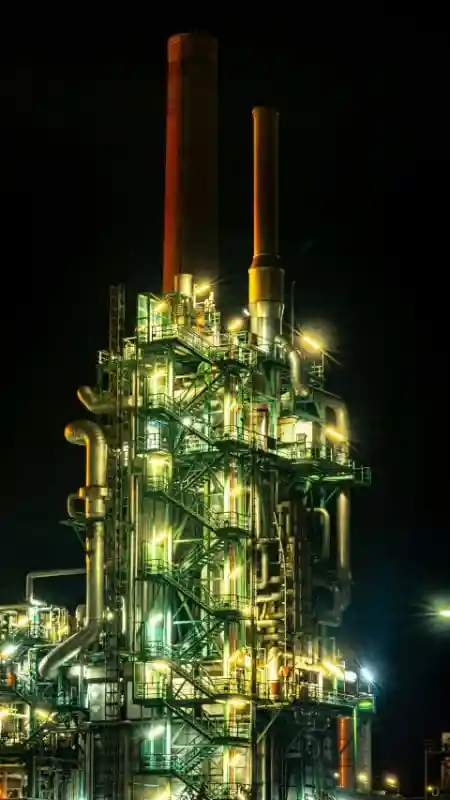
Oil & Gas
Pipeline flow assurance, multiphase transport, separator design, and subsea equipment analysis for upstream and midstream operations.

Renewable Energy

  • Wind turbine aerodynamics & wake effects
  • Hydro, tidal & wave turbine performance
  • Solar thermal system design

Oil & Gas

  • Gas turbine combustion & burner design
  • Pipeline multiphase flow & transport
  • Cooling tower, heat recovery & stack
Turbomachinery CFD Simulation

Turbomachinery

Turbomachinery CFD Simulation

Rotor-Stator Interaction
Transient simulation of rotating and stationary blade rows, capturing pressure fluctuations, wake mixing, and unsteady forcing.

Pump CFD
Full-stage simulation of centrifugal and axial pumps to predict head-flow curves, efficiency, and cavitation breakdown.

Compressor Analysis
Performance mapping of axial and centrifugal compressors including surge margin, choking, and stage matching.

Turbine Simulation
Blade-passage CFD for gas, steam, and hydraulic turbines - predicting power output, losses, and blade loading distribution.

Cavitation
Prediction of vapor bubble formation in low-pressure regions of pumps and turbines that can cause erosion, vibration, and performance loss.

Blade Design
Aerodynamic and hydrodynamic optimization of rotor and stator blade profiles for maximum efficiency, performance, and structural integrity.

Rotating Machinery

  • Rotor-stator interaction analysis
  • Compressor & turbine performance
  • Cavitation prediction in pumps & turbines

Performance & Analysis

  • Fan performance & blade optimization
  • Off-design & transient operation
  • Impeller & volute design
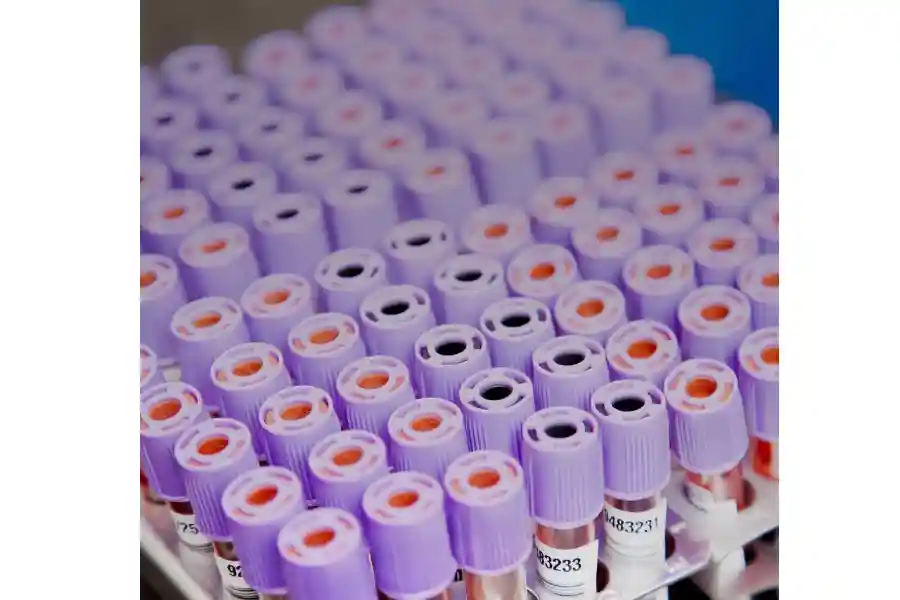
Pharmaceutical Manufacturing CFD Simulation

Pharmaceutical Manufacturing

Pharmaceutical Manufacturing CFD Simulation

Bioprocess Engineering
CFD-driven design of bioreactors, fermenters, and cell culture vessels to optimize mixing, oxygen transfer, and shear stress on cells.

Pharmaceutical Mixing
Simulation of impeller-driven blending in tanks and vessels to ensure homogeneous distribution of active ingredients and excipients.

Clean Room Flow
Airflow modeling in sterile manufacturing environments to maintain particle-free conditions and validate HVAC system performance.

Granulation & Coating
Simulation of fluidized bed and coating processes for tablet manufacturing, predicting particle growth and coating uniformity.

Reactor & Mixing

  • Bioreactor & fermenter optimization
  • Pharmaceutical mixing & blending
  • Sterile process vessel design

Manufacturing Processes

  • Fluidized bed granulation & coating
  • Clean room airflow & contamination control
  • Drying & lyophilization process design
Electronics & Electrical Systems CFD Simulation

Electronics & Electrical Systems

Electronics & Electrical Systems CFD Simulation

Conjugate Heat Transfer
Simultaneous simulation of heat conduction in solid components and convection in surrounding fluid, essential for PCB, heat sink, and enclosure temperature prediction.

Electronics Cooling
Thermal analysis of forced and natural convection cooling strategies for electronic devices, from chip-level to rack-level thermal design.

Data Center Thermal
Airflow modeling of server rooms including hot/cold aisle containment, raised-floor plenum distribution, and cooling system efficiency.

Power Electronics
Thermal simulation of high-power electrical components including transformers, inverters, switchgear, and cable systems under steady-state and transient loads.

Device Cooling

  • Enclosure & heat sink thermal design
  • Power electronics thermal analysis
  • Battery thermal management

System-Level Thermal

  • Data center airflow & cooling
  • High-voltage equipment thermal design
  • Natural & forced convection optimization
Chemical & Process Engineering CFD Simulation

Chemical & Process Engineering

Chemical & Process Engineering CFD Simulation

Reactor Design
Coupled simulation of fluid flow, heat transfer, and chemical kinetics to predict conversion rates, selectivity, and thermal hotspots in chemical reactors.

Multiphase Flow
Modeling of systems with multiple fluid phases (gas-liquid, liquid-solid) to predict flow regimes, phase distribution, and mass transfer in process equipment.

Heat Transfer
Analysis of thermal energy exchange in process equipment using conduction, convection, and radiation models for efficiency and safety optimization.

Mixing Analysis
CFD evaluation of stirred tanks, static mixers, and blending equipment to optimize mixing efficiency, residence time, and reaction yield.

Reactor & Mixing

  • Stirred tank reactor mixing
  • Multiphase reactors & bubble columns
  • Chemical reaction modeling

Process Systems

  • Separation & filtration modeling
  • Heat exchanger performance
  • Drying, crystallization & evaporation
Industrial Equipment CFD Simulation

Industrial Equipment

Industrial Equipment CFD Simulation

Valve CFD
Simulation of industrial valves to predict pressure drop, flow coefficient, cavitation risk, and operating torque requirements.

Industrial Mixers
CFD analysis of impeller-driven tanks and static mixers to optimize blending time, power consumption, and mixing homogeneity.

Heat Exchangers
Thermal-hydraulic simulation of shell-and-tube, plate, and compact heat exchangers to optimize heat transfer rates, pressure drop, and fouling resistance.

Piping Systems
Flow analysis in industrial pipe networks including pressure loss, flow distribution, water hammer, and multiphase transport prediction.

Separation
Modeling of particle-fluid separation in cyclones, filters, settling tanks, and dust collectors to predict collection efficiency and optimize equipment sizing.

Flow & Piping

  • Valve & piping flow analysis
  • Nozzle optimization
  • Filtration & porous media flow
  • Heat exchanger performance & design

Process Equipment

  • Separators & cyclones
  • Mixers & agitators
  • Industrial ovens & drying systems
Water & Environmental CFD Simulation

Water & Environmental

Water & Environmental CFD Simulation

Hydraulic CFD
Simulation of open-channel and pressurized water flows - including weirs, spillways, junctions, and pipe networks.

Flood Modeling
Prediction of water levels, flow velocities, and inundation extents during flood events for risk assessment and infrastructure design.

Water Treatment
Flow analysis in settling tanks, clarifiers, and treatment basins to optimize residence time, mixing, and pollutant removal.

Pollutant Dispersion
Atmospheric and aquatic transport modeling of contaminants - tracking concentration fields downwind or downstream from emission sources.

Water & Hydraulics

  • Dam & hydraulic structure analysis
  • Sediment transport & coastal erosion
  • Wastewater treatment plant optimization

Environmental

  • River & floodplain flow simulation
  • Stormwater management & urban drainage
  • Contamination & pollutant transport
Rail & Ground Transportation CFD Simulation

Rail & Ground Transportation

Rail & Ground Transportation CFD Simulation

Train Aerodynamics
CFD analysis of air resistance, pressure distribution, and wake structures around rail vehicles to optimize nose shape and body profile for drag reduction.

Crosswind Stability
Simulation of lateral aerodynamic forces and moments on rail vehicles under gusty wind conditions to evaluate rollover risk on exposed track sections.

Tunnel Flow
Analysis of confined airflow around trains in tunnels including piston effect, ventilation requirements, and emergency smoke extraction scenarios.

Pressure Waves
Transient pressure fluctuations generated when a train enters or passes through a tunnel, simulated to assess passenger comfort and structural loads on infrastructure.

Vehicle Aerodynamics

  • High-speed train drag reduction
  • Crosswind stability analysis
  • Underbody & wheel wake flow

Infrastructure & Environment

  • Tunnel pressure waves & ventilation
  • Platform wind comfort & safety
  • Dust & smoke dispersion near tracks
Healthcare & Biomedicine CFD Simulation

Healthcare & Biomedicine

Healthcare & Biomedicine CFD Simulation

Hemodynamics
Simulation of pulsatile blood flow through arteries, heart valves, and vascular grafts using non-Newtonian fluid models for disease assessment and treatment planning.

Respiratory Flow
Modeling of airflow through nasal passages, airways, and lungs for understanding breathing mechanics and optimizing drug delivery.

Medical Devices
CFD analysis of flow-related medical devices including blood pumps, heart valves, inhalers, and dialysis equipment.

Drug Delivery
Simulation of particle transport and deposition in respiratory or vascular systems to optimize targeted drug administration.

Cardiovascular & Respiratory

  • Blood flow & vascular disease simulation
  • Respiratory airway & aerosol deposition
  • Ventilator & breathing system design

Devices & Diagnostics

  • Medical device flow performance
  • Drug delivery & inhalation modeling
  • Microfluidics & lab-on-chip design
Consumer Goods CFD Simulation

Consumer Goods

Consumer Goods CFD Simulation

Food & Beverage
CFD modeling of heating, cooling, mixing, and drying operations in food and beverage production for product quality and process efficiency.

Appliance Design
Flow and thermal optimization of household appliances including ovens, refrigerators, air purifiers, and climate devices.

Spray & Nozzle
Multiphase simulation of liquid atomization, droplet size distribution, and spray coverage for nozzles and dispensers.

Packaging
Simulation of filling processes, container airflow, and thermal packaging performance to optimize product protection and shelf life.

Appliances & Products

  • Home appliance thermal & airflow design
  • Injection molding optimization
  • Air purifier & ventilation device optimization
  • Spray & aerosol product performance

Food & Packaging

  • Food processing thermal & flow analysis
  • Refrigeration & cold chain optimization
  • Packaging & filling process simulation

SimFlow Free

Explore the full CFD simulation engine at your own pace

Free

No signup required

  • Full simulation engine
  • 200,000 mesh nodes
  • 1 CPU for meshing and computing
  • No signup, no credit card, no time limit
Download Free

Most Popular

Professional

Full power for individual engineers and researchers

8,000 EUR / year

Single Seat license

  • Everything in Free, plus:
  • Unlimited mesh & CPUs
  • Engineering support
  • Automatic updates
  • 30-day free trial available
See Pricing

Enterprise

Flexible access for engineering teams

10,000 EUR / year

Floating license

  • Everything in Professional, plus:
  • Priority assistance
  • Offline license option
  • 30-day free trial available
See Pricing

Perpetual licenses available. Academic pricing for universities. See full pricing details

01What is SimFlow CFD software?

SimFlow is a general purpose desktop CFD software with an intuitive interface combining a full simulation suite in one package. CAD import, meshing, simulation setup, and post-processing.

SimFlow covers many CFD applications including aerodynamics, hydrodynamics, heat transfer, multiphase flows, particle tracking, combustion, and many more.

Learn More

02Is SimFlow free?

Yes. SimFlow Free version is available at no cost with no time limit. You get access to all physics models and CFD applications with a 200,000 mesh node limit and 1 CPU core.

When you are ready to scale, upgrade to a commercial plan for unlimited mesh, unlimited CPUs, and professional engineering support.

We also offer a free 30-day trial of the commercial version so you can test it on your cases before committing.

Download Now

03How can I test SimFlow?

Start with SimFlow Free and download it right away. No registration and no time limit. All physics models and applications are included so you can evaluate SimFlow on your own cases.

Follow our step-by-step tutorials to get up and running quickly with ready-made examples covering meshing, simulation setup, and post-processing.

Need more power? Request a free 30-day trial of the commercial version with unlimited mesh and unlimited CPUs.

Download Now See Tutorials

04Is SimFlow easy to learn?

Yes. SimFlow is designed around an intuitive interface where every step of the simulation workflow is visual.

Tutorials, example projects, and documentation help you get productive quickly. Most users run their first simulation within minutes of downloading.

See Tutorials

05What CFD simulations can I run with SimFlow?

SimFlow supports incompressible and compressible flow, turbulence modeling (RANS, LES, DES), heat transfer and conjugate heat transfer, multiphase flows (VOF, Euler-Euler), particle tracking (Lagrangian), species transport, and combustion.

Common use cases include external aerodynamics, HVAC, hydrodynamics, mixing, and thermal management.

Explore Applications

06How much does SimFlow CFD software cost?

Professional single-seat license is 8,000 EUR/year. Enterprise floating license is 10,000 EUR/year.

Both include unlimited mesh, unlimited CPUs, and full engineering support. SimFlow Free is available at no cost with no time limit.

See Pricing

07Is SimFlow cloud-based or desktop?

SimFlow is a desktop CFD software, however you can install SimFlow on your chosen cloud provider such as AWS.

Coming 2026: Native cloud support to delegate computations to the cloud or any machine in your organization directly from your desktop.

Download Now

08What makes SimFlow different?

SimFlow has one price per license with no additional fees. You can run multiple simultaneous simulations on hundreds or even thousands of CPU cores without paying extra for HPC.

No HPC fees, all modules in one package, free version, 30-day commercial trial, professional engineering support, and runs on Windows, Linux, and macOS.

Easy to learn, easy to use, easy to switch.

Learn More

09What licensing options do you offer?

SimFlow offers flexible licensing to fit your workflow.

Single-Seat / Floating. Lock to one machine or share across your team with a network license server.

Annual / Perpetual. Subscribe yearly with updates included, or buy once and own it forever.

Online / Offline. Activate via internet or use an offline license file for air-gapped environments.

See Pricing

10What OS does SimFlow support?

SimFlow runs natively on Windows, Linux, and macOS (Apple Silicon). One license covers all platforms. Install and switch freely.

Download Now

11SimFlow Free vs Commercial

Same physics engine, same applications, and regular updates for both versions.

Free: 200,000 mesh nodes, 1 CPU core.

Commercial: unlimited mesh, unlimited CPUs, and engineering support.

Download Now Compare Plans

12Do you offer support and training?

Every commercial license includes professional support, along with training and engineering consulting for teams with specific simulation needs. Our support team can also prepare custom tutorials and materials tailored to your project.

Documentation, tutorials, and example projects are available for all users.

See Plans