How the Bali Process works
The challenges we address

Trafficking in Persons involves the use of deception, force or fraud to recruit, transport, harbour and ultimately receive and hold people against their will, with the aim of exploiting them for profit – through forced labour, marriage or sexual exploitation. This $150 billion a year global industry can take place both within, and across borders, and men, women and children of all ages and from all backgrounds and nationalities can become victims of this crime.
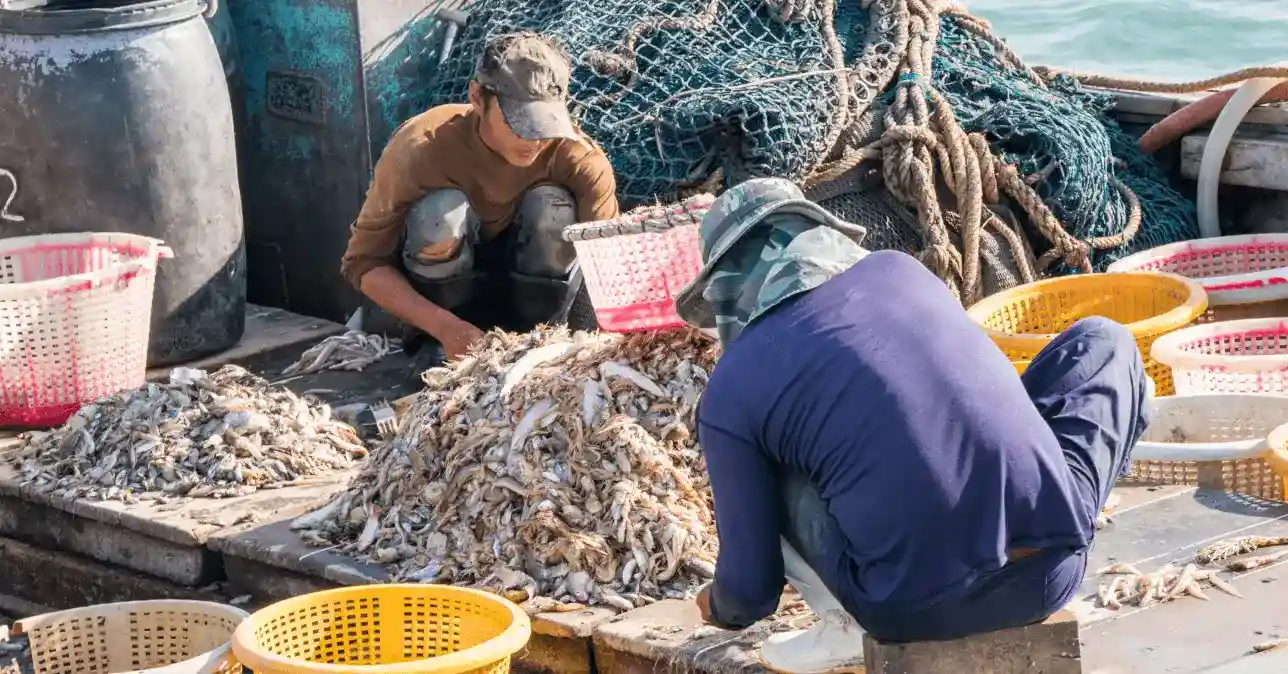
People smuggling, also referred to as the smuggling of migrants, refers to the facilitated, illegal movement of people across borders. Complex criminal networks take advantage of those seeking opportunities and a better life, charging high prices for dangerous and illegal journeys, with migrants extremely vulnerable to related forms of crime including trafficking.

Transnational Crime and Technology
The use of technology by transnational crime networks has become a growing concern for Bali Process Members and Observers. Criminal groups are increasingly exploiting digital tools to conduct operations across borders, creating new challenges for law enforcement in detection, investigation, and disruption.
Recent Developments: WG-TIP and TEG-RR Meetings | Bali Process Manila 2025

The Video Highlights: WG-TIP and TEG-RR Meetings | Bali Process Manila 2025 provides key moments from a week of Bali Process engagements held in Manila from 1–5 December 2025, convened under the Working Group on Trafficking in Persons (WG-TIP) and the Technical Experts Group on Returns and Reintegration (TEG-RR).
The meetings brought together Bali Process members, observers, and partners to strengthen cooperation and address shared regional challenges. Throughout the week, participants exchanged insights on emerging trends in trafficking in persons and cyber-enabled exploitation, and discussed practical, people-centred approaches to prevention, protection, and response.
Discussions also focused on enhancing cooperation on safe, dignified, and sustainable return and reintegration. The video highlights the Bali Process’ ongoing efforts to support coordinated, practical, and effective regional responses to trafficking in persons and related exploitation.
The Regional Support Office of the Bali Process

The Regional Support Office of the Bali Process (RSO) provides a unique function and resource – delivering practical, on-the-ground support for the Bali Process and its Working Groups.
The RSO works to strengthen cooperation across Member States, and to translate ambitions into action and real-world impact – through knowledge transfer and the sharing of information and best practices.
As the only mechanism of its kind in the Asia–Pacific region, the RSO leverages policy expertise, technical skills, and operational experience from Bali Process Members and partners to design and deliver practical initiatives that address regional challenges in migration management, trafficking in persons, and related transnational crime.
The Bali Process: 20 Years

In the 20 years since the first meeting of the Bali Process Ministerial Conference in 2002, the Bali Process on People Smuggling, Trafficking in Persons and Related Transnational Crime has evolved and grown to match the changing scale and complexity of the issues within its mandate.
Today, the Bali Process provides its 45 Member States, four Member Organisations, 18 Observer States and nine Observer Organisations with a crucial forum for policy dialogue, information sharing and capacity building, supported by four Working Groups, the Regional Support Office and the Government and Business Forum.