trace
trace 1
(trās)n.
1.
a. A visible mark, such as a footprint, made or left by the passage of a person, animal, or thing.
b. Evidence or an indication of the former presence or existence of something; a vestige: left without a trace of having been there.
2.
a. An extremely small amount or barely perceivable indication: spoke with a trace of sarcasm.
b. A constituent, such as a chemical compound or element, present in quantities less than a standard limit.
3. A path or trail that has been beaten out by the passage of animals or people.
4. An act of researching or ascertaining the origin or location of something: put a trace on the phone call; asked for a trace on a lost package.
5. A line drawn by a recording instrument, such as a cardiograph.
6. Mathematics
a. The point at which a line, or the curve in which a surface, intersects a coordinate plane.
b. The sum of the elements of the principal diagonal of a matrix.
7. An engram.
v. traced, trac·ing, trac·es
v.tr.
1.
a. To go along or follow (a path, for example): We traced the trail up the mountain.
b. To follow the course or trail of: trace a wounded deer.
2.
a. To ascertain the successive stages in the development or progress of: tracing the life cycle of an insect; trace the history of a family.
b. To discover or determine by searching or researching evidence: trace the cause of a disease.
c. To locate or ascertain the origin of: traced the money to a foreign bank account.
3.
a. To draw (a line or figure); sketch; delineate.
b. To form (letters) with special concentration or care.
4.
a. To copy by following lines seen through a sheet of transparent paper.
b. To follow closely (a prescribed pattern): The skater traced a figure eight.
5.
a. To imprint (a design) by pressure with an instrument on a superimposed pattern.
b. To make a design or series of markings on (a surface) by such pressure on a pattern.
6. To record (a variable), as on a graph.
v.intr.
1. To make one's way along a trail or course: We traced along the ridge.
2. To have origins; be traceable: linguistic features that trace to West Africa.
adj.
Occurring in extremely small amounts or in quantities less than a standard limit.
[Middle English, track, from Old French, from tracier, to trace, from Vulgar Latin *tractiāre, from Latin tractus, a dragging, course, from past participle of trahere, to draw.]
trace′a·bil′i·ty n.
trace′a·ble adj.
trace′a·bly adv.
trace 2
(trās)n.
1. One of two side straps or chains connecting a harnessed draft animal to a vehicle or whiffletree.
2. A bar or rod, hinged at either end to another part, that transfers movement from one part of a machine to another.
kick over the traces
To act in a way that contravenes social expectations or propriety: "As soon as the opportunity presented itself, [he] kicked over the traces and threw himself into a life of pleasure" (K.D. Reynolds).
[Middle English trais, from Old French, pl. of trait, a hauling, harness strap, from Latin tractus, a hauling, from past participle of trahere, to haul.]
American Heritage® Dictionary of the English Language, Fifth Edition. Copyright © 2016 by Houghton Mifflin Harcourt Publishing Company. Published by Houghton Mifflin Harcourt Publishing Company. All rights reserved.
trace
(treɪs)n
1. a mark or other sign that something has been in a place; vestige
2. a tiny or scarcely detectable amount or characteristic
3. a footprint or other indication of the passage of an animal or person
4. (Mechanical Engineering) any line drawn by a recording instrument or a record consisting of a number of such lines
5. something drawn, such as a tracing
6. chiefly US a beaten track or path
7. (Psychology) the postulated alteration in the cells of the nervous system that occurs as the result of any experience or learning. See also memory trace, engram
8. (Mathematics) geometry the intersection of a surface with a coordinate plane
9. (Mathematics) maths the sum of the diagonal entries of a square matrix
10. (Linguistics) linguistics a symbol inserted in the constituent structure of a sentence to mark the position from which a constituent has been moved in a generative process
11. (Physical Geography) meteorol an amount of precipitation that is too small to be measured
12. archaic a way taken; route
vb
13. (tr) to follow, discover, or ascertain the course or development of (something): to trace the history of China.
14. (tr) to track down and find, as by following a trail
15. to copy (a design, map, etc) by drawing over the lines visible through a superimposed sheet of transparent paper or other material
16.
a. to draw or delineate a plan or diagram of: she spent hours tracing the models one at a time.
b. to outline or sketch (an idea, policy, etc): he traced out his scheme for the robbery.
17. (Art Terms) (tr) to decorate with tracery
18. (Textiles) (tr) to imprint (a design) on cloth, etc
19. (usually foll by back) to follow or be followed to source; date back: his ancestors trace back to the 16th century.
20. archaic to make one's way over, through, or along (something)
[C13: from French tracier, from Vulgar Latin tractiāre (unattested) to drag, from Latin tractus, from trahere to drag]
ˈtraceable adj
ˌtraceaˈbility, ˈtraceableness n
ˈtraceably adv
ˈtraceless adj
ˈtracelessly adv
trace
(treɪs)n
1. (Horse Training, Riding & Manège) either of the two side straps that connect a horse's harness to the swingletree
2. (Angling) angling a length of nylon or, formerly, gut attaching a hook or fly to a line
3. kick over the traces to escape or defy control
[C14 trais, from Old French trait, ultimately from Latin trahere to drag]
Collins English Dictionary – Complete and Unabridged, 12th Edition 2014 © HarperCollins Publishers 1991, 1994, 1998, 2000, 2003, 2006, 2007, 2009, 2011, 2014
trace1
(treɪs)n., v. traced, trac•ing, n.
1. a surviving mark, sign, or evidence of the former existence, influence, or action of some agent or event; vestige.
2. a barely discernible indication or evidence of some quantity, quality, characteristic, expression, etc.
3. an extremely small amount of some chemical component: a trace of copper in the ore.
4. traces, the series of footprints left by an animal.
5. the track left by the passage of a person, animal, or object.
6. precipitation of less than 0.005 in. (0.127 mm).
7. a trail or path, esp. through wild or open territory, made by the passage of people, animals, or vehicles.
8. a tracing, drawing, or sketch of something.
9. a lightly drawn line, as the record drawn by a self-registering instrument.
10. Math.
a. the intersection of two planes, or of a plane and a surface.
b. the sum of the elements along the principal diagonal of a square matrix.
11. to follow the footprints, track, or traces of.
12. to follow (footprints, evidence, the history or course of something, etc.).
13. to follow the course, development, or history of: to trace a political movement.
14. to ascertain by investigation; discover.
15. to draw (a line, outline, figure, etc.).
16. to make a plan, diagram, or map of.
17. to copy (a drawing, plan, etc.) by following the lines of the original on a superimposed transparent sheet.
18. to make an impression or imprinting of (a design, pattern, etc.).
v.i.19. to go back in history, ancestry, or origin.
20. to follow a course, trail, etc.
[1250–1300; Middle English: to make one's way, proceed < Middle French tracier < Vulgar Latin *tractiāre, derivative of Latin tractus, past participle of trahere to draw, drag]
trace′a•ble, adj.
trace2
(treɪs)n.
either of the two straps, ropes, or chains by which a carriage, wagon, or the like is drawn by a harnessed horse or other draft animal.
Idioms:kick over the traces, to throw off restraint; become independent or defiant.
[1300–50; Middle English trais < Middle French, pl. of trait strap for harness < Latin tractus dragging]
Random House Kernerman Webster's College Dictionary, © 2010 K Dictionaries Ltd. Copyright 2005, 1997, 1991 by Random House, Inc. All rights reserved.
Trace
of hares: hares collectively; a line or train of people, 1385.Dictionary of Collective Nouns and Group Terms. Copyright 2008 The Gale Group, Inc. All rights reserved.
trace
Past participle: traced
Gerund: tracing
| Imperative |
|---|
| trace |
| trace |
| Present |
|---|
| I trace |
| you trace |
| he/she/it traces |
| we trace |
| you trace |
| they trace |
| Preterite |
|---|
| I traced |
| you traced |
| he/she/it traced |
| we traced |
| you traced |
| they traced |
| Present Continuous |
|---|
| I am tracing |
| you are tracing |
| he/she/it is tracing |
| we are tracing |
| you are tracing |
| they are tracing |
| Present Perfect |
|---|
| I have traced |
| you have traced |
| he/she/it has traced |
| we have traced |
| you have traced |
| they have traced |
| Past Continuous |
|---|
| I was tracing |
| you were tracing |
| he/she/it was tracing |
| we were tracing |
| you were tracing |
| they were tracing |
| Past Perfect |
|---|
| I had traced |
| you had traced |
| he/she/it had traced |
| we had traced |
| you had traced |
| they had traced |
| Future |
|---|
| I will trace |
| you will trace |
| he/she/it will trace |
| we will trace |
| you will trace |
| they will trace |
| Future Perfect |
|---|
| I will have traced |
| you will have traced |
| he/she/it will have traced |
| we will have traced |
| you will have traced |
| they will have traced |
| Future Continuous |
|---|
| I will be tracing |
| you will be tracing |
| he/she/it will be tracing |
| we will be tracing |
| you will be tracing |
| they will be tracing |
| Present Perfect Continuous |
|---|
| I have been tracing |
| you have been tracing |
| he/she/it has been tracing |
| we have been tracing |
| you have been tracing |
| they have been tracing |
| Future Perfect Continuous |
|---|
| I will have been tracing |
| you will have been tracing |
| he/she/it will have been tracing |
| we will have been tracing |
| you will have been tracing |
| they will have been tracing |
| Past Perfect Continuous |
|---|
| I had been tracing |
| you had been tracing |
| he/she/it had been tracing |
| we had been tracing |
| you had been tracing |
| they had been tracing |
| Conditional |
|---|
| I would trace |
| you would trace |
| he/she/it would trace |
| we would trace |
| you would trace |
| they would trace |
| Past Conditional |
|---|
| I would have traced |
| you would have traced |
| he/she/it would have traced |
| we would have traced |
| you would have traced |
| they would have traced |
Collins English Verb Tables © HarperCollins Publishers 2011
ThesaurusAntonymsRelated WordsSynonymsLegend:
| Noun | 1. |  trace - a just detectable amount; "he speaks French with a trace of an accent" trace - a just detectable amount; "he speaks French with a trace of an accent"small indefinite amount, small indefinite quantity - an indefinite quantity that is below average size or magnitude spark - a small but noticeable trace of some quality that might become stronger; "a spark of interest"; "a spark of decency" |
| 2. |  trace - an indication that something has been present; "there wasn't a trace of evidence for the claim"; "a tincture of condescension" trace - an indication that something has been present; "there wasn't a trace of evidence for the claim"; "a tincture of condescension"footprint - a trace suggesting that something was once present or felt or otherwise important; "the footprints of an earlier civilization" indicant, indication - something that serves to indicate or suggest; "an indication of foul play"; "indications of strain"; "symptoms are the prime indicants of disease" | |
| 3. |  trace - a suggestion of some quality; "there was a touch of sarcasm in his tone"; "he detected a ghost of a smile on her face" trace - a suggestion of some quality; "there was a touch of sarcasm in his tone"; "he detected a ghost of a smile on her face"proffer, proposition, suggestion - a proposal offered for acceptance or rejection; "it was a suggestion we couldn't refuse" | |
| 4. | 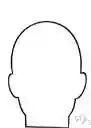 trace - a drawing created by superimposing a semitransparent sheet of paper on the original image and copying on it the lines of the original image trace - a drawing created by superimposing a semitransparent sheet of paper on the original image and copying on it the lines of the original imagedrawing - a representation of forms or objects on a surface by means of lines; "drawings of abstract forms"; "he did complicated pen-and-ink drawings like medieval miniatures" | |
| 5. | 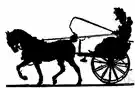 trace - either of two lines that connect a horse's harness to a wagon or other vehicle or to a whiffletree trace - either of two lines that connect a horse's harness to a wagon or other vehicle or to a whiffletreeharness - stable gear consisting of an arrangement of leather straps fitted to a draft animal so that it can be attached to and pull a cart line - something (as a cord or rope) that is long and thin and flexible; "a washing line" | |
| 6. |  trace - a visible mark (as a footprint) left by the passage of person or animal or vehicle trace - a visible mark (as a footprint) left by the passage of person or animal or vehicleprint, mark - a visible indication made on a surface; "some previous reader had covered the pages with dozens of marks"; "paw prints were everywhere" | |
| Verb | 1. |  trace - follow, discover, or ascertain the course of development of something; "We must follow closely the economic development is Cuba" ; "trace the student's progress" trace - follow, discover, or ascertain the course of development of something; "We must follow closely the economic development is Cuba" ; "trace the student's progress"keep abreast, keep up, follow - keep informed; "He kept up on his country's foreign policies" analyse, analyze, examine, study, canvass, canvas - consider in detail and subject to an analysis in order to discover essential features or meaning; "analyze a sonnet by Shakespeare"; "analyze the evidence in a criminal trial"; "analyze your real motives" keep an eye on, watch over, watch, observe, follow - follow with the eyes or the mind; "Keep an eye on the baby, please!"; "The world is watching Sarajevo"; "She followed the men with the binoculars" |
| 2. | 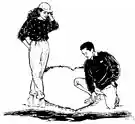 trace - make a mark or lines on a surface; "draw a line"; "trace the outline of a figure in the sand" trace - make a mark or lines on a surface; "draw a line"; "trace the outline of a figure in the sand"mark - make or leave a mark on; "the scouts marked the trail"; "ash marked the believers' foreheads" construct - draw with suitable instruments and under specified conditions; "construct an equilateral triangle" inscribe - draw within a figure so as to touch in as many places as possible circumscribe - draw a line around; "He drew a circle around the points" circumscribe - to draw a geometric figure around another figure so that the two are in contact but do not intersect draw - engage in drawing; "He spent the day drawing in the garden" draw - represent by making a drawing of, as with a pencil, chalk, etc. on a surface; "She drew an elephant"; "Draw me a horse" write - mark or trace on a surface; "The artist wrote Chinese characters on a big piece of white paper"; "Russian is written with the Cyrillic alphabet" | |
| 3. | 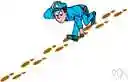 trace - to go back over again; "we retraced the route we took last summer"; "trace your path" trace - to go back over again; "we retraced the route we took last summer"; "trace your path"return - go or come back to place, condition, or activity where one has been before; "return to your native land"; "the professor returned to his teaching position after serving as Dean" | |
| 4. | 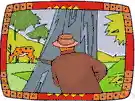 trace - pursue or chase relentlessly; "The hunters traced the deer into the woods"; "the detectives hounded the suspect until they found him" trace - pursue or chase relentlessly; "The hunters traced the deer into the woods"; "the detectives hounded the suspect until they found him"dog, give chase, go after, chase, tail, chase after, trail, track, tag - go after with the intent to catch; "The policeman chased the mugger down the alley"; "the dog chased the rabbit" ferret - hound or harry relentlessly | |
| 5. |  trace - discover traces of; "She traced the circumstances of her birth" trace - discover traces of; "She traced the circumstances of her birth"detect, discover, notice, observe, find - discover or determine the existence, presence, or fact of; "She detected high levels of lead in her drinking water"; "We found traces of lead in the paint" | |
| 6. | trace - make one's course or travel along a path; travel or pass over, around, or along; "The children traced along the edge of the dark forest"; "The women traced the pasture" go forward, proceed, continue - move ahead; travel onward in time or space; "We proceeded towards Washington"; "She continued in the direction of the hills"; "We are moving ahead in time now" | |
| 7. |  trace - copy by following the lines of the original drawing on a transparent sheet placed upon it; make a tracing of; "trace a design"; "trace a pattern" trace - copy by following the lines of the original drawing on a transparent sheet placed upon it; make a tracing of; "trace a design"; "trace a pattern"re-create, copy - make a replica of; "copy that drawing"; "re-create a picture by Rembrandt" | |
| 8. |  trace - read with difficulty; "Can you decipher this letter?"; "The archeologist traced the hieroglyphs" trace - read with difficulty; "Can you decipher this letter?"; "The archeologist traced the hieroglyphs"read - interpret something that is written or printed; "read the advertisement"; "Have you read Salman Rushdie?" |
Based on WordNet 3.0, Farlex clipart collection. © 2003-2012 Princeton University, Farlex Inc.
trace
noun
Collins Thesaurus of the English Language – Complete and Unabridged 2nd Edition. 2002 © HarperCollins Publishers 1995, 2002
trace
noun1. A visible sign or mark of the passage of someone or something:
2. A mark or remnant that indicates the former presence of something:
1. To follow the traces or scent of, as in hunting:
The American Heritage® Roget's Thesaurus. Copyright © 2013, 2014 by Houghton Mifflin Harcourt Publishing Company. Published by Houghton Mifflin Harcourt Publishing Company. All rights reserved.