zip() function
The zip() function is used to make an iterator that aggregates elements from each of the iterables. The iterator stops when the shortest input iterable is exhausted. With a single iterable argument, it returns an iterator of 1-tuples. With no arguments, it returns an empty iterator.
Version:
(Python 3.2.5)
Syntax:
zip(*iterables)
Parameter:
| Name | Description | Required / Optional |
|---|---|---|
| *iterables | Iterator objects that will be joined together. | Required |
Return value:
Returns an iterator of tuples, where the i-th tuple contains the i-th element from each of the argument sequences or iterables.
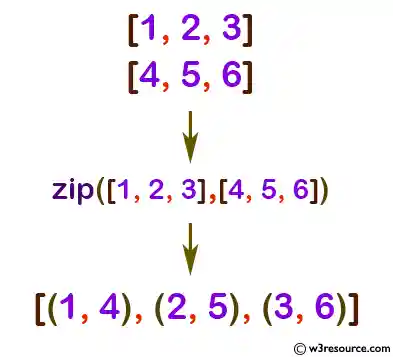
Example: Python zip() function
x = [1, 2, 3]
y = [4, 5, 6]
zipped = zip(x, y)
print(list(zipped))
Output:
[(1, 4), (2, 5), (3, 6)]
Pictorial Presentation:
Python Code Editor:
Previous: vars()
Next: Python Home
Test your Python skills with w3resource's quiz