Jonathan A. Zea
You can also visit my profile on our lab’s website.
Currently, I am pursuing a PhD on AI Mechanistic Interpretability. My areas of interest include Deep Learning, Machine Learning, Neural Networks, Algorithms, and the intersection of AI and Philosophy.
In a broader context, I am passionate about microcontrollers, embedded systems, robotics and technology.
Beyond that, I am also interested about literature, climate change, puzzles and board games.
-
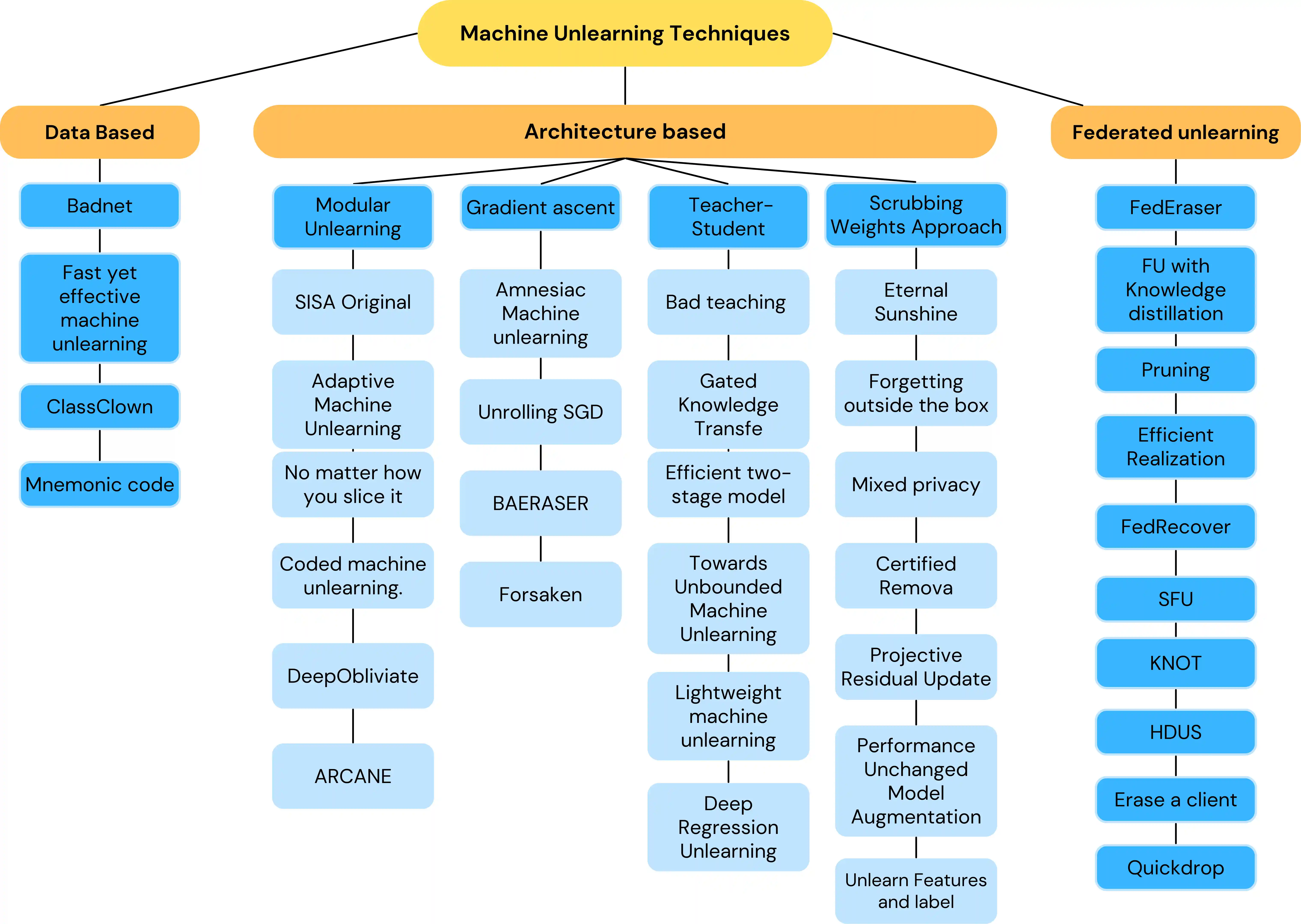
A Systematic Literature Review of Machine Unlearning Techniques in Neural Networks
Ivanna Daniela Cevallos , Marco E. Benalcázar, Ángel Leonardo Valdivieso Caraguay , and
Computers, 2025
-
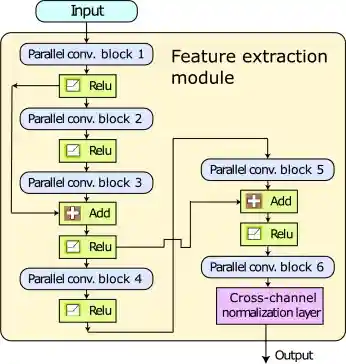
CNN-LSTM and post-processing for EMG-based hand gesture recognition
Lorena Isabel Barona López , Francis M. Ferri , Jonathan Zea, and 2 more authors
Intelligent Systems with Applications, 2024
Hand Gesture Recognition (HGR) using electromyography (EMG) signals is a challenging problem due to the variability and noise in the signals across individuals. This study addresses this challenge by examining the effect of incorporating a post-processing algorithm, which filters the sequence of predictions and removes spurious labels, on the performance of a HGR model based on spectrograms and Convolutional Neural Networks (CNN). The study also compares CNN vs CNN-LSTM to assess the influence of the memory cells on the model. The EMG-EPN-612 dataset, which contains measurements of EMG signals for 5 hand gestures from 612 subjects, was used for training and testing. The results showed that the post-processing algorithm increased the recognition accuracy by 41.86% for the CNN model and 24.77% for the CNN-LSTM model. The inclusion of the memory cells increased accuracy by 3.29%, but at the cost of 53 times more learnables. The CNN-LSTM model with post-processing achieved a mean recognition accuracy of 90.55% (SD=9.45%). These findings suggest new paths for research in HGR architectures beyond the traditional focus on the classification and feature extraction stages. For reproducibility purposes, we made publicly available the source code in Github.
-
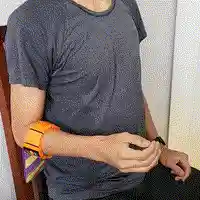
An Open-Source Data Acquisition and Manual Segmentation System for Hand Gesture Recognition based on EMG
Jonathan Zea, Marco E. Benalcázar, Lorena Isabel Barona Lôpez , and 1 more author
In 2021 IEEE Fifth Ecuador Technical Chapters Meeting (ETCM) , 2021
-
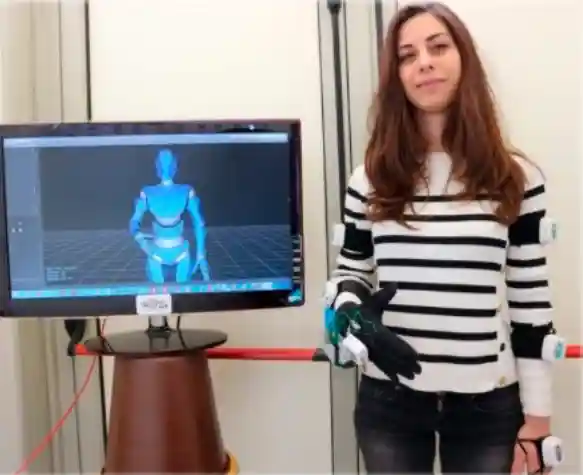
Sign Language Recognition Using Wearable Electronics: Implementing k-Nearest Neighbors with Dynamic Time Warping and Convolutional Neural Network Algorithms
Giovanni Saggio , Pietro Cavallo , Mariachiara Ricci , and 3 more authors
Sensors, 2020
We propose a sign language recognition system based on wearable electronics and two different classification algorithms. The wearable electronics were made of a sensory glove and inertial measurement units to gather fingers, wrist, and arm/forearm movements. The classifiers were k-Nearest Neighbors with Dynamic Time Warping (that is a non-parametric method) and Convolutional Neural Networks (that is a parametric method). Ten sign-words were considered from the Italian Sign Language: cose, grazie, maestra, together with words with international meaning such as google, internet, jogging, pizza, television, twitter, and ciao. The signs were repeated one-hundred times each by seven people, five male and two females, aged 29–54 y ± 10.34 (SD). The adopted classifiers performed with an accuracy of 96.6% ± 3.4 (SD) for the k-Nearest Neighbors plus the Dynamic Time Warping and of 98.0% ± 2.0 (SD) for the Convolutional Neural Networks. Our system was made of wearable electronics among the most complete ones, and the classifiers top performed in comparison with other relevant works reported in the literature.
-
Real-Time Hand Gesture Recognition: A Long Short-Term Memory Approach with Electromyography
In Advances and Applications in Computer Science, Electronics and Industrial Engineering , 2020
Hand gestures are a non-verbal type of communication ideally suited for Human-Machine Interaction. Nevertheless, accuracy rates and response times still are a matter of research. One unattended problem has been the difficulty and vagueness of the evaluation of the models proposed in the literature. In this paper, a protocol for evaluating recognition is proposed. A Hand Gesture Recognition system using electromyography signals (EMG) is also presented. This model works in real time, is user dependent and is based in Long Short-Term Memory Networks. The model recognizes 5 different classes (wave in, wave out, fist, open, pinch) apart from the relax state. A data set with 120 people was collected using the commercial device Myo Armband. The data set was divided 50% for tuning and 50% for testing. Following the evaluation protocol proposed, the presented model achieves a 95.79% in classification and a 88.1% in recognition accuracy. An analysis of the characteristics of this model shows the advantage over similar models and its capability for being applied in all sort of fields.


