Python isatty() function
The isatty() function in Python is used to check whether a file is connected to a tty-type device or not.
The tty, which stands for teletypewriter, is an input device (terminal device) used to perform the input and output operations based on a character-by-character process.
Note: The communication between the terminal device and the program itself is controlled by the tty interface. Here, the program is used to read and write the data.
The isatty() function suggests the definition in its name. That is, isatty stands for "is a tty." Simply, it means whether the file object is connected to a tty. If yes, then true is returned; otherwise, false is returned. That is why, as I always say, Python sometimes feels like a very simple language, like reading a book and understanding the thing.
Python isatty() syntax
The syntax to use Python's isatty() function is:
where fo is the file handler or file object.
Note: The isatty() function in Python returns true if the file object or stream is connected to a terminal device. Otherwise, it returns false.
Python isatty() example
Here is an example of the isatty() function in Python:
fo = open("codescracker.txt", "r")
print(fo.isatty())
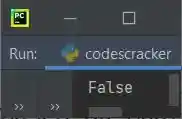
Since the file object fo is not connected to a tty-type terminal device, the above program produces false on the output screen, as shown in the snapshot given below:
Advantages of the isatty() function in Python
- The isatty() function determines whether or not the program is being run interactively in a terminal. This is useful for interactive programs that need user input or output.
- If a program anticipates user input from a terminal, it can use isatty() to determine whether the input is from a terminal or a file. This can improve error handling and prevent unexpected program behavior.
- If a program does not need to output data to a terminal, it can skip certain formatting or display options, making better use of system resources.
Disadvantages of the isatty() function in Python
- The isatty() function only applies to file-like objects associated with a terminal device. This function provides no useful information for other file-like objects.
- The behavior of the isatty() function may differ across platforms and operating systems, resulting in inconsistent behavior for programs that rely on it.
- Programs that simulate a terminal environment can fool the isatty() function, resulting in unexpected results.
« Previous Function Next Function »
Liked this post? Share it!