Python property() Function
The property() function in Python returns the property attribute. For example:
class CodesCracker:
    def __init__(self, x):
        self.x = x

    def getV(self):
        print("\nGetting the Value")
        return self.x

    def setV(self, x):
        print("\nNow Setting the Value to \"", x, "\"", sep="")
        self.x = x
        return self.x

    def delV(self):
        print("\nDeleting the Value")
        del self.x

    val = property(getV, setV, delV, "property() Demo")

a = CodesCracker("Python Programming")
print(a.val)

a.val = "Built-in Functions"
print(a.val)

del a.val
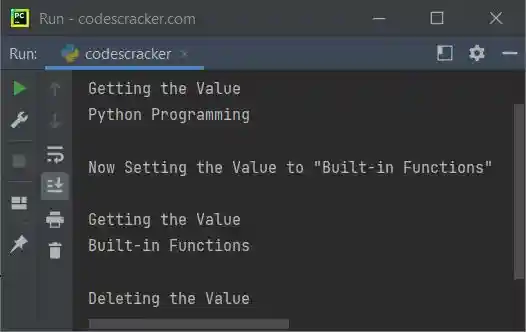
The snapshot given below shows the sample output produced by above Python program, demonstrating the property() function:
Python property() Function Syntax
The syntax of property() function in Python, is:
property(fget, fset, fdel, doc)
where:
- fget - refers to a function, used for getting an attribute value
- fset - refers to a function, used for setting an attribute value
- fdel - refers to a function, used for deleting an attribute
- doc - refers to a string, used to contain documentation for the string (docstring)
Note: All the four parameters are optional. Also the default value is None for all four parameters.
Python property() Function Example
Here is an example of property() function in Python:
class CodesCracker:
    def __init__(self, stud):
        self.s = stud

    def getval(self):
        print("\nGetting the Name of Student...")
        return self.s

    def setval(self, nstud):
        print("\nNow Setting Name of Student to \"", nstud, "\"", sep="")
        self.s = nstud

    def delval(self):
        print("\nDeleting the Name of Student...")
        del self.s

    stud = property(getval, setval, delval)

x = CodesCracker("Chloe")
print("The Name of Student is:", x.stud)
x.stud = "Linda"
print("Now the Name of Student is:", x.stud)
del x.stud
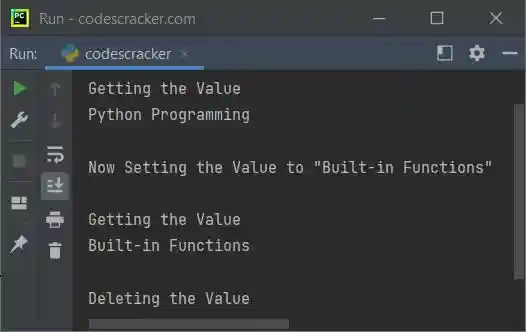
The sample run of this program, is shown in the snapshot given below:
Note: The same job can also be done using the @property decorator, instead of using property() function.
« Previous Function Next Function »
Liked this post? Share it!