| ITGAE | |||||||||||||||||||||||||
|---|---|---|---|---|---|---|---|---|---|---|---|---|---|---|---|---|---|---|---|---|---|---|---|---|---|
| Identifiers | |||||||||||||||||||||||||
| Aliases | ITGAE, CD103, HUMINAE, integrin subunit alpha E | ||||||||||||||||||||||||
| External IDs | OMIM: 604682 MGI: 1298377 HomoloGene: 113560 GeneCards: ITGAE | ||||||||||||||||||||||||
| |||||||||||||||||||||||||
| |||||||||||||||||||||||||
| |||||||||||||||||||||||||
| Orthologs | |||||||||||||||||||||||||
| Species | Human | Mouse | |||||||||||||||||||||||
| Entrez | |||||||||||||||||||||||||
| Ensembl | |||||||||||||||||||||||||
| UniProt | |||||||||||||||||||||||||
| RefSeq (mRNA) | |||||||||||||||||||||||||
| RefSeq (protein) | |||||||||||||||||||||||||
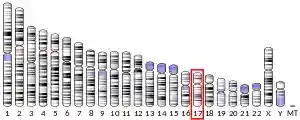
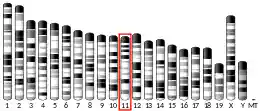
| Location (UCSC) | Chr 17: 3.71 – 3.8 Mb | Chr 11: 73.09 – 73.15 Mb | |||||||||||||||||||||||
| PubMed search | [3] | [4] | |||||||||||||||||||||||
| Wikidata | |||||||||||||||||||||||||
| |||||||||||||||||||||||||




Integrin, alpha E (ITGAE) also known as CD103 (cluster of differentiation 103) is an integrin protein that in human is encoded by the ITGAE gene.[5][6] CD103 binds integrin beta 7 (β7– ITGB7) to form the complete heterodimeric integrin molecule αEβ7, which has no distinct name. The αEβ7 complex is often referred to as "CD103" though this strictly refers only to the αE chain. Note that the β7 subunit can bind with other integrin α chains, such as α4 (CD49d).
Tissue distribution
CD103 is expressed widely on intraepithelial lymphocyte (IEL) T cells (both αβ T cells and γδ T cells) and on some peripheral regulatory T cells (Tregs).[7] It has also been reported on lamina propria T cells.[8] A subset of dendritic cells in the gut mucosa and mesenteric lymph nodes, known as CD103 dendritic cells, also expresses this marker.[9]
It is useful in identifying hairy cell leukemia which is positive for this marker in contrast to most other hematologic malignancies which are negative for CD103 except enteropathy-associated T cell lymphoma.[10]
Function
The chief ligand for αEβ7 is E-cadherin, a cellular adhesion molecule (CAM) found on epithelial cells.[11] It is probably important for T cell homing to the intestinal sites.[12]
Tregs are important for decreasing the immune response and appear to play a crucial role in the prevention of autoimmune diseases. Tregs are defined as CD4+/CD25+/Foxp3+ cells.[13] Some CD4+/FoxP3− cells also express CD103 and have been attributed regulatory activity. It is unclear whether the presence of CD103 on Treg cells represents a specialized feature for Treg, or Treg differentiation of IEL T cells.
See also
- Cluster of differentiation
- Tissue-resident memory T cell
References
- ^ a b c GRCh38: Ensembl release 89: ENSG00000083457 - Ensembl, May 2017
- ^ a b c GRCm38: Ensembl release 89: ENSMUSG00000005947 - Ensembl, May 2017
- ^ "Human PubMed Reference:". National Center for Biotechnology Information, U.S. National Library of Medicine.
- ^ "Mouse PubMed Reference:". National Center for Biotechnology Information, U.S. National Library of Medicine.
- ^ Kilshaw PJ, Higgins JM (2002). "Alpha E: no more rejection?". J. Exp. Med. 196 (7): 873–5. doi:10.1084/jem.20021404. PMC 2194032. PMID 12370249.
- ^ "Entrez Gene: integrin".
- ^ Lehmann J, Huehn J, de la Rosa M, Maszyna F, Kretschmer U, Krenn V, Brunner M, Scheffold A, Hamann A (October 2002). "Expression of the integrin alpha Ebeta 7 identifies unique subsets of CD25+ as well as CD25- regulatory T cells". Proc. Natl. Acad. Sci. U.S.A. 99 (20): 13031–6. doi:10.1073/pnas.192162899. PMC 130581. PMID 12242333.
- ^ Aziz S, Fackler OT, Meyerhans A, Müller-Lantzsch N, Zeitz M, Schneider T (January 2005). "Replication of M-tropic HIV-1 in activated human intestinal lamina propria lymphocytes is the main reason for increased virus load in the intestinal mucosa". J. Acquir. Immune Defic. Syndr. 38 (1): 23–30. doi:10.1097/00126334-200501010-00005. PMID 15608520. S2CID 22884381.
- ^ Johansson-Lindbom B, Svensson M, Pabst O, Palmqvist C, Marquez G, Förster R, Agace WW (October 2005). "Functional specialization of gut CD103+ dendritic cells in the regulation of tissue-selective T cell homing". J. Exp. Med. 202 (8): 1063–73. doi:10.1084/jem.20051100. PMC 2213212. PMID 16216890.
- ^ Swerdlow SH, Campo E, Harris NL, Jaffe ES, Pileri SA, Stein H, Thiele J, Vardiman JW (2008). WHO Classification of Tumours of Haematopoietic and Lymphoid Tissues (World Health Organization Classification of Tumours) (4th ed.). Geneva: World Health Organization. ISBN 978-92-832-2431-0.
- ^ Hadley GA, Bartlett ST, Via CS, Rostapshova EA, Moainie S (October 1997). "The epithelial cell-specific integrin, CD103 (alpha E integrin), defines a novel subset of alloreactive CD8+ CTL". J. Immunol. 159 (8): 3748–56. PMID 9378961.
- ^ Agace WW, Higgins JM, Sadasivan B, Brenner MB, Parker CM (October 2000). "T-lymphocyte-epithelial-cell interactions: integrin alpha(E)(CD103)beta(7), LEEP-CAM and chemokines". Curr. Opin. Cell Biol. 12 (5): 563–8. doi:10.1016/S0955-0674(00)00132-0. PMID 10978890.
- ^ Allakhverdi Z, Fitzpatrick D, Boisvert A, Baba N, Bouguermouh S, Sarfati M, Delespesse G (December 2006). "Expression of CD103 identifies human regulatory T-cell subsets". J. Allergy Clin. Immunol. 118 (6): 1342–9. doi:10.1016/j.jaci.2006.07.034. PMID 17137867.
Further reading
- Davila S, Froeling FE, Tan A, et al. (2010). "New genetic associations detected in a host response study to hepatitis B vaccine". Genes Immun. 11 (3): 232–8. doi:10.1038/gene.2010.1. PMID 20237496.
- Tilburgs T, Scherjon SA, Roelen DL, Claas FH (2009). "Decidual CD8+CD28- T cells express CD103 but not perforin". Hum. Immunol. 70 (2): 96–100. doi:10.1016/j.humimm.2008.12.006. PMID 19150377.
- Schlickum S, Sennefelder H, Friedrich M, et al. (2008). "Integrin alpha E(CD103)beta 7 influences cellular shape and motility in a ligand-dependent fashion". Blood. 112 (3): 619–25. doi:10.1182/blood-2008-01-134833. PMID 18492951.
- Rose JE, Behm FM, Drgon T, et al. (2010). "Personalized smoking cessation: interactions between nicotine dose, dependence and quit-success genotype score". Mol. Med. 16 (7–8): 247–53. doi:10.2119/molmed.2009.00159. PMC 2896464. PMID 20379614.
- Liu YH, Chen RH, Chen WC, et al. (2010). "Disease association of the CD103 polymorphisms in Taiwan Chinese Graves' ophthalmopathy patients". Ophthalmology. 117 (8): 1645–51. doi:10.1016/j.ophtha.2009.12.037. PMID 20417566.
- Lesch KP, Timmesfeld N, Renner TJ, et al. (2008). "Molecular genetics of adult ADHD: converging evidence from genome-wide association and extended pedigree linkage studies". J Neural Transm. 115 (11): 1573–85. doi:10.1007/s00702-008-0119-3. PMID 18839057. S2CID 7036114.
- Shiffman D, O'Meara ES, Bare LA, et al. (2008). "Association of gene variants with incident myocardial infarction in the Cardiovascular Health Study". Arterioscler. Thromb. Vasc. Biol. 28 (1): 173–9. doi:10.1161/ATVBAHA.107.153981. PMC 2636623. PMID 17975119.
- Agace WW, Higgins JM, Sadasivan B, et al. (2000). "T-lymphocyte-epithelial-cell interactions: integrin alpha(E)(CD103)beta(7), LEEP-CAM and chemokines". Curr. Opin. Cell Biol. 12 (5): 563–8. doi:10.1016/S0955-0674(00)00132-0. PMID 10978890.
- Hadley G (2004). "Role of integrin CD103 in promoting destruction of renal allografts by CD8 T cells". Am. J. Transplant. 4 (7): 1026–32. doi:10.1111/j.1600-6143.2004.00465.x. PMID 15196058. S2CID 3038018.
- Enjuanes A, Benavente Y, Bosch F, et al. (2008). "Genetic variants in apoptosis and immunoregulation-related genes are associated with risk of chronic lymphocytic leukemia". Cancer Res. 68 (24): 10178–86. doi:10.1158/0008-5472.CAN-08-2221. PMID 19074885.
- Luke MM, O'Meara ES, Rowland CM, et al. (2009). "Gene variants associated with ischemic stroke: the cardiovascular health study". Stroke. 40 (2): 363–8. doi:10.1161/STROKEAHA.108.521328. PMC 2881155. PMID 19023099.
- Silva LK, Blanton RE, Parrado AR, et al. (2010). "Dengue hemorrhagic fever is associated with polymorphisms in JAK1". Eur. J. Hum. Genet. 18 (11): 1221–7. doi:10.1038/ejhg.2010.98. PMC 2950898. PMID 20588308.
- Annacker O, Coombes JL, Malmstrom V, et al. (2005). "Essential role for CD103 in the T cell-mediated regulation of experimental colitis". J. Exp. Med. 202 (8): 1051–61. doi:10.1084/jem.20040662. PMC 2213206. PMID 16216886.
- Kilshaw PJ, Higgins JM (2002). "Alpha E: no more rejection?". J. Exp. Med. 196 (7): 873–5. doi:10.1084/jem.20021404. PMC 2194032. PMID 12370249.
- Uss E, Rowshani AT, Hooibrink B, et al. (2006). "CD103 is a marker for alloantigen-induced regulatory CD8+ T cells". J. Immunol. 177 (5): 2775–83. doi:10.4049/jimmunol.177.5.2775. PMID 16920912.
- Le Floc'h A, Jalil A, Vergnon I, et al. (2007). "Alpha E beta 7 integrin interaction with E-cadherin promotes antitumor CTL activity by triggering lytic granule polarization and exocytosis". J. Exp. Med. 204 (3): 559–70. doi:10.1084/jem.20061524. PMC 2137907. PMID 17325197.
- Heron M, Grutters JC, Van Moorsel CH, et al. (2009). "Effect of variation in ITGAE on risk of sarcoidosis, CD103 expression, and chest radiography". Clin. Immunol. 133 (1): 117–25. doi:10.1016/j.clim.2009.06.007. PMID 19604725.
- Shaw SK, Brenner MB (1995). "The beta 7 integrins in mucosal homing and retention". Semin. Immunol. 7 (5): 335–42. doi:10.1016/1044-5323(95)90014-4. PMID 8580465.
- Dickeson SK, Santoro SA (1998). "Ligand recognition by the I domain-containing integrins". Cell. Mol. Life Sci. 54 (6): 556–66. doi:10.1007/s000180050184. PMID 9676575. S2CID 9775686.
- Heron M, Slieker WA, Zanen P, et al. (2008). "Evaluation of CD103 as a cellular marker for the diagnosis of pulmonary sarcoidosis". Clin. Immunol. 126 (3): 338–44. doi:10.1016/j.clim.2007.11.005. PMID 18182176.
External links
- ITGAE+protein,+human at the US National Library of Medicine Medical Subject Headings (MeSH)
- ITGAE Info with links in the Cell Migration Gateway
This article is copied from an article on Wikipedia® - the free encyclopedia created and edited by its online user community. The text was not checked or edited by anyone on our staff. Although the vast majority of Wikipedia® encyclopedia articles provide accurate and timely information, please do not assume the accuracy of any particular article. This article is distributed under the terms of GNU Free Documentation License.