Thingol
| Thingol | |
|---|---|
| Tolkien character | |
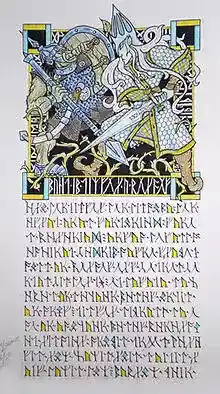 The Fight between Thingol and Boldog | |
| In-universe information | |
| Aliases | Elwë Singollo, Elu Thingol, King of Doriath, King of the Sindar, King of the Teleri, High-king and Lord of Beleriand, |
| Race | Elves |
| Gender | Male |
| Book(s) | The Silmarillion, The Children of Húrin, The Lays of Beleriand, Beren & Lúthien |
Elu Thingol is a fictional character in J.R.R. Tolkien's Middle-earth legendarium. He appears in The Silmarillion, The Lays of Beleriand and Children of Húrin and in numerous stories in The History of Middle-earth. He is a major character in the First Age of Middle-earth[1] and an essential part of the ancestral backgrounding of the romance between Aragorn and Arwen in The Lord of the Rings.
Thingol is introduced as the King of Doriath, King of the Sindar, High-king[T 1] and Lord of Beleriand. He is said to be "the tallest of all the Children of Ilúvatar" and the "mightiest of the Eldar save Fëanor only".[T 2]
Fictional role
In The Silmarillion he is one of the three chieftains of the Elves who depart from Cuiviénen with Oromë as ambassadors of Valinor and later become Kings. Upon his return, he persuades many of his kindred, the Nelyar, to follow him back to Valinor. This host becomes known as the Teleri. He later encounters Melian the Maia and fell in love with her. He had a daughter, Lúthien, who married Beren. He fought numerous wars with Morgoth and Fëanor, before being killed in a war with the Dwarves. Thingol was the one who set numerous quests deemed impossible for Beren in order to prevent him from marrying Lúthien.
Etymology
- Thingol is Sindarin for "grey cloak". The Quenya form of his name is [Elwë] Singollo with the same meaning.[T 3]
Analysis
Verlyn Flieger writes that Thingol's actions may seem unjustified thematically, but in terms of plot they make sense in terms of his politics and dynastic needs. With the return of the Noldorin Elves to Middle-earth, his mood darkens with the threat that the immigrants pose to his kingdom. He takes successively darker actions, moving in Flieger's terms further and further from the light, so that even when he gets a Silmaril, he knows neither how to appreciate it nor to use it. She contrasts him with Beren, who though a Man is constantly drawn towards the light.[2] Evans drew a further parallel between Thingol and the Noldor: like them, he turned away from the Light, and chooses to remain in Middle-earth with Melian, who could stop time and its changes behind her Girdle.[3]
Tom Shippey writes that Thingol is part of the tightly-woven trap of The Silmarillion. There are three Hidden Elvish Kingdoms including Doriath; these were founded by three relatives, including Thingol; and they are each betrayed and destroyed; they are each penetrated by a mortal Man, again all relatives, in Doriath's case Beren; and the sense of Doom, which Shippey glosses as "future disaster", hangs heavy over all of them in the tale.[4]
The medievalist Marjorie Burns states that Thingol gained "great power" through his marriage to Melian, noting that she resembles Rider Haggard's infinitely desirable Arthurian muse, Ayesha of his novel She: A History of Adventure.[5] Lisa Hopkins have noted Thingol's later depiction as a prideful king who rarely listens to his wife's counsel, even though she is defined as a character with immense foresight and wisdom; notably, Thingol's reckless actions and refusal to heed Melian's advice about the Silmarils brought about the downfall of his kingdom, while the hero Tuor is wiser by comparison for listening to his wife Idril.[6] Robley Evans observed that Thingol's marriage with Melian seemed to "promise a model union of diverse created beings" on first impression, but noted that Thingol is the "complementary opposite of Feanor in Tolkien’s structural counterpoint" in that he is ultimately destroyed by his own version of Feanor's oath, since the act of claiming the Silmaril recovered by Beren placed his kingdom under the Doom of Mandos.[3]
The House of Thingol, Elmo, and Olwë
| Half-elven family tree[T 4][T 5] | |||||||||||||||||||||||||||||||||||||||||||||||||||||||||||||||||||||||||||||||||||||||||||||||||||||||||||||||||||||||||||||||||||||||||||||||||||||||||||||||||||||||||||||||||||||||||||||||||||||||||||||||||||||||||||||||||||||||||||||||||||||||||||||||||||||||||||||||||||||||||||||||||||||||||||||||||||||||||||||||||||||||||||||||||||||||||||||||||||||||||||||||||||||||||||||||||||||||||||||||||||||||||||||||||||||||||||||||||||||||||||||||||||||||||||||||||||||||||||||||||||||||||||||||||||||||||||||||||||||||||||||||||||||||||||||||||||||||||||||||||||||||||||||||||||||||||||||||||||||||||||||||||||||||||||||||||||||||||||||||||||||||||||||||||||||||||||||||||||||||||||||||||||||||||||||||||||||||||||||||||||||||||||||||||||||||||||||||||||||||||||||||||||||||||||||||||||||||||||||||||||||||||||||||||||||||||||||||||||||||||||||||||||||||||||||||||||||||||||||||||||||||||||||||||||||||||||||||||||||||||||||||||||||||||||||||||||||||||||||||||||||||||||||||||||||||||||||||||||||||
|---|---|---|---|---|---|---|---|---|---|---|---|---|---|---|---|---|---|---|---|---|---|---|---|---|---|---|---|---|---|---|---|---|---|---|---|---|---|---|---|---|---|---|---|---|---|---|---|---|---|---|---|---|---|---|---|---|---|---|---|---|---|---|---|---|---|---|---|---|---|---|---|---|---|---|---|---|---|---|---|---|---|---|---|---|---|---|---|---|---|---|---|---|---|---|---|---|---|---|---|---|---|---|---|---|---|---|---|---|---|---|---|---|---|---|---|---|---|---|---|---|---|---|---|---|---|---|---|---|---|---|---|---|---|---|---|---|---|---|---|---|---|---|---|---|---|---|---|---|---|---|---|---|---|---|---|---|---|---|---|---|---|---|---|---|---|---|---|---|---|---|---|---|---|---|---|---|---|---|---|---|---|---|---|---|---|---|---|---|---|---|---|---|---|---|---|---|---|---|---|---|---|---|---|---|---|---|---|---|---|---|---|---|---|---|---|---|---|---|---|---|---|---|---|---|---|---|---|---|---|---|---|---|---|---|---|---|---|---|---|---|---|---|---|---|---|---|---|---|---|---|---|---|---|---|---|---|---|---|---|---|---|---|---|---|---|---|---|---|---|---|---|---|---|---|---|---|---|---|---|---|---|---|---|---|---|---|---|---|---|---|---|---|---|---|---|---|---|---|---|---|---|---|---|---|---|---|---|---|---|---|---|---|---|---|---|---|---|---|---|---|---|---|---|---|---|---|---|---|---|---|---|---|---|---|---|---|---|---|---|---|---|---|---|---|---|---|---|---|---|---|---|---|---|---|---|---|---|---|---|---|---|---|---|---|---|---|---|---|---|---|---|---|---|---|---|---|---|---|---|---|---|---|---|---|---|---|---|---|---|---|---|---|---|---|---|---|---|---|---|---|---|---|---|---|---|---|---|---|---|---|---|---|---|---|---|---|---|---|---|---|---|---|---|---|---|---|---|---|---|---|---|---|---|---|---|---|---|---|---|---|---|---|---|---|---|---|---|---|---|---|---|---|---|---|---|---|---|---|---|---|---|---|---|---|---|---|---|---|---|---|---|---|---|---|---|---|---|---|---|---|---|---|---|---|---|---|---|---|---|---|---|---|---|---|---|---|---|---|---|---|---|---|---|---|---|---|---|---|---|---|---|---|---|---|---|---|---|---|---|---|---|---|---|---|---|---|---|---|---|---|---|---|---|---|---|---|---|---|---|---|---|---|---|---|---|---|---|---|---|---|---|---|---|---|---|---|---|---|---|---|---|---|---|---|---|---|---|---|---|---|---|---|---|---|---|---|---|---|---|---|---|---|---|---|---|---|---|---|---|---|---|---|---|---|---|---|---|---|---|---|---|---|---|---|---|---|---|---|---|---|---|---|---|---|---|---|---|---|---|---|---|---|---|---|---|---|---|---|---|---|---|---|---|---|---|---|---|---|---|---|---|---|---|---|---|---|---|---|---|---|---|---|---|---|---|---|---|---|---|---|---|---|---|---|---|---|---|---|---|---|---|---|---|---|---|---|---|---|---|---|---|---|---|---|---|---|---|---|---|---|---|---|---|---|---|---|---|---|---|---|---|---|---|---|---|---|---|---|---|---|---|---|---|---|---|---|---|---|---|---|---|---|---|---|---|---|---|---|---|---|---|---|---|---|---|---|---|---|---|---|---|---|---|---|---|---|---|---|---|---|---|---|---|---|---|---|---|---|---|---|---|---|---|---|---|---|---|---|---|---|---|---|---|---|---|---|---|---|---|---|---|---|---|---|---|---|---|---|---|---|---|---|---|---|---|---|---|---|---|---|---|---|---|---|---|---|---|---|---|---|---|---|---|---|---|---|---|---|---|---|---|---|---|---|---|---|---|---|---|---|---|---|---|---|---|---|---|---|---|---|---|---|---|---|---|---|---|---|---|---|---|---|---|---|---|---|---|---|---|---|---|---|---|---|---|---|---|---|---|---|---|---|---|---|---|---|---|---|---|---|---|---|---|---|---|---|---|---|---|---|---|---|---|---|---|---|---|---|---|---|---|---|---|---|---|---|---|---|---|---|---|---|---|---|---|---|---|---|---|---|---|---|---|---|---|---|---|---|---|---|---|---|---|---|---|---|---|---|---|---|---|---|---|---|---|---|---|---|---|---|---|---|---|---|---|---|---|---|---|---|---|---|---|---|---|---|---|---|---|---|---|---|---|---|---|---|---|---|---|---|---|---|---|---|---|---|---|---|---|---|---|---|---|---|---|---|---|---|---|
| |||||||||||||||||||||||||||||||||||||||||||||||||||||||||||||||||||||||||||||||||||||||||||||||||||||||||||||||||||||||||||||||||||||||||||||||||||||||||||||||||||||||||||||||||||||||||||||||||||||||||||||||||||||||||||||||||||||||||||||||||||||||||||||||||||||||||||||||||||||||||||||||||||||||||||||||||||||||||||||||||||||||||||||||||||||||||||||||||||||||||||||||||||||||||||||||||||||||||||||||||||||||||||||||||||||||||||||||||||||||||||||||||||||||||||||||||||||||||||||||||||||||||||||||||||||||||||||||||||||||||||||||||||||||||||||||||||||||||||||||||||||||||||||||||||||||||||||||||||||||||||||||||||||||||||||||||||||||||||||||||||||||||||||||||||||||||||||||||||||||||||||||||||||||||||||||||||||||||||||||||||||||||||||||||||||||||||||||||||||||||||||||||||||||||||||||||||||||||||||||||||||||||||||||||||||||||||||||||||||||||||||||||||||||||||||||||||||||||||||||||||||||||||||||||||||||||||||||||||||||||||||||||||||||||||||||||||||||||||||||||||||||||||||||||||||||||||||||||||||||
See also
References
Primary
- ^ J.R.R. Tolkien, Christopher Tolkien editor, History of Middle-earth, Vol. XI, (1994), p. 21, "Fingolfin...acknowledged the high-kingship of Thingol"; p.380, Thingol is also acknowledged high-king by Círdan and his following: p.410, the Grey-elves of Mithrim acknowledged Thingol as high-king.
- ^ J.R.R. Tolkien, Christopher Tolkien editor, History of Middle-earth, Vol.XI, (1994), p.21, p.25.
- ^ The Silmarillion, annotated index entry for "Thingol"
- ^ Tolkien, J. R. R. (1977), Christopher Tolkien (ed.), The Silmarillion, Boston: Houghton Mifflin, "Of the Rings of Power and the Third Age": Family Trees I and II: "The house of Finwë and the Noldorin descent of Elrond and Elros", and "The descendants of Olwë and Elwë", ISBN 0-395-25730-1
- ^ Tolkien, J. R. R. (1955), The Return of the King, The Lord of the Rings, Boston: Houghton Mifflin (published 1987), Appendix A: Annals of the Kings and Rulers, I The Númenórean Kings, ISBN 0-395-08256-0
Secondary
- ^ Bulles, Marcel E. (2013) [2006]. "Thingol". In Michael D. C. Drout (ed.). J. R. R. Tolkien Encyclopedia. Routledge. p. 646. ISBN 978-0-415-86511-1.
- ^ Flieger, Verlyn (1983). Splintered Light: Logos and Language in Tolkien's World. Wm B. Eerdmans Publishing. pp. 120–130. ISBN 978-0-8028-1955-0.
- ^ a b Evans, Robley (1987). "Tolkien's World Creation: Degenerative Recurrence". Mythlore. 14 (1). article 55.
- ^ Shippey, Tom (2005) [1982]. The Road to Middle-Earth (Third ed.). HarperCollins. pp. 287–296. ISBN 978-0261102750.
- ^ Burns, Marjorie (2005). Perilous Realms: Celtic and Norse in Tolkien's Middle-earth. University of Toronto Press. p. 123. ISBN 978-0-8020-3806-7.
- ^ Coutras, Lisa (2016). Tolkien’s Theology of Beauty: Majesty, Splendor, and Transcendence in Middle-earth. Springer. p. 193. ISBN 978-1-1375-5345-4.
This article is copied from an article on Wikipedia® - the free encyclopedia created and edited by its online user community. The text was not checked or edited by anyone on our staff. Although the vast majority of Wikipedia® encyclopedia articles provide accurate and timely information, please do not assume the accuracy of any particular article. This article is distributed under the terms of GNU Free Documentation License.