Flux - the GitOps family of projects
📢 Announcing Flux 2.8 GA
Flux is a set of continuous and progressive delivery solutions for Kubernetes that are open and extensible.
The latest version of Flux brings many new features, making it more flexible and versatile.
Flux is a CNCF Graduated project.
Get started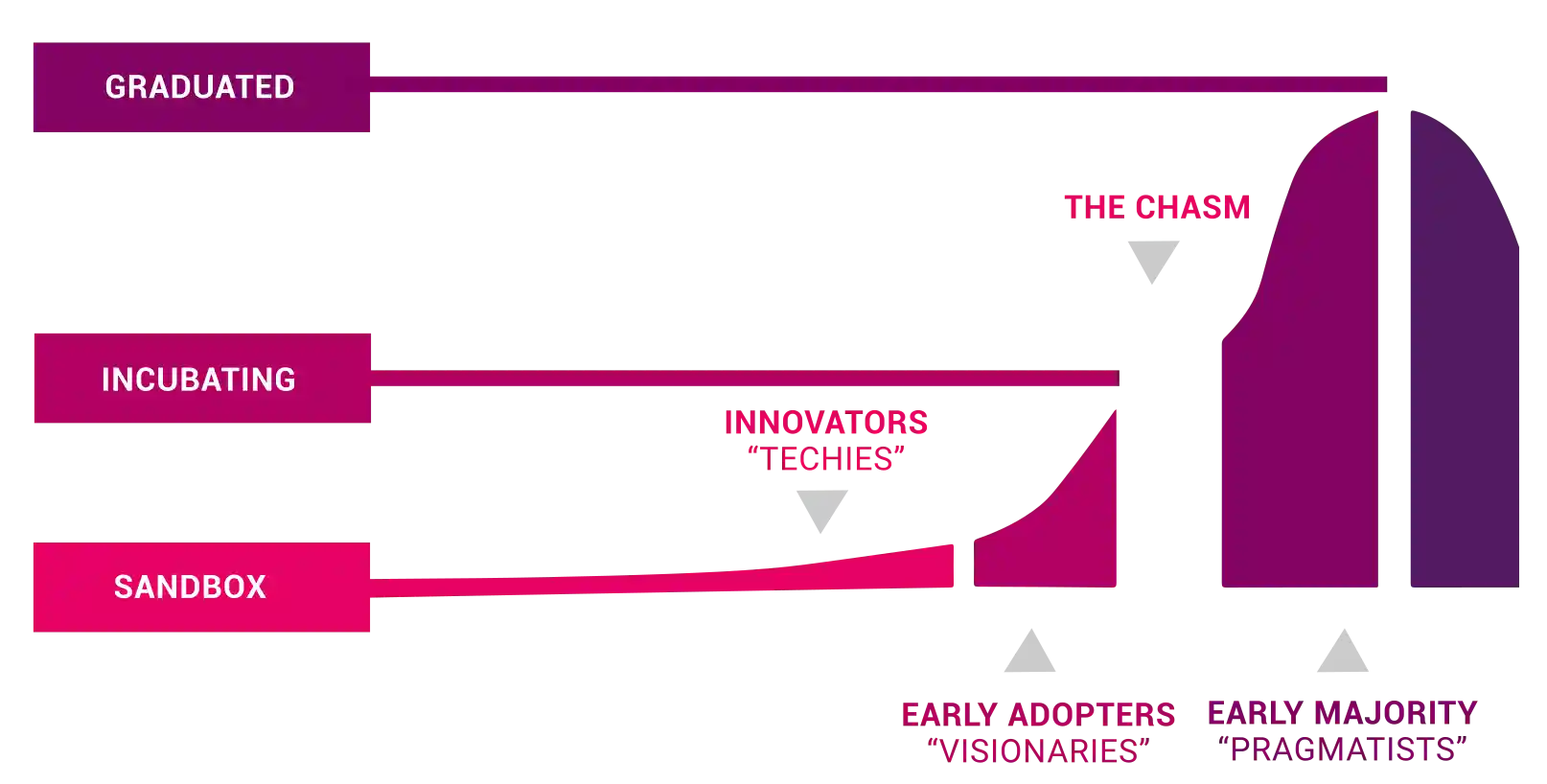
Benefits
GitOps for apps and infrastructure
Flux and Flagger deploy apps with canaries, feature flags, and A/B rollouts. Flux can also manage any Kubernetes resource. Infrastructure and workload dependency management is built in.
Declarative & Automated
Describe the entire desired state of your system in Git. This includes apps, configuration, dashboards, monitoring, and everything else. Use YAML to enforce conformance to the declared system. You don’t need to run kubectl because all changes are synced automatically.
Auditable
Everything is controlled through pull requests. Your Git history provides a sequence of transactions, allowing you to recover state from any snapshot.
Features
Flux enables application deployment (CD) and (with the help of Flagger) progressive delivery (PD) through automatic reconciliation. Flux can even push back to Git for you with automated container image updates to Git (image scanning and patching).
Flux works with your Git providers (GitHub, GitLab, Bitbucket, can even use s3-compatible buckets as a source), all major container registries, fully integrates with OCI and all CI workflow providers.
Pull vs. Push, least amount of privileges, adherence to Kubernetes security policies and tight integration with security tools and best-practices. Read more about our security considerations.
Flux uses true Kubernetes RBAC via impersonation and supports multiple Git repositories. Multi-cluster infrastructure and apps work out of the box with Cluster API: Flux can use one Kubernetes cluster to manage apps in either the same or other clusters, spin up additional clusters themselves, and manage clusters including lifecycle and fleets.
Support for e.g. Kustomize, Helm; GitHub, GitLab, Harbor and custom webhooks; notifications on Slack and other chat systems; RBAC, and policy-driven validation (OPA, Kyverno, admission controllers).
No matter if you use one of the Flux UIs or a hosted cloud offering from your cloud vendor, Flux has a thriving ecosystem of integrations and products built on top of it and all have great dashboards for you.
Adopted by
First created at

Who is using Flux
Flux is a CNCF Graduated project and was categorised as “Adopt” on the CNCF CI/CD Tech Radar (alongside Helm).
Some of the biggest organisations have adopted the Flux family of projects for their GitOps needs.
See who is part of our community and how about joining yourself?

GitOps will help the German mobile carrier manage IT automation for its 5G SA app on a large internal Kubernetes platform with minimal staff needed to do hands-on administration.
Using Flux, DT now manages some 200 Kubernetes clusters with just 10 full-time engineers and plans to scale to thousands of clusters without adding more than one or two more members to the infrastructure team.
Vuk Gojnic, Deutsche Telekom

- Industry: Finance
- Location: London
Highlights
- Production speed increased by 50%
- Deployments increased by 75%
- MTTR in 20min for all clusters
- Devs 75% less focused on operations
Key Benefits
- GitOps enabled a self-service Development Team
- Weave Flux enabled greater security into their workflows
Leveraging GitOps has allowed us to create a self-service platform for engineers so they can concentrate on delivering business value through innovation, without the full need for Platform Team assistance. The engineers focus on building container images and managing the testing of their microservices and Weave Flux handles the deployments.

- Industry: Software
- Location: United States of America
Key Benefits
- GitOps provides a low-risk self-deployment model
- Significant time savings with automated cluster lifecycle management
- Robust and secure platform with built-in auditability
For Kubernetes, Gitops provides a simple audit trail that is invaluable in figuring out what has broken. Flux (and our Tidebot) give our developers a low-risk self-deployment option. Together, Flux and GitOps accelerate our innovation.
This session will walk through the migration steps, what it takes to operate Flux in an air-gapped environment and how we achieved parity when applications are deployed to environments with different constraints.
By introducing Helm and Flux, DoD moved to a more declarative model where everything is version controlled and deployed by Flux thereby reducing manual operations, improving deployment consistency and also bringing more compliance with regard to change management and application life cycle.
Michael Medellin & Gordon Tillman, Department of Defense

In this session we show how CNCF Flux is enabled in Azure Arc enabled Kubernetes and Azure Kubernetes Services and also give a sneak peek at implementation of Flux.
To provide Kubernetes admins and app developers with the latest tooling for managing configuration and application deployment, Azure enables GitOps with Flux.
Chris Sanders & Jonathan Innis, Microsoft
Resources
If you are new to Flux, you might want to check out some of the following resources to get started.

Playlist: GitOps Days 2022
video