Rucent
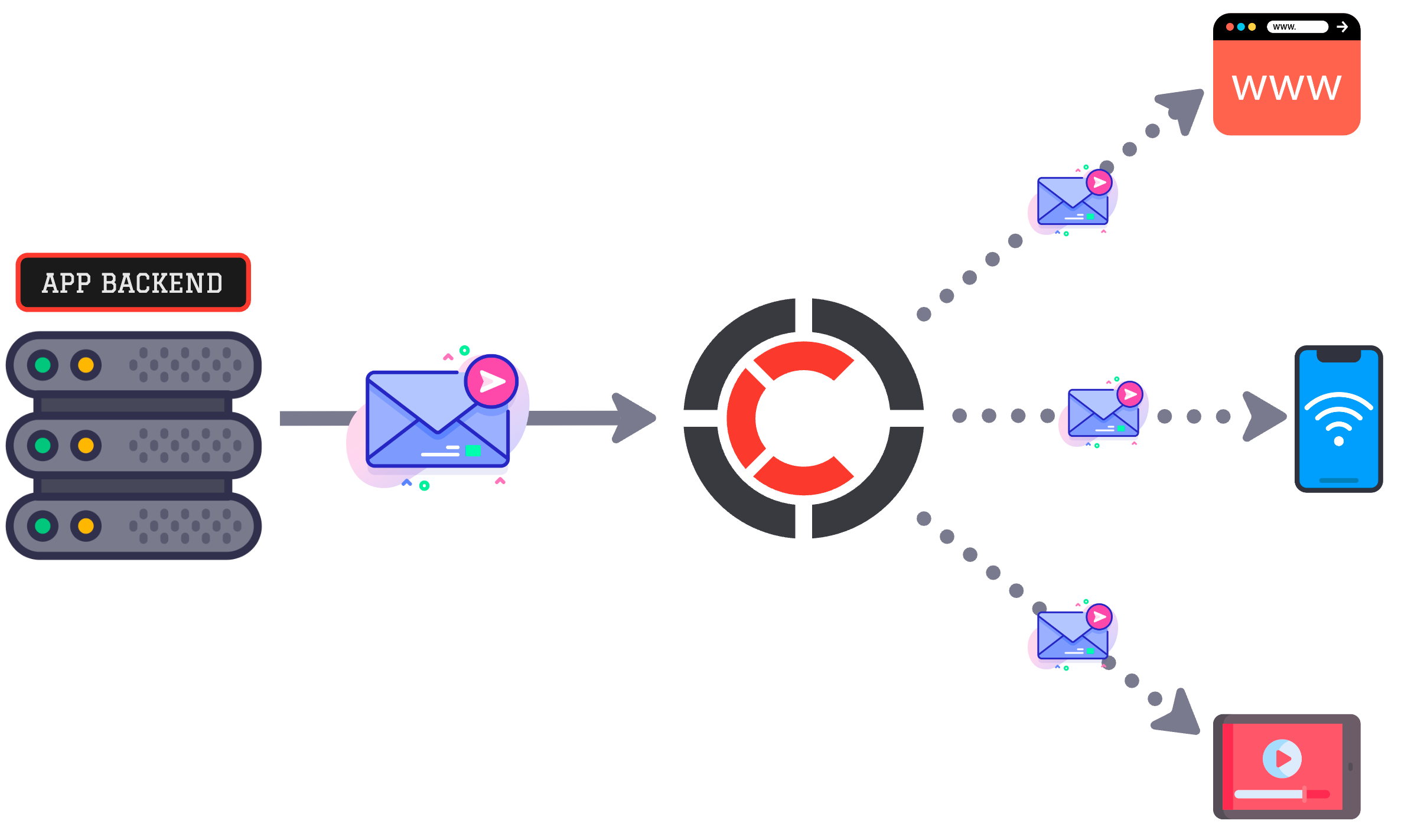
Rucent is a Rust library designed to facilitate communication with Centrifugo's HTTP API. It provides seamless interaction with Centrifugo's server for managing real-time messaging and client interactions. With Rucent, you can issue API commands such as publishing messages, managing subscriptions, and retrieving history data.
Features
- Publish messages to specific channels.
- Manage subscriptions and disconnections.
- Retrieve historical data from Centrifugo.
- Batch multiple commands in a single request for efficiency.
Requirements
Before using Rucent, ensure you have:
- Rust installed on your system (version 1.65 or later).
- A running instance of Centrifugo.
Installation
Add the Rucent library to your Cargo.toml dependencies:
[dependencies]
rucent = "0.1.4"
Enable optional features as needed:
[features]
with_local_server = []
Usage
Example: Sending a Publish Command
use rucent::client::{Client, Config};

#[tokio::main]
async fn main() {
    let config = Config {
        addr: Some("http://127.0.0.1:8000/api".to_string()),
        key: Some("your_api_key".to_string()),
        http_client: None,
    };

    let client = Client::new(config);

    let channel = "test_channel";
    let payload = serde_json::json!({ "input": "Hello, Rucent!" });

    match client.publish(channel.to_string(), payload, &[]).await {
        Ok(response) => println!("Publish successful: {:?}", response),
        Err(err) => eprintln!("Error: {:?}", err),
    }
}
Example: Broadcast to Multiple Channels
--snip--
    let mut channels = Vec::new();

    for i in 0..10 {
        channels.push(format!("test_channel_{}", i));
    }


    let broadcast_result = client
        .broadcast(channels, r#"{"date": "2024-12-28"}"#, &[])
        .await;

    log::info!("Broadcasted to {} channels successfully", broadcast_result.unwrap().responses.len());
Example: Batching Multiple Commands
#[tokio::main]
async fn main() {
    let config = Config {
        addr: Some("http://127.0.0.1:8000/api".to_string()),
        key: Some("your_api_key".to_string()),
        http_client: None,
    };

    let client = Client::new(config);
    let pipe = client.pipe();

    let channel = Rc::new("chan3".to_string());

    let count = 10;

    for _ in 0..count {
        let _ = pipe.add_publish(channel.to_string(), r#"{"input": "test1"}"#, &[]);
    }

    let replies = match client.send_pipe(&pipe).await {
        Ok(reply) => reply,
        Err(err) => {
            println!("an error occurred while sending pipe {err}");
            Vec::new()
        }
    };

    let reply_len = replies.len();

    for reply in replies {
        if let Some(err) = reply.error {
            println!("An error occured with {err}");
        }
    }

    println!("Sent {reply_len} commands in one http request");
}
Running Tests
With Local Environment
To run tests using a local Centrifugo instance, provide the required environment variables:
API_URL=http://127.0.0.1:8000/api API_KEY=fa7ce149-b279-4870-af59-ad7ce78ef11a cargo test --test client --features with_local_server -- --nocaptureWithout Local Environment
To run tests without a local Centrifugo instance:
cargo test --test client -- --nocaptureReferences
- The code was developed following the specification in this proto file: api.proto
- Learn more about Centrifugo at centrifugal.dev
Contributing
We welcome contributions! Feel free to open issues, submit pull requests, or suggest new features.
Steps to Contribute
- Fork the repository.
- Create a feature branch:
git checkout -b feature-branch-name. - Make your changes and commit them:
git commit -m "Description of changes". - Push to your fork:
git push origin feature-branch-name. - Open a pull request against the main repository.
License
Rucent is licensed under either of the following licenses, at your option:
- MIT License
- Apache License 2.0
See LICENSE-MIT or LICENSE-APACHE for details.