A roulette is a curve traced by a fixed point on a closed convex curve as that curve rolls without slipping along a second curve. The roulettes described by the foci of conics when rolled upon a line are sections of minimal surfaces (i.e., they yield minimal surfaces when revolved about the line) known as unduloids.
A particularly interesting case of a roulette is a regular  -gon rolling on a "road" composed of a sequence of
truncated catenaries, as illustrated above, as first
noted by Robison (1960). This motion is smooth in the sense that the geometric
centroid follows a straight line, although in the case of the rolling equilateral
triangle, a physical model would be impossible to construct because the vertices
of the triangles would get "stuck" in the ruts (Wagon 2000). For the rolling
square (a "square wheel"), the shape of the
road is the catenary
-gon rolling on a "road" composed of a sequence of
truncated catenaries, as illustrated above, as first
noted by Robison (1960). This motion is smooth in the sense that the geometric
centroid follows a straight line, although in the case of the rolling equilateral
triangle, a physical model would be impossible to construct because the vertices
of the triangles would get "stuck" in the ruts (Wagon 2000). For the rolling
square (a "square wheel"), the shape of the
road is the catenary  truncated at
 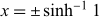 (Wagon 2000). Interestingly, a detailed mathematical
analysis had been published by J. C. Maxwell (of electromagnetic theory
fame) in 1849 (Maxwell 1849) which, while its did not include critical idea of truncating
catenaries, contained essentially all the other underlying mathematical ideas.
(Wagon 2000). Interestingly, a detailed mathematical
analysis had been published by J. C. Maxwell (of electromagnetic theory
fame) in 1849 (Maxwell 1849) which, while its did not include critical idea of truncating
catenaries, contained essentially all the other underlying mathematical ideas.
For a regular  -gon,
the Cartesian equation of the corresponding catenary
is
-gon,
the Cartesian equation of the corresponding catenary
is
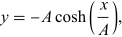
where

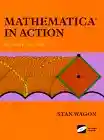
The roulette consisting of a square on a truncated catenary road is depicted on the cover of Wagon (2000).
Given a base curve, let another curve roll on it, and call the point rigidly attached to this rolling curve the "pole." The following table then summarizes some roulettes for various common curves and poles. Note that the cases curtate cycloid, cycloid, and prolate cycloid are together called trochoids, and similarly for the various varieties of epicycloids (called epitrochoids) and hypocycloids (called hypotrochoids).
See also
Catenary, Delta Curve, Glissette, Reuleaux Polygon, Reuleaux Triangle, Rotor, Unduloid
Explore with Wolfram|Alpha
References
Besant, W. H. Notes on Roulettes and Glissettes, 2nd enl. ed. Cambridge, England: Deighton, Bell & Co., 1890.Cundy, H. and Rollett, A. "Roulettes and Involutes." §2.6 in Mathematical Models, 3rd ed. Stradbroke, England: Tarquin Pub., pp. 46-55, 1989.Gardner, M. The Sixth Book of Mathematical Games from Scientific American. Chicago, IL: University of Chicago Press, p. 128, 1984.Hall, L. and Wagon, S. "Roads and Wheels." Math. Mag. 65, 283-301, 1992.Lawrence, J. D. A Catalog of Special Plane Curves. New York: Dover, pp. 56-58 and 206, 1972.Lockwood, E. H. "Roulettes." Ch. 17 in A Book of Curves. Cambridge, England: Cambridge University Press, pp. 138-151, 1967.Maxwell, J. C. "On the Theory of Rolling Curves." §XXXV in Trans. Roy. Soc. Edin. 16, 519-540, 1849.Robison, G. B. "Rockers and Rollers." Math. Mag. 33, 139-144, 1960.Wasgon, S. "The Ultimate Flat Tire." Math. Horizons, pp. 14-17, Feb. 1999.Wagon, S. Mathematica in Action, 2nd ed. New York: W. H. Freeman, p. 52, 2000.Yates, R. C. "Roulettes." A Handbook on Curves and Their Properties. Ann Arbor, MI: J. W. Edwards, pp. 175-185, 1952.Zwillinger, D. (Ed.). "Roulettes (Spirograph Curves)." §8.2 in CRC Standard Mathematical Tables and Formulae, 3rd ed. Boca Raton, FL: CRC Press, 1996.
Referenced on Wolfram|Alpha
Cite this as:
Weisstein, Eric W. "Roulette." From MathWorld--A Wolfram Resource. https://mathworld.wolfram.com/Roulette.html