
A Comeback for Nuclear Power?
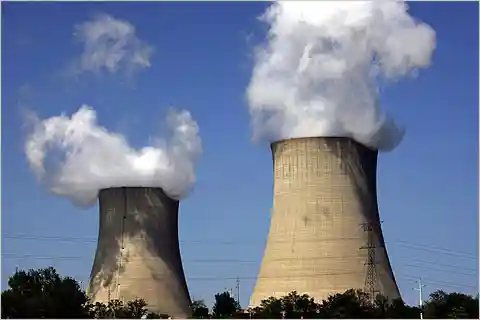 Jeff Haynes/Agence France-Presse — Getty Images The Exelon nuclear generating stations in Byron, Ill.
 The Obama administration has approved a $8 billion loan guarantee to support the construction of two nuclear reactors in Georgia. If the project goes forward, the plants would be the first built in the United States since the 1970s.
The 2005 Energy Policy Act authorized $18.5 billion in loan guarantees, but none have been issued until now. President Obama has proposed tripling that amount to expand nuclear power as a way to control greenhouse gas emissions and bolster domestic energy production.
Does the need for new sources of low-carbon energy now outweigh the costs and risks associated with nuclear power?
- Samuel Thernstrom, American Enterprise Institute
- Robert Hahn and Peter Passell, regulation2point0.org
- Ellen Vancko, Union of Concerned Scientists
- Peter van Doren and Jerry Taylor, Cato Institute
- Christopher Paine, Natural Resources Defense Council
- Denis Du Bois, Energy Priorities Magazine
The Greatest Danger Is Financial

Samuel Thernstrom is a resident fellow and the co-director of the Geo-engineering Project at the American Enterprise Institute.
Nuclear power is not a silver-bullet solution to America’s energy challenges, but it is an essential part of the puzzle that has been largely neglected until now for political reasons.
President Obama took office a year ago with high hopes for ambitious action on climate; today, it seems clear that no federal emissions limits will be enacted this year. The gridlock that grips the Senate has forced the president to consider other approaches to climate, and these loan guarantees are clearly part of that strategy.
If construction costs soar because of regulatory or political obstacles, the administration could end up with little to show for these efforts.
The president’s initiative should be commended both on the merits — we need the clean energy — and for the politics. As the president noted, “changing the ways we produce and use energy … demands of us a willingness to extend our hand across old divides, to act in good faith, to move beyond the broken politics of the past.” Given the depth of the ideological divide over climate policy, the administration cannot afford to ignore the few opportunities there are to bridge the gap with bipartisan initiatives that can generate megawatts of reliable clean energy.
Read more…
What about the risks of nuclear power? Historically, those dangers have been extraordinarily low, despite popular fears to the contrary, and the next generation of nuclear plants will be even safer than those built in the 1960s and ’70s. The real safety issue is not the risk of accidents or attacks on nuclear plants, it is the vexing problem of waste disposal, and on that front, the administration appears unfortunately unwilling to take on the longstanding dispute over Yucca Mountain.
The greatest danger associated with these loan guarantees is not environmental but financial; the risk of default on these loans is high, given the uncertain economic and regulatory environment for these plants. If construction costs soar because of regulatory and political obstacles, the administration could yet end up with little to show for these efforts. There are no simple solutions to America’s energy challenges.
What We Don’t Know
Robert Hahn is a visiting senior fellow at the Smith School, Oxford University and Peter Passell is editor of the Milken Review. They recently co-founded regulation2point0.org, a web portal on regulatory policy.
Providing more than $8 billion in loan guarantees to build the first American nuclear power plant in three decades is one way to jumpstart the industry, but this sort of indirect subsidy leaves a lot to be desired from an economist’s point of view. Indeed, while we’re ready to be convinced that nuclear power’s virtues (zero greenhouse emissions) outweighs its vices (cost and waste disposal), we’d like any incentives to produce more nuclear power to be part of a coherent energy-climate change strategy.
Any incentives to produce more nuclear power need to be part of a coherent energy-climate change strategy.
What passes for energy policy is a Rube Goldberg construction, a machine powered by direct subsidies, tax breaks and mandates that is going in no particular direction. Is ethanol worth the cost in lost taxes and higher food prices? If General Motor’s heavily subsidized plug-in electric car catches on, will there be enough electricity to keep them on the road on a hot summer afternoon? Don’t ask Congress or the White House — they don’t have a clue.
Of course, the energy bell has already been rung a zillion times; we can’t start over.
Read more…
We could, however, try to make sense of where we are and where we should be going by applying some straightforward economic principles — in particular that, while markets aren’t perfect in deciding how much energy to use and in what form, they can do better than the alternatives. The key, then, is to get prices right — to calculate the external costs and benefits of energy sources in terms of climate change risk, localized pollution and maybe national security, then offset them with a system of taxes or tradable emissions rights.
An impossible dream? Sure. But it’s a good place to begin thinking about what’s wrong with current energy policy and what might make it a bit better.
Better Environmental Options

Ellen Vancko is Nuclear Energy and Climate Change Project Manager for the Union of Concerned Scientists in Washington, D.C. She was the former director of communications and government affairs for the North American Electric Reliability Council.
Does the need for low-carbon energy outweigh nuclear power’s risks and costs? The short answer is no. Even discounting nuclear power’s significant security and safety problems, rapidly escalating construction costs could be the industry’s biggest challenge.
Building wind and solar projects and natural gas power plants would be cheaper, faster and safer.
Earlier this month, President Obama proposed tripling nuclear loan guarantees to $54 billion from the $18.5 billion the Department of Energy allocated in 2005. The industry, however, wants more. It wants taxpayers to underwrite all the new reactors it wants to build.
Why loan guarantees? Because six top investment firms told the Department of Energy in 2007 that they were unwilling to finance new reactors in light of the industry’s horrible financial track record. Utilities don’t want to take that risk, either. But both would consider new reactors if taxpayers assumed the risk — in the form of federal loan guarantees.
Read more…
Taxpayers should be skeptical. First, projected construction costs have skyrocketed. In 2002, the industry estimated it would cost $2 billion to $3 billion to build a typical 1,100-megawatt reactor. Now projected costs run as high as $9 billion per unit.
Second, based on the industry’s history of cancellations and defaults, both the Congressional Budget Office (2003) and the Government Accountability Office (2008) estimate that the average default risk on a federal loan guarantee for new construction could be as high as 50 percent.
A 2009 peer-reviewed Union of Concerned Scientists study, “Climate 2030: A National Blueprint for a Clean Economy,” found that the United States does not need to significantly expand its reliance on nuclear power to make dramatic cuts in power plant carbon emissions through 2030, and that new reactors — beyond a handful of “first-mover” reactors built with the $18.5 billion in loan guarantees — would be uneconomical.
The study found it would be more cost-effective to meet a stringent emissions cap with a mix of energy efficiency; wind, solar and other renewable resources; and combined-heat-and-power plants fueled by natural gas. Those options are not only safer and more environmentally friendly, they could be built much more quickly and at much lower risk to investors and taxpayers.
Stop Nuclear Welfare
Peter van Doren and Jerry Taylor are senior fellows at the Cato Institute.
If building new nuclear power plants is such a good idea, why won’t anyone put their own money at risk without government loan guarantees?
Federal efforts to force construction of the plants will prove economically counterproductive.
The answer is that nuclear power is risky for investors because it ties up more capital for longer periods of time than its main competitor, natural-gas-fired generation. Nuclear power makes economic sense only if natural gas prices are very high. Then, over time, the high initial costs of nuclear power would be offset by nuclear power’s lower fuel costs.
Natural gas prices are not high enough at present to allow nuclear to compete. So what could make natural gas prices go up enough to make nuclear power attractive?
One possibility is natural supply constraints. Until recently, North American gas supplies were thought to be increasingly scarce, but in 2009 natural gas reserve estimates increased by 35 percent because of technological advancements in shale rock drilling — the largest reserve increase in 44 years. So natural constraints are no longer in play and natural gas prices have returned to reasonable levels.
Read more…
A second possibility is a (direct or indirect) carbon tax to reduce greenhouse gas emissions. The Congressional Budget Office reported in 2008 that a carbon tax of $45 a ton would induce market interest in nuclear power plants. And that’s if natural gas prices were to stay relatively high.
If gas prices were to return to their historical norm — which they have — the tax would have to be $80 a ton. And if construction costs were to double (and, historically speaking, the C.B.O. reports that a 207 percent cost overrun was the norm for nuclear power plant construction when we built them 30 years ago), it would require a $150 per ton carbon tax to induce market actors to build nuclear power plants rather than to respond to the tax with some other technology or market adjustment.
The bottom line is that nuclear power cannot compete against natural gas except under relatively extreme future cost scenarios, none of which are likely in the foreseeable future. Federal efforts to force nuclear power plant construction will thus prove economically counterproductive.
Nothing Has Changed

Christopher Paine is the Nuclear Program Director at the Natural Resources Defense Council in Washington, D.C.
Nuclear power is already a significant source of low-carbon electricity production, providing about 15 percent of global grid-connected electricity production, but there are many reasons its share of generation has remained flat for decades.
The well-known obstacles to nuclear power have not diminished with time or been addressed.
The primary obstacle has been and remains the financial cost. But there are other well-known obstacles, which have not diminished with time. One can do no more than list them here:
1) The fuel cycle required to support nuclear power has technical overlaps with the capabilities needed to build nuclear weapons — with latent or overt nuclear weapons proliferation a possible result, as currently seen in Iran, and over the years in Pakistan, India, and North Korea;
2) Significant environmental harms and risks, including contamination from uranium mining and processing activities, enormous water consumption for reactor cooling, excessive thermal discharges to local aquatic environments, and the leakage of radionuclides from storage, processing, and disposal of spent nuclear fuels;
Read more…
3) The need for costly reserve capacity in the regional or national grid to back up the reactor in the event of an unplanned outage because nuclear power is currently deployed in huge increments (1100-1600 megawatts per unit);
4) Large project execution and financial risks, which strongly discourage private financing, making nuclear power almost everywhere a partial or complete “ward of the state;”
5) Very long project development, construction, and startup times (typically seven to 15 years) for nuclear plants compared with two to five years for major wind and solar projects and far less for end-use energy efficiency improvements and distributed low-carbon generation. Depending on the mix of low-carbon resources in a particular region, a portfolio composed of these sources can provide clean electricity services at a kilowatt-per-hour cost that is significantly less than the cost of electricity from new nuclear power plants.
Given all these obstacles, the Obama administration’s proposal to expand loan guarantees would support the slower, more expensive, polluting, and riskier thing ahead of the quicker, cheaper, cleaner, less risky thing. Since Steven Chu, the Nobel-winning Secretary of Energy, is clearly not stupid, one hopes that all this is just a giant bone thrown to the Senate Republicans, who have been loudly demanding greater subsidization of the nuclear industry for quite some time.
But if the Senate must be thrown a nuclear bone to gnaw on in order to pass a climate bill, let it be a small one, limited to ascertaining the cost-effectiveness, safety, and environmental impacts of a few units of the new generation of nuclear power plants, rather than force-feeding the revival of an entire failed industry. If the 50 year old nuclear power industry has a future in the U.S., the invisible hand of a competitive, carbon-constrained energy marketplace will reveal it in time.
Toxic Liability

Denis Du Bois is the founding editor of Energy Priorities Magazine and a frequent commentator on energy topics.
Which is more toxic — the corporate stigma of being associated with a new nuclear power plant, or the waste that comes out of that plant for the next 60 years?
Don’t cite Europe as a model: economically, nuclear power has been a failure there as well.
Loan guarantees won’t completely neutralize the risks of construction delays, cost overruns, lawsuits, credit downgrades and regulatory uncertainty. Guarantees will, however, leave taxpayers on the hook for several billion dollars.
Proponents seem to be counting on the American public to view climate change as justification for backing those risky guarantees. Prepare for a big disappointment. Even though man-caused global warming is a widely accepted truth, U.S. consumers are slow to switch to energy-efficient light bulbs, much less to trade in our S.U.V.s, even with subsidies.
That indifference is one reason why nukes are politically toxic, as well. Congressional leaders who support nuclear construction should lobby to locate facilities in their states to store radioactive waste. That’s the stuff that must be kept completely away from people, animals, food sources, aquifers and soil for about 65,000 years.
How? Don’t ask the French, they don’t have an answer, either.
Read more…
Europe, even with a price on carbon, is not rushing to build new nukes. Economically, nuclear power is a failure. The levelized cost per kilowatt-hour (including the cost of waste storage) is higher than unsubsidized renewable energy. Europeans are investing in wind and solar energy for their future.
We should use subsidies to support technologies that have a societal benefit, like energy efficiency — not to create more industries that will need bailouts.
The necessity of loan guarantees for nuclear power plant construction is a sign that the market is correctly avoiding a well-known, unacceptable and toxic liability.