GNOME Core Applications
From Wikipedia, the free encyclopedia
| GNOME Core Applications | |
|---|---|
| Developer | The GNOME Project |
| Initial release | December 20, 1998; 27 years ago[1][better source needed] |
| Written in | C, C++, JavaScript, Python, Rust, Vala[2][3] |
| Operating system | Unix-like |
| License | GNU General Public License |
| Website | apps |
The GNOME Core Applications (also known as Apps for GNOME) are a software suite that is packaged with GNOME, a free and open-source desktop environment. The suite provides a consistent look and feel to the GNOME desktop, utilizes the Adwaita design language and tightly integrates with the GNOME desktop. The suite is developed and maintained through GNOME's official GitLab instance.
A comprehensive list of these applications is available at apps.gnome.org
- Settings – main interface to configure various aspects of GNOME. Diverse panels represent graphical front-ends to configure the NetworkManager daemon and other daemons.
-

GNOME Settings

- Contacts – the contacts book app
- Document Scanner (Simple Scan) - Application for operating printer scanners.
- Image Viewer (Loupe) – Image viewer.
- Document Viewer (Papers) – Viewer for digital documents such as PDF files. (Modern replacement for the previous core app: Evince)[4]
- Files (Nautilus) – File manager.
- Audio Player (Decibels) - General purpose audio player.[5][6]
- Video Player (Showtime) – Video player. (Modern replacement for the previous core app: Totem)
-

Document Viewer
-

-

Image Viewer
-

Video Player


- Connections - the front-end for remote desktops. Introduced in GNOME 41.
- Disks - formatting and managing partitions
- Disk Usage Analyzer (Baobab) - Used for representing disk usage graphically
- Extensions - extension manager for the GNOME desktop
- Fonts - the font viewer
- Logs – written in Vala, introduced with 3.12
- Help (Yelp) - the help documentation software
- Software - the software manager, supports native package managers, as well as Flatpaks
- System Monitor - shows CPU usage graphs
- Terminal Emulators
- Web (Epiphany) - the web browser
-

-

GNOME Usage Analyzer
-
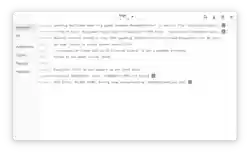
GNOME Logs
-
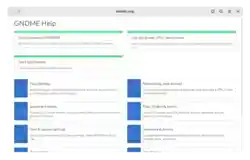
GNOME Help
-

.png)


- GNOME Clocks - creating alarms and timers
- GNOME Maps - map application, powered by OpenStreetMap
- Weather - the weather app
-

GNOME Clocks
-

GNOME Clocks
-
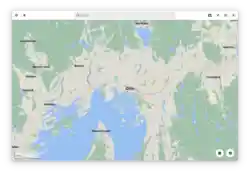
GNOME Maps
-

GNOME Weather
-


- Calculator (gcalctool)
- Calendar
- Characters (Modern replacement for the previous core app: Gucharmap)
- Camera (Snapshot) (Modern replacement for the previous core app: Cheese)
- GNOME Tour
- GNOME Text Editor (Modern replacement for the previous core app: Gedit)
-

-

GNOME Calendar


- Boxes - the virtualization software
- Builder - the IDE for creating GNOME apps
- D-Spy - D-Bus analyzer
- Dconf Editor - Dconf database editor
- Devhelp - API documentation viewer
- Sysprof - debugging software

GNOME Circle is a collection of applications which have been built to extend the GNOME platform,[9] utilize GNOME technologies, and follow the GNOME human interface guidelines.[10] They are hosted, developed, and managed in the GNOME official development infrastructure, on gitlab.gnome.org. Developers who are using the GNOME platform can apply for inclusion in GNOME Circle. Benefits include promotional support and eligibility for project contributors to become GNOME Foundation members.[9] Circle applications are not part of GNOME Core Applications.
Some examples of such applications include:
- Apostrophe - a markdown editor
- Authenticator - a two-factor authentication code generator
- Eyedropper - a color picker and formatter utility
- Foliate - An ebook reader
- Fragments - a torrent manager
- Gaphor - UML and SysML modeling tool
- Health - a fitness tracker
- Pika Backup - a backup software
- Polari - messaging app
- Wike (software) - a Wikipedia browser
- ^ "first release".
- ^ Larabel, Michael (27 December 2025). "44% Of GNOME Core Apps Are Written In C, 13% In JavaScript & 10% In Rust". www.phoronix.com. Retrieved 27 December 2025.
- ^ Herold, Sophie (27 December 2025). "GNOME in 2025: Some Numbers". Sophie's Blog. Retrieved 28 December 2025.
- ^ patch-jh (2024-06-15). "Is Papers the replacement for Evince?". r/gnome. Retrieved 2025-04-29.
- ^ "Audio Player – Apps for GNOME". apps.gnome.org. Retrieved 2025-04-29.
- ^ "GNOME Release Notes". GNOME Release Notes. Retrieved 2025-04-29.
- ^ "Christian Hergert / ptyxis · GitLab". gitlab.gnome.org. Retrieved 2025-04-29.
- ^ "Ptyxis Becomes Ubuntu's Recommended Replacement To GNOME Terminal". www.phoronix.com. Retrieved 2025-04-29.
- ^ a b "GNOME Circle". circle.gnome.org. Retrieved 2023-11-28.
- ^ "GNOME Human Interface Guidelines". developer.gnome.org. Retrieved 2024-09-10.
- apps
.gnome (homepage).org