comparison
com·par·i·son
(kəm-păr′ĭ-sən)n.
1.
a. The act of comparing or the process of being compared.
b. A statement or estimate of similarities and differences.
2. The quality of being similar or equivalent; likeness: no comparison between the two books.
3. Grammar The modification or inflection of an adjective or adverb to denote the positive, comparative, and superlative degrees, as in English, along with the equative degree in certain other languages, such as Irish Gaelic.
[Middle English comparisoun, from Old French comparaison, from Latin comparātiō, comparātiōn-, from comparātus, past participle of comparāre, to compare; see compare.]
American Heritage® Dictionary of the English Language, Fifth Edition. Copyright © 2016 by Houghton Mifflin Harcourt Publishing Company. Published by Houghton Mifflin Harcourt Publishing Company. All rights reserved.
comparison
(kəmˈpærɪsən)n
1. the act or process of comparing
2. the state of being compared
3. comparable quality or qualities; likeness: there was no comparison between them.
4. (Rhetoric) a rhetorical device involving comparison, such as a simile
5. (Grammar) grammar Also called: degrees of comparison the listing of the positive, comparative, and superlative forms of an adjective or adverb
6. bear comparison stand comparison to be sufficiently similar in class or range to be compared with (something else), esp favourably
Collins English Dictionary – Complete and Unabridged, 12th Edition 2014 © HarperCollins Publishers 1991, 1994, 1998, 2000, 2003, 2006, 2007, 2009, 2011, 2014
com•par•i•son
(kəmˈpær ə sən)n.
1. the act of comparing.
2. the state of being compared.
3. a likening; comparative estimate or statement.
4. capability of being compared or likened; similarity.
5. the inflection or other modification of an adjective or adverb to indicate degrees of superiority or inferiority in quality, quantity, or intensity, as in mild, milder, mildest, less mild, least mild.
[1300–50; Middle English < Old French comparaison < Latin comparātiōnem, acc. of comparātiō. See compare]
Random House Kernerman Webster's College Dictionary, © 2010 K Dictionaries Ltd. Copyright 2005, 1997, 1991 by Random House, Inc. All rights reserved.
ThesaurusAntonymsRelated WordsSynonymsLegend:
| Noun | 1. | 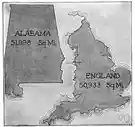 comparison - the act of examining resemblances; "they made a comparison of noise levels"; "the fractions selected for comparison must require pupils to consider both numerator and denominator" comparison - the act of examining resemblances; "they made a comparison of noise levels"; "the fractions selected for comparison must require pupils to consider both numerator and denominator"examination, scrutiny - the act of examining something closely (as for mistakes) likening - the act of comparing similarities analogy - drawing a comparison in order to show a similarity in some respect; "the operation of a computer presents and interesting analogy to the working of the brain"; "the models show by analogy how matter is built up" collation - careful examination and comparison to note points of disagreement confrontation - a focussed comparison; bringing together for a careful comparison contrast - the act of distinguishing by comparing differences |
| 2. | comparison - relation based on similarities and differences relation - an abstraction belonging to or characteristic of two entities or parts together imaginative comparison - the kind of mental comparison that is expressed in similes or metaphors or allegories | |
| 3. | 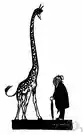 comparison - qualities that are comparable; "no comparison between the two books"; "beyond compare" comparison - qualities that are comparable; "no comparison between the two books"; "beyond compare"alikeness, likeness, similitude - similarity in appearance or character or nature between persons or things; "man created God in his own likeness" |
Based on WordNet 3.0, Farlex clipart collection. © 2003-2012 Princeton University, Farlex Inc.
comparison
noun
2. similarity, analogy, resemblance, correlation, likeness, comparability There is no comparison between the picture quality of a video and that of a DVD.
Quotations
"Comparisons are odious" [John Fortescue De Laudibus Legum Angliae]
"Comparisons are odorous" [William Shakespeare Much Ado About Nothing]
Collins Thesaurus of the English Language – Complete and Unabridged 2nd Edition. 2002 © HarperCollins Publishers 1995, 2002
comparison
nounThe quality or state of being alike:
The American Heritage® Roget's Thesaurus. Copyright © 2013, 2014 by Houghton Mifflin Harcourt Publishing Company. Published by Houghton Mifflin Harcourt Publishing Company. All rights reserved.
Translations
porovnánísrovnánístupňování
sammenligning
vertailusamankaltaisuussamanlaisuus
usporedba
összehasonlításfokozáshasonlóság
samanburîur
比較
비교
porovnanie
primerjava
jämförelse
การเปรียบเทียบ
sự so sánh
comparison
[kəmˈpærɪsn] N
Collins Spanish Dictionary - Complete and Unabridged 8th Edition 2005 © William Collins Sons & Co. Ltd. 1971, 1988 © HarperCollins Publishers 1992, 1993, 1996, 1997, 2000, 2003, 2005
Collins English/French Electronic Resource. © HarperCollins Publishers 2005
comparison
Collins German Dictionary – Complete and Unabridged 7th Edition 2005. © William Collins Sons & Co. Ltd. 1980 © HarperCollins Publishers 1991, 1997, 1999, 2004, 2005, 2007
Collins Italian Dictionary 1st Edition © HarperCollins Publishers 1995
compare
(kəmˈpeə) verb1. to put (things etc) side by side in order to see to what extent they are the same or different. If you compare his work with hers you will find hers more accurate; This is a good essay compared with your last one.
2. to describe as being similar to. She compared him to a monkey.
3. to be near in standard or quality. He just can't compare with Mozart.
comparable (ˈkompərəbl) adjectiveof the same kind, on the same scale etc. The houses were not at all comparable in size.
comparative (kəmˈpӕrətiv) adjective1. judged by comparing with something else. the comparative quiet of the suburbs.
2. (of an adjective or adverb used in comparisons) between positive and superlative, as the following underlined words. a bigger book; a better man; Blacker is a comparative adjective; (also noun) What is the comparative of `bad'?
comˈparatively adverbThis house was comparatively cheap.
comparison (kəmˈpӕrisn) noun(an act of) comparing. There's no comparison between Beethoven and pop music; Living here is cheap in comparison with London.
compare with is used to bring out similarities and differences between two things of the same type: He compared his pen with mine and decided mine was better .
compare to is used when pointing out a similarity between two different things: Stars are often compared to diamonds .
Kernerman English Multilingual Dictionary © 2006-2013 K Dictionaries Ltd.
comparison
→ مُقَارَنَة porovnání sammenligning Vergleich σύγκριση comparación vertailu comparaison usporedba paragone 比較 비교 vergelijking sammenlikning porównanie comparação сравнение jämförelse การเปรียบเทียบ kıyaslama sự so sánh 比较Multilingual Translator © HarperCollins Publishers 2009