raid
raid
(rād)n.
1. A surprise attack by a small armed force.
2. A sudden forcible entry into a place by police: a raid on a gambling den.
3. An entrance into another's territory for the purpose of seizing goods or valuables.
4. A predatory operation mounted against a competitor, especially an attempt to lure away the personnel or membership of a competing organization.
5. An attempt to seize control of a company, as by acquiring a majority of its stock.
6. An attempt by speculators to drive stock prices down by coordinated selling.
v. raid·ed, raid·ing, raids
v.intr.
To conduct a raid or participate in one.
[Scots, raid on horseback, from Middle English rade, from Old English rād, a riding, road; see reidh- in Indo-European roots.]
raid′er n.
Word History: Raid and road both descend from the Old English word rād, which meant primarily "the act of riding" but could also be used specifically to describe an act of riding with hostile intent—that is, a raid. The ai in raid represents the standard development of the Old English vowel ā in Scots and the dialects of northern England, while the oa in road represents the standard development of Old English ā in the dialects of southern England. In the dialects of southern England, road retained its earlier senses of "journey on horseback" and "hostile foray" until the mid-1600s, when the modern sense "public way" became the most common meaning of the word. Later, Sir Walter Scott (1771-1832) helped popularize the northern form of the word, raid, through his collections of Scots ballads and his other writings. In the meaning "a military expedition on horseback," raid became part of the general vocabulary of English outside of Scotland and northern England. A trace of the earlier meaning of road, "foray, raid," can still be detected in the compound inroad, literally "a riding or advance into."
American Heritage® Dictionary of the English Language, Fifth Edition. Copyright © 2016 by Houghton Mifflin Harcourt Publishing Company. Published by Houghton Mifflin Harcourt Publishing Company. All rights reserved.
raid
(reɪd)n
1. a sudden surprise attack: an air raid.
2. a surprise visit by police searching for criminals or illicit goods: a fraud-squad raid.
vb
3. to make a raid against (a person, thing, etc)
4. to sneak into (a place) in order to take something, steal, etc: raiding the larder.
[C15: Scottish dialect, from Old English rād military expedition; see road]
ˈraider n
Collins English Dictionary – Complete and Unabridged, 12th Edition 2014 © HarperCollins Publishers 1991, 1994, 1998, 2000, 2003, 2006, 2007, 2009, 2011, 2014
raid
(reɪd)n.
1. a sudden assault or attack, as upon something to be seized or suppressed: a police raid on a narcotics ring.
2. a sudden attack on an enemy, as by air or by a small land force.
3. an effort to lure away a competitor's employees, members, etc.
4. a concerted attempt of speculators to force stock prices down.
v.t.5. to make a raid on.
v.i.6. to engage in a raid.
[1375–1425; Middle English (north and Scots) ra(i)de, Old English rād expedition, literally, a riding; doublet of road]
Random House Kernerman Webster's College Dictionary, © 2010 K Dictionaries Ltd. Copyright 2005, 1997, 1991 by Random House, Inc. All rights reserved.
raid
An operation, usually small scale, involving a swift penetration of hostile territory to secure information, confuse the enemy, or to destroy installations. It ends with a planned withdrawal upon completion of the assigned mission.
Dictionary of Military and Associated Terms. US Department of Defense 2005.
raid
Past participle: raided
Gerund: raiding
| Imperative |
|---|
| raid |
| raid |
| Present |
|---|
| I raid |
| you raid |
| he/she/it raids |
| we raid |
| you raid |
| they raid |
| Preterite |
|---|
| I raided |
| you raided |
| he/she/it raided |
| we raided |
| you raided |
| they raided |
| Present Continuous |
|---|
| I am raiding |
| you are raiding |
| he/she/it is raiding |
| we are raiding |
| you are raiding |
| they are raiding |
| Present Perfect |
|---|
| I have raided |
| you have raided |
| he/she/it has raided |
| we have raided |
| you have raided |
| they have raided |
| Past Continuous |
|---|
| I was raiding |
| you were raiding |
| he/she/it was raiding |
| we were raiding |
| you were raiding |
| they were raiding |
| Past Perfect |
|---|
| I had raided |
| you had raided |
| he/she/it had raided |
| we had raided |
| you had raided |
| they had raided |
| Future |
|---|
| I will raid |
| you will raid |
| he/she/it will raid |
| we will raid |
| you will raid |
| they will raid |
| Future Perfect |
|---|
| I will have raided |
| you will have raided |
| he/she/it will have raided |
| we will have raided |
| you will have raided |
| they will have raided |
| Future Continuous |
|---|
| I will be raiding |
| you will be raiding |
| he/she/it will be raiding |
| we will be raiding |
| you will be raiding |
| they will be raiding |
| Present Perfect Continuous |
|---|
| I have been raiding |
| you have been raiding |
| he/she/it has been raiding |
| we have been raiding |
| you have been raiding |
| they have been raiding |
| Future Perfect Continuous |
|---|
| I will have been raiding |
| you will have been raiding |
| he/she/it will have been raiding |
| we will have been raiding |
| you will have been raiding |
| they will have been raiding |
| Past Perfect Continuous |
|---|
| I had been raiding |
| you had been raiding |
| he/she/it had been raiding |
| we had been raiding |
| you had been raiding |
| they had been raiding |
| Conditional |
|---|
| I would raid |
| you would raid |
| he/she/it would raid |
| we would raid |
| you would raid |
| they would raid |
| Past Conditional |
|---|
| I would have raided |
| you would have raided |
| he/she/it would have raided |
| we would have raided |
| you would have raided |
| they would have raided |
Collins English Verb Tables © HarperCollins Publishers 2011
ThesaurusAntonymsRelated WordsSynonymsLegend:
| Noun | 1. | 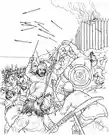 raid - a sudden short attack raid - a sudden short attack air attack, air raid - an attack by armed planes on a surface target penetration, incursion - an attack that penetrates into enemy territory swoop - a very rapid raid |
| 2. | raid - an attempt by speculators to defraud investors embezzlement, misappropriation, peculation, misapplication, defalcation - the fraudulent appropriation of funds or property entrusted to your care but actually owned by someone else | |
| Verb | 1. | raid - search without warning, make a sudden surprise attack on; "The police raided the crack house" attack, assail - launch an attack or assault on; begin hostilities or start warfare with; "Hitler attacked Poland on September 1, 1939 and started World War II"; "Serbian forces assailed Bosnian towns all week" |
| 2. | raid - enter someone else's territory and take spoils; "The pirates raided the coastal villages regularly" encroach upon, intrude on, obtrude upon, invade - to intrude upon, infringe, encroach on, violate; "This new colleague invades my territory"; "The neighbors intrude on your privacy" maraud - raid and rove in search of booty; "marauding rebels overran the countryside" | |
| 3. | raid - take over (a company) by buying a controlling interest of its stock; "T. Boone Pickens raided many large companies" take over, usurp, arrogate, seize, assume - seize and take control without authority and possibly with force; take as one's right or possession; "He assumed to himself the right to fill all positions in the town"; "he usurped my rights"; "She seized control of the throne after her husband died" | |
| 4. | raid - search for something needed or desired; "Our babysitter raided our refrigerator" search - subject to a search; "The police searched the suspect"; "We searched the whole house for the missing keys" |
Based on WordNet 3.0, Farlex clipart collection. © 2003-2012 Princeton University, Farlex Inc.
raid
verb
3. make a search of, search, bust (informal), descend on, make a raid on, make a swoop on Fraud squad officers raided the firm's offices.
noun
1. attack, invasion, seizure, onset, foray, sortie, incursion, surprise attack, hit-and-run attack, sally, inroad, irruption The rebels attempted a surprise raid on a military camp.
2. bust (informal), swoop, descent, surprise search a raid on a house by thirty armed police
Collins Thesaurus of the English Language – Complete and Unabridged 2nd Edition. 2002 © HarperCollins Publishers 1995, 2002
raid
nounAn act of invading, especially by military forces:
1. To make a surprise attack on:
2. To enter so as to attack, plunder, destroy, or conquer:
The American Heritage® Roget's Thesaurus. Copyright © 2013, 2014 by Houghton Mifflin Harcourt Publishing Company. Published by Houghton Mifflin Harcourt Publishing Company. All rights reserved.
Translations
غَارَةهَجوم سَريع ومُفاجِئيَشِنُّ غارَةًيَغْزويقومُ بِغارَةٍ، يُداهِم
náletpřepadpřepadnoutútokvyloupit
raidrazziaforetage en razziaforetage et raidforetage et raid mod
hyökätä yllättäenyllätyshyökkäys
napasti iznenadaprepad
rajtaütrajtaütés
gera innrás/rassíurassíataka úr, ræna
襲撃襲撃する
급습급습하다
antpuolio dalyvisreidasreido dalyvissurengti reidą į
iebruktizkratītpārmeklētuzbruktuzbrukums
vyrabovať
napadracija
göra en rädräd
การจู่โจมจู่โจม
cuộc đột kíchtấn công bất ngờ
raid
[reɪd]
A. N
1. (into territory, across border) → incursión f (into en) (on specific target) → asalto m (on a) to carry out or make a raid on sth → asaltar algo
B. VT
4. (Brit) [criminals] [+ bank] → asaltar
Collins Spanish Dictionary - Complete and Unabridged 8th Edition 2005 © William Collins Sons & Co. Ltd. 1971, 1988 © HarperCollins Publishers 1992, 1993, 1996, 1997, 2000, 2003, 2005
Collins English/French Electronic Resource. © HarperCollins Publishers 2005
raid
Collins German Dictionary – Complete and Unabridged 7th Edition 2005. © William Collins Sons & Co. Ltd. 1980 © HarperCollins Publishers 1991, 1997, 1999, 2004, 2005, 2007
Collins Italian Dictionary 1st Edition © HarperCollins Publishers 1995
raid
(reid) nouna sudden, short and usually unexpected attack. The enemy made a raid on the docks; The police carried out a raid on the gambling den.
verb1. to make a raid on. The police raided the gambling club.
2. to take things from. I'm hungry – let's raid the fridge.
ˈraider nounThe raiders burned down all the houses.
Kernerman English Multilingual Dictionary © 2006-2013 K Dictionaries Ltd.
raid
→ غَارَة, يَغْزو nálet, vyplenit foretage et raid mod, raid Überfall, überfallen επιδρομή, κάνω επιδρομή asaltar, asalto hyökätä yllättäen, yllätyshyökkäys attaquer, raid napasti iznenada, prepad incursione, irrompere 襲撃, 襲撃する 급습, 급습하다 inval, overvallen plutselig angrep, raide najazd, najechać incursão, invadir налет, совершать налет göra en räd, räd การจู่โจม, จู่โจม baskın, baskın yapmak cuộc đột kích, tấn công bất ngờ 搜捕Multilingual Translator © HarperCollins Publishers 2009