Also found in: Thesaurus, Medical, Financial, Acronyms, Idioms, Encyclopedia, Wikipedia.
help
(hĕlp)v. helped, help·ing, helps
v.tr.
1.
a. To give assistance to (someone); make it easier for (someone) to do something; aid: She helped me with my project. I helped her find her book.
b. To give material or financial aid to: help the homeless.
c. To wait on, as in a store or restaurant: Please help the customer in aisle 20.
2.
a. To contribute to the effectiveness or improvement of (something); improve or advance: tax breaks to help create jobs; new ways to help the environment; a remark that didn't help the situation.
b. To ease the pain or discomfort of; relieve: medication to help your cold.
3. To refrain from; avoid or resist. Used with can or cannot: couldn't help laughing.
v.intr.
1. To be of service; give assistance: I made a cake, and my friend helped.
2. To be of use or provide relief: He has a bad back, and physical therapy hasn't helped.
n.
1. The action of helping; assistance: Do you need help with that package?
2. One that helps: You've been a great help. A food processor is a help to the serious cook.
3.
a. Archaic A person employed to help, especially a farm worker or domestic servant.
b. Such employees considered as a group. Often used with the.
help (oneself) to
1. To serve or provide oneself with: Help yourself to the cookies.
2. Informal To take (something) without asking permission: The thief even helped himself to the spare change in the jar.
help (someone) off
To assist (someone) in taking off a piece of clothing: Help me off with these boots.
help (someone) on
To assist in putting on a piece of clothing: Help your grandmother on with her coat.
[Middle English helpen, from Old English helpan.]
help′er n.
American Heritage® Dictionary of the English Language, Fifth Edition. Copyright © 2016 by Houghton Mifflin Harcourt Publishing Company. Published by Houghton Mifflin Harcourt Publishing Company. All rights reserved.
help
(hɛlp)vb
1. to assist or aid (someone to do something), esp by sharing the work, cost, or burden of something: he helped his friend to escape; she helped him climb out of the boat.
2. to alleviate the burden of (someone else) by giving assistance
3. (tr) to assist (a person) to go in a specified direction: help the old lady up from the chair.
4. to promote or contribute to: to help the relief operations.
5. to cause improvement in (a situation, person, etc): crying won't help.
6. (tr; preceded by can, could, etc; usually used with a negative)
a. to avoid or refrain from: we can't help wondering who he is.
b. (usually foll by it) to prevent or be responsible for: I can't help it if it rains.
7. to alleviate (an illness, etc)
8. (tr) to serve (a customer): can I help you, madam?.
9.
a. to serve (someone with food, etc) (usually in the phrase help oneself): may I help you to some more vegetables?; help yourself to peas.
b. to provide (oneself with) without permission: he's been helping himself to money out of the petty cash.
10. cannot help but to be unable to do anything else except: I cannot help but laugh.
11. help a person off with to assist a person in the removal of (clothes)
12. help a person on with to assist a person in the putting on of (clothes)
13. so help me
a. on my honour
b. no matter what: so help me, I'll get revenge.
n
14. the act of helping, or being helped, or a person or thing that helps: she's a great help.
15. a helping
16. (Industrial Relations & HR Terms)
a. a person hired for a job; employee, esp a farm worker or domestic servant
b. (functioning as singular) several employees collectively
17. a means of remedy: there's no help for it.
interj
used to ask for assistance
[Old English helpan; related to Old Norse hjalpa, Gothic hilpan, Old High German helfan]
ˈhelpable adj
ˈhelper n
Collins English Dictionary – Complete and Unabridged, 12th Edition 2014 © HarperCollins Publishers 1991, 1994, 1998, 2000, 2003, 2006, 2007, 2009, 2011, 2014
help
(hɛlp)v.t.
1. to save; rescue; succor: Help me, I'm falling!
2. to contribute to; facilitate or promote: to help desegregation.
3. to be useful or profitable to: Your knowledge of languages will help you in your career.
4. to refrain from; avoid (usu. prec. by can or cannot): I can't help teasing him about it.
5. to prevent or stop (usu. prec. by can or cannot): The disagreement could not be helped.
6. to make less unpleasant or monotonous; improve: A new rug might help the room.
7. to relieve (someone) in need, sickness, pain, or distress: to help the poor.
8. to alleviate; remedy: Nothing seems to help my headache.
9. to serve food or drink to: Help her to salad.
10. to serve or wait on (a customer), as in a store.
v.i.11. to give aid; be of service or advantage: Every little bit helps.
12. help out, to assist, as during a time of need.
n.13. the act of helping; aid or assistance; relief or succor.
14. a person or thing that helps: You were a tremendous help after the fire.
15. a hired helper; employee.
16. a body of such helpers.
17. a domestic servant or a farm laborer.
18. means of remedying, stopping, or preventing: There is no help for it now.
interj.20. (used as an exclamation to call for assistance or to attract attention.)
Idioms:1. cannot or can't help but, to be unable to refrain from or avoid; be obliged to: Still, you can't help but admire her.
2. help oneself to,
a. to serve oneself with: Help yourself to the cake.
b. to take or use without asking permission; appropriate.
[before 900; Middle English; Old English helpan, c. Old Saxon helpan, Old High German helfan, Old Norse hjalpa, Gothic hilpan]
help′a•ble, adj.
help′er, n.
syn: help, aid, assist, succor agree in the idea of furnishing someone with something that is needed. help implies furnishing anything that furthers one's efforts or satisfies one's needs: I helped her plan the party. aid and assist, somewhat more formal, imply a furthering or seconding of another's efforts. aid suggests an active helping; assist suggests less need and less help: to aid the poor; to assist a teacher in the classroom. To succor, still more formal and literary, is to give timely help and relief to someone in difficulty or distress: Succor him in his hour of need.
usage: cannot help but has been condemned by some as the ungrammatical version of cannot help followed by the present participle: You cannot help admiring her. The idiom cannot help but is so common in all types of speech and writing, however, that it must be characterized as standard.
Random House Kernerman Webster's College Dictionary, © 2010 K Dictionaries Ltd. Copyright 2005, 1997, 1991 by Random House, Inc. All rights reserved.
help
1. 'help' as a transitive verb
If you help someone, you make something easier for them. When help has this meaning, it can be followed by an infinitive, with or without to. For example, you can say 'I helped him to move the desk' or 'I helped him move the desk'. There is no difference in meaning.
We must try to help students to have confidence in their ability.
Something went wrong with his machine so I helped him fix it.
2. 'help' as an intransitive verb
You can also use help as an intransitive verb, followed by an infinitive with or without to. If someone helps do something or helps to do it, they help other people to do it.
I used to help cook the meals for the children.
The taxi driver helped to carry the bags into the hotel.
If something helps do something or helps to do it, it makes it easier for that thing to be done.
The money helped pay the rent.
This policy helped to improve the competitiveness of American exports.
Be Careful!
Don't use an -ing form after help. Don't say, for example, 'I helped moving the desk' or 'I helped him moving the desk'.
3. 'cannot help'
If you cannot help doing something, you are unable to prevent yourself from doing it.
I couldn't help teasing him a little.
Be Careful!
Don't use a to-infinitive after cannot help. Don't say, for example, 'I couldn't help to tease him a little'.
Collins COBUILD English Usage © HarperCollins Publishers 1992, 2004, 2011, 2012
help
Past participle: helped
Gerund: helping
| Imperative |
|---|
| help |
| help |
| Present |
|---|
| I help |
| you help |
| he/she/it helps |
| we help |
| you help |
| they help |
| Preterite |
|---|
| I helped |
| you helped |
| he/she/it helped |
| we helped |
| you helped |
| they helped |
| Present Continuous |
|---|
| I am helping |
| you are helping |
| he/she/it is helping |
| we are helping |
| you are helping |
| they are helping |
| Present Perfect |
|---|
| I have helped |
| you have helped |
| he/she/it has helped |
| we have helped |
| you have helped |
| they have helped |
| Past Continuous |
|---|
| I was helping |
| you were helping |
| he/she/it was helping |
| we were helping |
| you were helping |
| they were helping |
| Past Perfect |
|---|
| I had helped |
| you had helped |
| he/she/it had helped |
| we had helped |
| you had helped |
| they had helped |
| Future |
|---|
| I will help |
| you will help |
| he/she/it will help |
| we will help |
| you will help |
| they will help |
| Future Perfect |
|---|
| I will have helped |
| you will have helped |
| he/she/it will have helped |
| we will have helped |
| you will have helped |
| they will have helped |
| Future Continuous |
|---|
| I will be helping |
| you will be helping |
| he/she/it will be helping |
| we will be helping |
| you will be helping |
| they will be helping |
| Present Perfect Continuous |
|---|
| I have been helping |
| you have been helping |
| he/she/it has been helping |
| we have been helping |
| you have been helping |
| they have been helping |
| Future Perfect Continuous |
|---|
| I will have been helping |
| you will have been helping |
| he/she/it will have been helping |
| we will have been helping |
| you will have been helping |
| they will have been helping |
| Past Perfect Continuous |
|---|
| I had been helping |
| you had been helping |
| he/she/it had been helping |
| we had been helping |
| you had been helping |
| they had been helping |
| Conditional |
|---|
| I would help |
| you would help |
| he/she/it would help |
| we would help |
| you would help |
| they would help |
| Past Conditional |
|---|
| I would have helped |
| you would have helped |
| he/she/it would have helped |
| we would have helped |
| you would have helped |
| they would have helped |
Collins English Verb Tables © HarperCollins Publishers 2011
ThesaurusAntonymsRelated WordsSynonymsLegend:
| Noun | 1. | 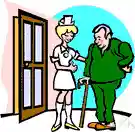 help - the activity of contributing to the fulfillment of a need or furtherance of an effort or purpose; "he gave me an assist with the housework"; "could not walk without assistance"; "rescue party went to their aid"; "offered his help in unloading" help - the activity of contributing to the fulfillment of a need or furtherance of an effort or purpose; "he gave me an assist with the housework"; "could not walk without assistance"; "rescue party went to their aid"; "offered his help in unloading"activity - any specific behavior; "they avoided all recreational activity" self-help - the act of helping or improving yourself without relying on anyone else facilitation - act of assisting or making easier the progress or improvement of something helping hand, hand - physical assistance; "give me a hand with the chores" recourse, refuge, resort - act of turning to for assistance; "have recourse to the courts"; "an appeal to his uncle was his last resort" thanks - with the help of or owing to; "thanks to hard work it was a great success" ministration, succor, succour, relief - assistance in time of difficulty; "the contributions provided some relief for the victims" lift - the act of giving temporary assistance service - an act of help or assistance; "he did them a service" accommodation - the act of providing something (lodging or seat or food) to meet a need boost, encouragement - the act of giving hope or support to someone comfort - assistance, such as that provided to an enemy or to a known criminal; "it gave comfort to the enemy" support - aiding the cause or policy or interests of; "the president no longer has the support of his own party"; "they developed a scheme of mutual support" |
| 2. |  help - a person who contributes to the fulfillment of a need or furtherance of an effort or purpose; "my invaluable assistant"; "they hired additional help to finish the work" help - a person who contributes to the fulfillment of a need or furtherance of an effort or purpose; "my invaluable assistant"; "they hired additional help to finish the work"coadjutor - an assistant to a bishop worker - a person who works at a specific occupation; "he is a good worker" accomplice, confederate - a person who joins with another in carrying out some plan (especially an unethical or illegal plan) attendant, attender, tender - someone who waits on or tends to or attends to the needs of another bat boy - (baseball) a boy who takes care of bats and other baseball equipment dental assistant - an assistant to a dentist deputy, lieutenant - an assistant with power to act when his superior is absent actor's assistant, dresser - a wardrobe assistant for an actor event planner - someone who plans social events as a profession (usually for government or corporate officials) facilitator - someone who makes progress easier flower girl - a young girl who carries flowers in a (wedding) procession girl Friday - a female assistant who has a range of duties enforcer, hatchet man - one whose job it is to execute unpleasant tasks for a superior cat's-paw, pawn, instrument - a person used by another to gain an end birthing coach, doula, labor coach, monitrice - an assistant (often the father of the soon-to-be-born child) who provides support for a woman in labor by encouraging her to use techniques learned in childbirth-preparation classes underboss - an assistant or second-in-command to a chief (especially in a crime syndicate) fashion model, manakin, mannequin, mannikin, manikin, model - a woman who wears clothes to display fashions; "she was too fat to be a mannequin" poser, model - a person who poses for a photographer or painter or sculptor; "the president didn't have time to be a model so the artist worked from photos" paraprofessional - a trained worker who is not a member of a profession but who assists a professional powder monkey - someone who carries explosives (as from the magazine to the guns on board a warship) prompter, theater prompter - someone who assists a performer by providing the next words of a forgotten speech chief assistant, man Friday, right-hand man - the most helpful assistant secretarial assistant, secretary - an assistant who handles correspondence and clerical work for a boss or an organization sidesman - (Church of England) an assistant to the churchwarden; collects offerings of money in the church subordinate, subsidiary, underling, foot soldier - an assistant subject to the authority or control of another whipper-in - huntsman's assistant in managing the hounds | |
| 3. |  help - a resource; "visual aids in teaching" help - a resource; "visual aids in teaching"resource - a source of aid or support that may be drawn upon when needed; "the local library is a valuable resource" | |
| 4. | help - a means of serving; "of no avail"; "there's no help for it" helpfulness - the property of providing useful assistance | |
| Verb | 1. | 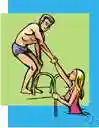 help - give help or assistance; be of service; "Everyone helped out during the earthquake"; "Can you help me carry this table?"; "She never helps around the house" help - give help or assistance; be of service; "Everyone helped out during the earthquake"; "Can you help me carry this table?"; "She never helps around the house"facilitate, alleviate, ease - make easier; "you could facilitate the process by sharing your knowledge" wait on, attend to, assist, attend, serve - work for or be a servant to; "May I serve you?"; "She attends the old lady in the wheelchair"; "Can you wait on our table, please?"; "Is a salesperson assisting you?"; "The minister served the King for many years" benefact - help as a benefactor; "The father benefacted his daughter in more ways than she was aware of" help out - be of help, as in a particular situation of need; "Can you help out tonight with the dinner guests?" subserve - be helpful or useful expedite, hasten - speed up the progress of; facilitate; "This should expedite the process" avail - be of use to, be useful to; "It will avail them to dispose of their booty" give care, care - provide care for; "The nurse was caring for the wounded" bootstrap - help oneself, often through improvised means back up, support - give moral or psychological support, aid, or courage to; "She supported him during the illness"; "Her children always backed her up" |
| 2. |  help - improve the condition of; "These pills will help the patient" help - improve the condition of; "These pills will help the patient"cure, bring around, heal - provide a cure for, make healthy again; "The treatment cured the boy's acne"; "The quack pretended to heal patients but never managed to" ameliorate, improve, meliorate, amend, better - to make better; "The editor improved the manuscript with his changes" do good, benefit - be beneficial for; "This will do you good" | |
| 3. | help - be of use; "This will help to prevent accidents" serve - contribute or conduce to; "The scandal served to increase his popularity" | |
| 4. | help - abstain from doing; always used with a negative; "I can't help myself--I have to smoke"; "She could not help watching the sad spectacle" refrain, forbear - resist doing something; "He refrained from hitting him back"; "she could not forbear weeping" | |
| 5. | help - help to some food; help with food or drink; "I served him three times, and after that he helped himself" dish, dish up, serve up, dish out, serve - provide (usually but not necessarily food); "We serve meals for the homeless"; "She dished out the soup at 8 P.M."; "The entertainers served up a lively show" cater, ply, provide, supply - give what is desired or needed, especially support, food or sustenance; "The hostess provided lunch for all the guests" | |
| 6. | help - contribute to the furtherance of; "This money will help the development of literacy in developing countries" encourage, promote, further, boost, advance - contribute to the progress or growth of; "I am promoting the use of computers in the classroom" | |
| 7. | help - take or use; "She helped herself to some of the office supplies" exploit, work - use or manipulate to one's advantage; "He exploit the new taxation system"; "She knows how to work the system"; "he works his parents for sympathy" | |
| 8. | help - improve; change for the better; "New slipcovers will help the old living room furniture" ameliorate, improve, meliorate, amend, better - to make better; "The editor improved the manuscript with his changes" |
Based on WordNet 3.0, Farlex clipart collection. © 2003-2012 Princeton University, Farlex Inc.
help
verb
1. (sometimes with out) aid, back, support, second, encourage, promote, assist, relieve, stand by, befriend, cooperate with, abet, lend a hand, succour, lend a helping hand, give someone a leg up (informal) If you're not willing to help me, I'll find somebody who will.
aid fight, bar, block, oppose, frustrate, discourage, foil, hinder, obstruct, impede, hobble
noun
1. assistance, aid, support, service, advice, promotion, guidance, cooperation, helping hand Thanks very much for your help.
assistance opposition, obstruction, hindrance, block, discouragement
help yourself to something (Informal) take, steal, appropriate, pocket, trouser (slang), swipe (informal), knock off (slang), pilfer (informal), purloin, snaffle (informal) Has somebody helped himself to some film star's diamonds?
Quotations
"Often we can help each other most by leaving each other alone; at other times we need the hand-grasp and the word of cheer" [Elbert Hubbard The Note Book]
Proverbs
"God helps them that help themselves"
"Many hands make light work"
Collins Thesaurus of the English Language – Complete and Unabridged 2nd Edition. 2002 © HarperCollins Publishers 1995, 2002
help
verb1. To give support or assistance.Also used with out:
2. To advance to a more desirable state:
1. The act or an instance of helping:
The American Heritage® Roget's Thesaurus. Copyright © 2013, 2014 by Houghton Mifflin Harcourt Publishing Company. Published by Houghton Mifflin Harcourt Publishing Company. All rights reserved.
Translations
помагам
pomocpomocipomocníkpomoctposílit
hjælphjælpehjælperikke kunne gøre forikke kunne lade være med
helpihelpo
abiabilineabistamaaitamakoduabiline
apuauttaaohjeopastaaapua!
pomoćpomoćipomoćnicapomoćnikupomoć!
nem tudja megállnisegítsegítség
bantu
hjálpakomast ekki hjá, geta ekki annaîlækna, slá áaîstoî, hjálpaîstoîa
助けて!助ける援助
도와줘요!도움(남을) 돕다
auxilium
bejėgiškaibejėgiškumasišsigelbėjimasnamų ūkio darbininkasnegalėti susilaikyti ne-
es nevarēju nesmietiesglābiņšKo es varu darīt, ja līst?nevarēt kaut ko darītvarēt kaut ko darīt
ajutaasista
pomôcťposlúžiť
pomagatipomočpostreči sipodpora
hjälphjälpahjälp!
kusaidiamsaada
ความช่วยเหลือช่วยช่วยด้วย
cứu!giúp đỡsự giúp đỡ
help
[help]
B. VT
2. (at table)
to help sb to soup/vegetables → servir sopa/verdura a algn
3. (= avoid) → evitar
"why are you laughing?" - "I can't help it" → -¿por qué te ríes? -no lo puedo evitar
I can't help it, I just don't like him → es superior a mí, me cae mal
"it's rather late now" - "I can't help that, you should have come earlier" → -ahora es bastante tarde -no es mi culpa, tenías que haber llegado antes
it can't be helped → no hay más remedio, ¿qué se le va a hacer?
he won't if I can help it → si de mí depende, no lo hará
can I help it if it rains? → ¿es mi culpa si llueve?
don't spend more than you can help → no gastes más de lo necesario
you can't help feeling sorry for him → no puede uno (por) menos de sentir lástima por él
4. to help o.s
4.2. (= serve o.s.) → servirse
help yourself! → ¡sírvete!
she helped herself to vegetables → se sirvió verdura
4.3. (= take sth) "can I borrow your pen?" - "help yourself" → -¿me prestas el bolígrafo? -cógelo
4.4. (= steal) he's helped himself to my pencil → me ha mangado el lápiz
4.5. (= prevent o.s.) I screamed with pain, I couldn't help myself → grité del dolor, no lo pude evitar
E. CPD help menu N (Comput) → menú m de ayuda
help out
Collins Spanish Dictionary - Complete and Unabridged 8th Edition 2005 © William Collins Sons & Co. Ltd. 1971, 1988 © HarperCollins Publishers 1992, 1993, 1996, 1997, 2000, 2003, 2005
help
[ˈhɛlp]
vt
(= assist) [+ person] → aider
Can you help me? → Est-ce que vous pouvez m'aider?
to help sb to do sth, to help sb do sth → aider qn à faire qch
I helped him to fix his car → Je l'ai aidé à réparer sa voiture.
She helped her sit up in bed so she could hold her baby → Elle l'a aidée à s'asseoir dans le lit pour qu'elle puisse prendre son bébé.
to help sb with sth [+ problem, task] → aider qn avec qch
to be able to help o.s.
people who can help themselves → les gens qui savent se débrouiller
to help sb across the road → aider qn à traverser la route
I helped her to her feet → je l'ai aidée à se lever
(in shop) can I help you? → vous désirez?
(= serve) help yourself! [+ to food] → servez-vous!
to help o.s to sth [+ food, drink, things on offer] → se servir de qch
Help yourself to bread → Servez-vous de pain.
to help o.s. to sth (= steal) → piquer qch
He helped himself to my wallet → Il m'a piqué mon portefeuille.
(with can't, couldn't) I couldn't help myself (= couldn't stop myself) → je n'ai pas pu m'en empêcher
I had to have a look. I couldn't help myself → Il fallait que je regarde. Je ne pouvais pas m'en empêcher.
I can't help it → je n'y peux rien
He can't help it → Il n'y peut rien.
can't help doing sth
I can't help feeling sorry for him → Je ne peux pas m'empêcher de le plaindre.
it can't be helped (= it's unavoidable) → on n'y peut rien
vt sep [+ person] → aiderhelp desk n → service m d'assistance
Collins English/French Electronic Resource. © HarperCollins Publishers 2005
help
vt
(with particle) to help somebody down → jdm hinunterhelfen; take some water to help the pill down → trinken Sie etwas Wasser, damit die Tablette besser rutscht; to help somebody on/off with his/her etc coat → jdm in den/aus dem Mantel helfen; he helped her out of the car → er half ihr aus dem Auto; to help somebody over the street → jdm über die Straße helfen; to help somebody through a difficult time (belief, hope, pills etc) → jdm in einer schwierigen Zeit durchhelfen; (person also) → jdm in einer schwierigen Zeit beistehen; to help somebody up (from floor, chair etc) → jdm aufhelfen or (up stairs etc) → hinaufhelfen; I helped him in with his cases → ich half ihm mit seinem Gepäck
(with can or cannot) he can’t help it, he’s only a baby → er kann nichts dafür, er ist doch noch ein Baby; he can’t help it! (hum inf: = he’s stupid) → (d)er ist nun mal so (doof); I can’t help being clever → (ich kann nichts dafür,) ich bin nun mal ein Genie or so schlau (inf); he can’t help the way he is → das ist nun mal (so) seine Art; don’t say more than you can help → sagen Sie nicht mehr als unbedingt nötig; not if I can help it → nicht, wenn es nach mir geht; I couldn’t help laughing → ich konnte mir nicht helfen, ich musste (einfach) lachen; I had to do it, I couldn’t help it or myself → ich konnte mir nicht helfen, ich musste es einfach tun; I couldn’t help thinking or but think … → ich konnte nicht umhin zu denken …; one cannot help wondering whether … → man muss sich wirklich fragen, ob …; it can’t be helped → das lässt sich nicht ändern, das ist nun mal so; I can’t help it if he’s always late → ich kann nichts dafür, dass er immer zu spät kommt
help
:
helpline
n (for emergencies) → Notruf m; (for information) → Informationsdienst m
helpmate (old), helpmeet (obs)
help screen
n (Comput) → Hilfebildschirm m
Collins German Dictionary – Complete and Unabridged 7th Edition 2005. © William Collins Sons & Co. Ltd. 1980 © HarperCollins Publishers 1991, 1997, 1999, 2004, 2005, 2007
Collins Italian Dictionary 1st Edition © HarperCollins Publishers 1995
help
(help) verb1. to do something with or for someone that he cannot do alone, or that he will find useful. Will you help me with this translation?; Will you please help me (to) translate this poem?; Can I help?; He fell down and I helped him up.
2. to play a part in something; to improve or advance. Bright posters will help to attract the public to the exhibition; Good exam results will help his chances of a job.
3. to make less bad. An aspirin will help your headache.
4. to serve (a person) in a shop. Can I help you, sir?
5. (with can(not), ~could (not)) to be able not to do something or to prevent something. He looked so funny that I couldn't help laughing; Can I help it if it rains?
noun1. the act of helping, or the result of this. Can you give me some help?; Your digging the garden was a big help; Can I be of help to you?
2. someone or something that is useful. You're a great help to me.
3. a servant, farmworker etc. She has hired a new help.
4. (usually with no) a way of preventing something. Even if you don't want to do it, the decision has been made – there's no help for it now.
ˈhelper nounWe need several helpers for this job.
ˈhelpful adjectivea very helpful boy; You may find this book helpful.
ˈhelpfully adverbˈhelpfulness nounˈhelping nounthe amount of food one has on one's plate. a large helping of pudding.
ˈhelpless adjectiveneeding the help of other people; unable to do anything for oneself. A baby is almost completely helpless.
ˈhelplessly adverbˈhelplessness nounhelp oneself1. (with to) to give oneself or take (food etc). Help yourself to another piece of cake; `Can I have a pencil?' `Certainly – help yourself; He helped himself to (= stole) my jewellery.
2. (with cannot, ~could not) to be able to stop (oneself). I burst out laughing when he told me – I just couldn't help myself.
help outto help (a person), usually for a short time because the person is in some difficulty. I help out in the shop from time to time; Could you help me out by looking after the baby?
Kernerman English Multilingual Dictionary © 2006-2013 K Dictionaries Ltd.
help
→ النَّجْدَة, مُسَاعَدَة, يُساعِدُ pomoc, pomoc!, pomoci hjælp, hjælpe helfen, Hilfe, Hilfe! βοήθεια, βοήθεια!, βοηθώ ¡socorro!, ayuda, ayudar apu, apua!, auttaa à l’aide !, aide, aider pomoć, pomoći, upomoć! aiutare, aiuto, aiuto! 助けて!, 助ける, 援助 도와줘요!, 도움, (남을) 돕다 help!, helpen, hulp hjelp, hjelp!, hjelpe pomoc, pomóc, pomocy! ajuda, ajudar, socorro! помогать, помогите!, помощь hjälp, hjälp!, hjälpa ความช่วยเหลือ, ช่วย, ช่วยด้วย imdat!, yardım, yardım etmek cứu!, giúp đỡ, sự giúp đỡ 帮助, 救命!Multilingual Translator © HarperCollins Publishers 2009
help
n. ayuda, asistencia, socorro, auxilio;
v. ayudar, asistir, auxiliar; remediar.
English-Spanish Medical Dictionary © Farlex 2012
- Could you help me with my luggage, please? (US)
Can you help me with my luggage, please? (UK) - Can you help me?
- Help!
- Get help quickly! (US)
Fetch help quickly! (UK) - Can you help me get on, please?
- Can you help me, please?
- Help yourself!
Collins Multilingual Translator © HarperCollins Publishers 2009
help
interj ¡Auxilio! ¡Socorro!; n ayuda, auxilio; vt, vi ayudar
English-Spanish/Spanish-English Medical Dictionary Copyright © 2006 by The McGraw-Hill Companies, Inc. All rights reserved.